
 salehunter.net
 According to recent data from the USDA and various financial institutions, raising a child in the United States costs an average of $15,000 to $18,000 in the first year alone. When you factor in diapers, infant formula, wipes, baby wash, and safety gear, the monthly checkout tally at the local grocery store can feel genuinely overwhelming. For generations, American parents relied on Sunday morning newspaper inserts to shave a few dollars off their bills. Today, the landscape of baby product coupons has completely transformed.
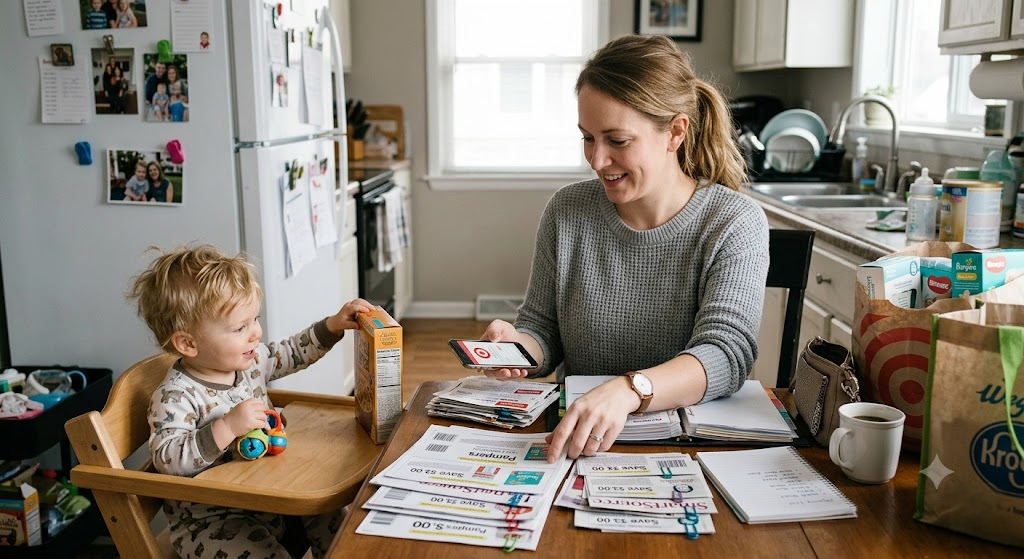
Modern parent-savvy shopping is no longer about sitting at the kitchen table with a pair of scissors; it is about strategic digital stacking, loyalty rewards, and understanding retail algorithms. Whether you are expecting your first child or navigating the toddler years with your third, mastering the baby coupon ecosystem can realistically save an American household between $1,200 and $2,500 a year.
This guide breaks down the exact mechanisms parents use to source high-value baby coupons, stack them legally at major US retail chains, and unlock insider discounts that most shoppers walk right past.
Go Straight to the Source: Manufacturer Programs
Before scouring third-party coupon databases, your first stop should always be the product manufacturers themselves. Major baby brands operate aggressive customer acquisition programs because they know brand loyalty forged during the sleep-deprived newborn phase often lasts for years.
The Formula Giants: Checks vs. Coupons
In the United States, infant formula is regulated strictly by the FDA. Because of this, brands like Enfamil and Similac rarely issue standard digital barcodes. Instead, they issue Formula Checks.
- Enfamil Family Beginnings: Signing up yields a welcome box containing sample cans, but more importantly, it triggers a recurring mailing of $5 to $15 paper checks. Unlike standard coupons, these checks are processed by cashiers as actual legal tender (similar to a traveler’s check). This means you can use them directly on top of store-level sales.
- Similac StrongMoms: Similar to Enfamil, this program sends a digital and physical rotation of reward checks tied to your child’s birth date.
- The Swap Network Hack: If you decide to exclusively breastfeed or your pediatrician switches your baby to a different brand, do not throw these checks away. There is a massive, highly active trade network on community platforms like Reddit (specifically the r/FormulaTrade subreddit) and local Facebook parent groups where moms swap Similac checks for Enfamil checks dollar-for-dollar.
Diaper Loyalty Apps
Paper diaper coupons have mostly vanished; the real monetary value has migrated to proprietary smartphone applications.
- Pampers Club: Inside every plastic sleeve of Pampers diapers and wipes is a small sticker with a QR code. Scanning these inside the app accrues points that convert directly into high-value manufacturer coupons (frequently $5 to $10 off your next box) or retailer gift cards.
- Huggies Rewards+ (via Fetch): Rather than managing their own standalone app, Huggies partnered directly with the receipt-scanning app Fetch. By snapping a photo of any grocery receipt containing a Huggies purchase, you earn accelerated point tiers that redeem for Visa, Amazon, or Target gift cards.
The Art of Retail Stacking
Finding a coupon is only step one. The real magic happens when you practice coupon stacking—the strictly legal shopping technique of combining a manufacturer discount, a store promo, and a cash-back rebate on a single transaction.
The Target “Gift Card Loop”
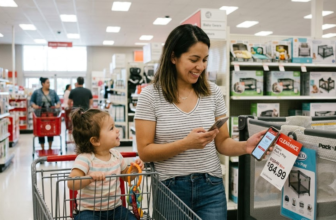
Target is widely considered the mecca of baby budget shopping in the US due to their recurring promotional calendar. Roughly every four to six weeks, Target runs a nationwide promotion: “Spend $100 on Baby Care (Diapers, Wipes, Formula, Toiletries), Get a $20 Target Gift Card.”
Here is how a savvy parent executes the ultimate stack:
- Wait for the Spend $100 / Get $20 promo to go live on a Sunday morning.
- Open the Target App and clip all available Target Circle manufacturer digital coupons (for example, “$3 off Pampers Swaddlers” and “$2 off Desitin”).
- Place $100 worth of qualifying baby supplies into your physical or digital cart.
- At checkout, scan your Target Circle barcode. The manufacturer coupons apply first, dropping your subtotal.
- Pay the remaining balance using a Target RedCard (debit or credit) to trigger an automatic, stackable 5% discount.
- Collect your $20 physical or digital gift card at the register.
- The Loop: Put that $20 gift card in a safe place and do not spend it on groceries. Save it specifically for the exact same baby promotion four weeks later, effectively lowering your out-of-pocket cash for the next month’s diaper haul to $80.
Drugstore Game Theory: CVS and Walgreens
While standard shelf prices at CVS and Walgreens are notoriously marked up compared to Walmart, their rewards ecosystems make them goldmines for baby toiletries like wash, lotion, and infant ibuprofen.
At CVS, look for weekly ExtraBucks promotions such as “Buy 2 Johnson & Johnson baby products, receive $5 in ExtraBucks.” If you pair this store promo with a “$2 off 2” manufacturer coupon clipped inside the CVS app, you will routinely walk out the door paying less than $1.25 per bottle of baby wash.
The Registry Welcome Box Phenomenon
You do not need to be hosting a traditional baby shower to create a baby registry. In the US retail ecosystem, major big-box stores treat baby registries as loss-leaders to capture your household’s long-term consumer data.
Create active registries at Amazon, Target, Walmart, and Babylist. You can set the privacy settings to “Private” so nobody else sees them.
- The Physical Freebies: Amazon and Target offer physical welcome boxes valued between $80 and $120. These boxes are stuffed with travel-sized Aquaphor, Avent bottles, water wipes, and exclusive paper manufacturer coupons that are never printed in Sunday newspapers.
- The Completion Discount: Roughly 60 days before your stated due date, Amazon and Target issue a 15% completion discount (which jumps to 20% during select seasonal Prime windows). This discount applies to almost anything remaining on your registry.
- The Hack: Add big-ticket, non-gift items to your registry yourself—such as your convertible car seat, nursery dresser, stroller, or breast pump accessories. Apply the completion coupon to your own purchase. On a $350 car seat, that single click saves you $52.50.
Post-Purchase Digital Rebate Engines
Once you have checked out and walked through the sliding glass doors, your savings aren’t technically finished. Cash-back rebate apps act as post-purchase digital coupons.
| App Name | Primary Baby Specialty | Typical Payout Mechanism |
|---|---|---|
| Ibotta | Name-brand diapers, organic baby food pouches, and infant acetaminophen. | Direct deposit to bank account or PayPal once you hit $20. |
| Fetch Rewards | Any itemized retail receipt; massive bonus tiers for Gerber and Huggies. | Retailer gift cards (Amazon, Target, Starbucks, Walmart). |
| Rakuten | Online purchases for cribs, nursery gear, and maternity clothing. | “Big Fat Check” mailed quarterly or sent via PayPal. |
Unconventional & Hidden US Coupon Sources
1. The Pediatrician’s Sample Closet
Pharmaceutical representatives visit pediatric clinics across America every single week. They leave behind cases of specialized formula (particularly expensive hypoallergenic formulas like Nutramigen or Alimentum, which retail for upward of $45 a can), premium diaper packs, and tier-one manufacturer coupons. When checking out from your baby’s routine wellness visits, politely ask the receptionist or the nurse: “Do you happen to have any manufacturer coupons or sample cans for [Brand Name] formula?” More often than not, they will gladly hand over a bag of supplies.
2. The “Praise Letter” Strategy
Boutique and eco-friendly baby brands (such as Honest Company, Millie Moon, Bambo Nature, and Pipette) rarely drop paper coupons in standard circulation. However, their public relations departments maintain dedicated budgets for customer retention. Navigate to the “Contact Us” page on their official websites. Write a short, genuine message stating how much you love their clean ingredients or how their wipes cleared up your baby’s diaper rash, but note that your family is on a strict budget. Companies frequently respond within a business week by mailing out high-value physical coupons ($3 to $5 off) or sending vouchers for entirely free products.
3. Leveraging Pre-Tax Dollars (HSA/FSA)
While not a traditional paper coupon, utilizing a Health Savings Account (HSA) or Flexible Spending Account (FSA) acts as an instant, guaranteed 20% to 30% discount based on your effective income tax bracket. Many new parents fail to realize that the IRS classifies dozens of everyday baby care items as qualified medical expenses.
Eligible pre-tax items include: baby mineral sunscreen, diaper rash ointments containing zinc oxide, nasal aspirators, infant rectal thermometers, lactation massagers, and breast milk storage bags. Always separate these items at the pharmacy register or use your dedicated HSA debit card at checkout.
Four Golden Rules of Baby Couponing
As you build your weekly savings routine, adhere to these four operational rules to keep yourself from accidentally losing money on “great deals”:
- Never over-stock Newborn (NB) sizes: Infants grow at an astonishing velocity during the first six weeks of life. An eight-pound newborn will likely graduate to Size 1 diapers within two weeks. If you stockpile fifteen boxes of Newborn diapers simply because you had high-value coupons, you will end up giving fourteen of them away.
- Watch exact ounce measurements: Retailers frequently introduce unique package sizing to prevent price matching. A manufacturer coupon might state “Valid on 22oz or larger formula powders.” If your local store happens to stock a 19.8oz container, the register software will hard-reject the coupon.
- Test before you invest: Do not buy a six-month supply of any single brand of wipes or lotion until your child has lived on Earth for at least a month. Infants can develop sudden contact dermatitis or allergies to specific synthetic fragrances, rendering your heavily discounted stockpile useless.
- Know your store’s overage policy: A handful of US retailers (most notably Walmart) still permit coupon overage. This means if you present a $2.00 coupon for a travel-sized baby item that rings up at $1.47, the remaining $0.53 is applied as a credit toward the rest of your shopping cart.
Raising a child in the United States is undeniably an expensive financial undertaking, but paying full retail sticker price for consumable baby goods is entirely optional. By dedicating just twenty minutes a week to aligning manufacturer checks, retail promotional gift card cycles, and cash-back apps, you shift the financial leverage back to your household budget.