 salehunter.net
 If you are exhausted by the endless cycle of rising streaming subscription costs and bloated cable bills, you are not alone. Millions of Americans are discovering a surprisingly simple, technologically advanced, and incredibly cost-effective solution: the modern digital television antenna. Finding a high-quality TV antenna sale is the first step toward reclaiming your living room entertainment, slashing your monthly expenses, and accessing crystal-clear local broadcasts without paying a dime in subscription fees.
However, navigating the digital antenna marketplace can feel overwhelming. With countless brands promising unbelievable ranges and 4K capabilities, how do you separate the genuine bargains from the deceptive marketing? This article will dive deep into the world of over-the-air (OTA) television, exploring the best times to find a TV antenna sale, the critical features you need to look for, and the lesser-known facts about broadcast technology that will make you an informed consumer.
The Economics of Cord-Cutting: Why You Need an Antenna Now
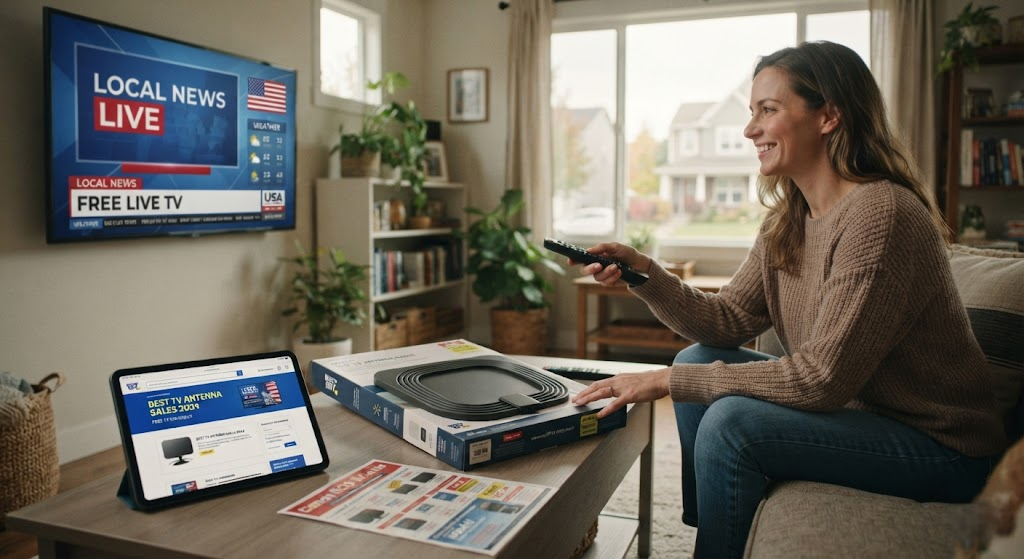
The golden age of cheap streaming is officially over. What started as a budget-friendly alternative to traditional cable has fractured into dozens of competing platforms. By the time you subscribe to three or four major streaming services to get your favorite shows, movies, and live sports, you are often paying just as much as you did for traditional cable.
This is where an OTA TV antenna becomes your most powerful financial tool. By purchasing an antenna during a promotional event or clearance sale, you make a one-time investment—often under fifty dollars for an indoor model or under a hundred and fifty for a premium outdoor array. In return, you gain unlimited, free access to major broadcast networks including ABC, CBS, NBC, FOX, PBS, and The CW, alongside dozens of sub-channels broadcasting classic movies, weather, and local news.
More importantly, live sports remain heavily concentrated on these local broadcast networks. From NFL Sunday night games to the Super Bowl, the NBA Finals, and the World Series, a high-quality antenna ensures you never miss a critical play, all without the need for an expensive live-TV streaming package.
Timing the Market: When to Spot the Best TV Antenna Sale
Like televisions and home audio equipment, OTA antennas follow predictable retail cycles. If you want to maximize your return on investment, timing your purchase is crucial. Here are the prime windows for finding a legitimate TV antenna sale:
- The Pre-Super Bowl Rush (Late January to Early February): Retailers know that Americans upgrade their home theater setups just before the biggest sporting event of the year. While big-screen TVs take the spotlight, accessories like soundbars and digital antennas also see significant markdowns. This is an excellent time to find bundled deals or steep discounts on amplified indoor antennas.
- Amazon Prime Day (July) and Competing Summer Sales: The mid-summer e-commerce battle is a fantastic time to upgrade your tech. Because the weather is warm, it is also the ideal season to purchase and install an outdoor or attic antenna. Look for lightning deals on top-tier outdoor multi-directional antennas during this window.
- Black Friday and Cyber Monday (November): The undisputed kings of retail sales. You will find the deepest discounts of the year during this weekend. However, be cautious of “doorbuster” off-brand antennas that sacrifice build quality for a low price tag. Stick to reputable brands that are offering genuine percentage-off sales.
- Spring Hardware Clearances (March to May): As home improvement stores transition their inventory for the busy spring and summer DIY seasons, you can often find excellent clearance sales on heavy-duty outdoor TV antennas and mounting hardware.
Decoding Antenna Specifications: What Actually Matters
When you are browsing a TV antenna sale, you will be bombarded with technical jargon. Understanding what these terms mean will protect you from buying an inferior product, regardless of how heavily discounted it is.
UHF vs. VHF Frequencies
Broadcast television signals travel over two primary frequency bands: Very High Frequency (VHF) and Ultra High Frequency (UHF).
Most modern digital channels are broadcast on the UHF band. Consequently, many sleek, flat, modern indoor antennas are designed strictly to capture UHF signals. However, in many major US markets, essential channels like ABC or CBS still broadcast on high-VHF frequencies. If you buy a UHF-only antenna, you might completely miss these vital networks. When shopping a sale, always look for an antenna explicitly labeled as “Dual-Band” or capable of receiving both VHF and UHF frequencies. Often, antennas with “rabbit ears” or specific telescoping dipoles are the ones best equipped to handle VHF.
The “Range” Myth Exposed
This is the most critical piece of advice for navigating a TV antenna sale: be highly skeptical of outrageous mileage claims.
You will frequently see cheap, unbranded antennas on major e-commerce platforms boasting a “200-Mile” or “300-Mile” range. Due to the curvature of the Earth, it is physically impossible for a standard terrestrial broadcast signal to reach that far without bouncing off the atmosphere under highly unusual weather conditions. The true maximum range for a clear line-of-sight broadcast is roughly 60 to 80 miles.
If you see a flimsy indoor plastic antenna claiming a 200-mile range on sale for twenty dollars, walk away. It is a deceptive listing. Focus instead on reputable brands that claim realistic ranges: 20 to 40 miles for indoor antennas, and 50 to 80 miles for high-mounted outdoor antennas.
Amplified vs. Non-Amplified
During a sale, you will notice that “amplified” antennas cost slightly more than passive (non-amplified) ones. An amplified antenna includes an electric signal booster that requires a power source (usually a USB plug or AC adapter).
If you live more than 30 miles from your local broadcast towers, or if you are splitting the antenna signal to multiple televisions in your home, an amplifier is a fantastic investment. It compensates for the signal loss that occurs along the coaxial cable. However, if you live downtown, very close to the broadcasting towers, an amplifier can actually overwhelm your TV’s tuner, resulting in pixelation or no picture at all. Buy according to your geographic location, not just because an amplified model happens to be on sale.
Lesser-Known Features to Look For
To truly get the best value during a TV antenna sale, look for these advanced features that many standard consumers overlook:
- LTE and 5G Filters: Cellular towers broadcast signals that are remarkably close to the frequencies used by digital television. As 5G networks expand across the USA, these cellular signals can cause frustrating interference, resulting in a choppy TV picture. Premium antennas now feature built-in LTE/5G filters to block these unwanted frequencies. If you find one on sale, prioritize it.
- NextGen TV (ATSC 3.0) Readiness: The United States is currently transitioning to a new broadcast standard known as ATSC 3.0, or NextGen TV. This revolutionary technology allows broadcasters to transmit OTA signals in stunning 4K HDR resolution, with Dolby Atmos surround sound, and enhanced weather alerts. The good news? All standard UHF/VHF antennas can receive ATSC 3.0 signals (you will just need a compatible TV tuner). Still, buying a high-quality antenna now ensures your home is future-proofed for the 4K broadcast revolution.
- High-Quality Coaxial Cables: A premium antenna is practically useless if connected with a cheap, poorly shielded cable. Look for sales that bundle RG6 coaxial cable, which offers superior shielding against electromagnetic interference compared to the older, thinner RG59 standard.
Indoor vs. Outdoor: Making the Right Call
A massive discount on an indoor antenna won’t do you any good if you live in a rural valley surrounded by heavy timber. Before you pull out your credit card, assess your living situation.
The Case for Indoor Antennas
If you live in an urban or suburban area within 30 miles of the broadcast towers, a flat, mud-flap style indoor antenna is usually sufficient. They are cheap, easy to conceal behind a television or flat against a window, and frequently go on sale. When installing, always experiment with different windows; placing the antenna higher up and facing the direction of the local towers yields the best results.
The Case for Attic and Outdoor Antennas
If you live 40 to 80 miles from the towers, or if your home is constructed with brick, stucco, or aluminum siding (which block radio waves), an outdoor or attic-mounted antenna is mandatory. While these require a bit of weekend DIY labor to install, they provide an immensely more stable, powerful signal. Because they represent a larger upfront cost, finding an outdoor TV antenna sale offers the most significant dollar-amount savings. Look for heavy-duty aluminum construction that can withstand high winds, ice, and UV degradation.
Maximizing Your Purchase: Post-Sale Steps
Once you have secured a fantastic deal on a new antenna, proper setup is the final hurdle between you and free television.
Before you mount anything permanently, use free online resources like the FCC’s DTV Reception Maps or RabbitEars.info. By entering your zip code, these databases will tell you exactly where your local broadcast towers are located, the precise distance to your home, and whether the channels are UHF or VHF. This information dictates exactly which direction you should point your new antenna.
Furthermore, remember that installing the antenna is only half the battle. You must use your television’s remote control to navigate to the settings menu and perform a “Channel Scan” or “Auto-Program.” This tells your TV’s internal tuner to lock onto the frequencies your new antenna is pulling in. You should rescan your channels every few months, or anytime you slightly adjust the antenna’s position, as broadcasters occasionally add new sub-networks to their lineups.
Conclusion: Claim Your Broadcast Freedom
The era of paying exorbitant monthly fees for local news and live broadcast sports is over. Armed with the right knowledge regarding frequencies, realistic range capabilities, and geographic positioning, you are now prepared to navigate the crowded marketplace. Keep your eyes open for seasonal retail cycles, ignore the deceptive “300-mile” marketing traps, and look for advanced features like built-in 5G filters. By patiently hunting for the perfect TV antenna sale, you can drastically reduce your entertainment budget, cut the cord with confidence, and enjoy decades of high-definition, over-the-air television absolutely free of charge.