
 salehunter.net
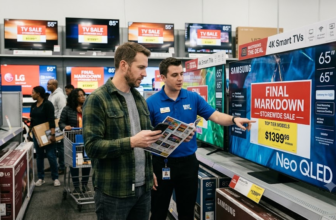
 Walking into an electronics store—or even scrolling through an online retailer—can feel like stepping into a futuristic labyrinth. With acronyms like OLED, QLED, Mini-LED, and HDMI 2.1 flying at you from every direction, it is easy to feel overwhelmed. However, if you are looking to upgrade your home entertainment setup, you are in a prime position to take advantage of the market. Buying a TV shouldn’t feel like a high-stakes gamble; it should be an exciting journey toward a better viewing experience.
Whether you are looking to upgrade your gaming setup, prepare for the next big sports season, or simply want a clearer picture for your favorite streaming services, navigating the world of TV sales requires more than just luck. It requires a bit of strategy, a dash of technical knowledge, and the patience to wait for the right moment.
Understanding the Seasonal Rhythm of TV Sales

One of the biggest mistakes consumers make is walking into a store or browsing a website without knowing the calendar. The TV market operates on a very predictable, cyclical rhythm. If you buy at the wrong time, you might find yourself paying a premium for a set that will be significantly discounted just a few months later.
The “New Model” Clearance Window
Manufacturers typically announce their new lineups early in the year—often around the Consumer Electronics Show (CES) in January. These new models begin hitting retail shelves in late spring, usually April and May. This is the “Golden Window” for savvy shoppers. When the 2026 models arrive, retailers are desperate to clear out the 2025 inventory. You can often find last year’s flagship models—which are still technically superior to budget-tier current models—at prices that are significantly marked down.
The Super Bowl Spike
For decades, the weeks leading up to the Super Bowl have been marketed as the best time to buy a TV. While this is still a great time for sales, the discounts are often focused on mid-range and entry-level sets. If you are looking for a basic 55-inch or 65-inch screen for a den or guest room, this is your time. However, don’t expect the top-of-the-line OLEDs to drop to their absolute lowest prices here; those deals are usually reserved for the end of the year.
Black Friday and Cyber Monday
We cannot talk about sales without mentioning the titans of commerce: Black Friday and Cyber Monday. In November, retailers pull out all the stops. While some “doorbuster” deals are built-for-retail models—often with cut-back features—this is also when high-end sets see their deepest price cuts of the year. If you have your eye on a premium OLED or a high-end Mini-LED, November is likely when you will see the best “all-time low” price for the current model year.
Decoding the Display Alphabet Soup: What to Buy?
Once you’ve settled on *when* to buy, you need to decide *what* to buy. The display technology landscape has evolved rapidly. Here is a breakdown of what you actually need to know to avoid overspending on features you won’t use.
OLED (Organic Light Emitting Diode)
OLED remains the gold standard for movie lovers and cinema enthusiasts. Because every pixel provides its own light, OLEDs offer “perfect blacks” and infinite contrast. When you watch a scene in space or a dark moody thriller, an OLED screen doesn’t have the “grayish” glow you see on cheaper LCD screens. If your priority is cinematic quality, an OLED sale is exactly what you should wait for.
QLED and Mini-LED
If you have a bright room with many windows, OLED might struggle with glare. This is where QLED (Quantum Dot LED) and the newer Mini-LED technology shine. Mini-LED TVs use thousands of tiny LEDs behind the screen, allowing for brightness levels that OLEDs simply cannot match. If you watch a lot of daytime sports or live in a house flooded with sunlight, a high-quality Mini-LED TV is often a better purchase than an OLED.
The Resolution Myth: 4K vs. 8K
Let’s be clear: 8K is beautiful, but for 99% of consumers, it is currently unnecessary. There is a severe lack of native 8K content, and at normal viewing distances, most human eyes cannot tell the difference between 4K and 8K on screens smaller than 85 inches. Save your money. Put the budget you would have spent on an 8K badge toward a larger 4K screen or a better sound system.
Size Matters: Finding the “Sweet Spot”
There is a recurring phenomenon in home electronics: people buy a TV, bring it home, and within a week, they wish they had bought the larger size. The “too big” fear is rarely realized in practice. Modern, thin-bezel TVs occupy much less physical footprint than the bulky sets of the past.
A general rule of thumb for 4K viewing is to take your viewing distance in inches and multiply it by 0.84 to get the ideal screen size. However, a simpler way to think about it is this: for an immersive experience, you want your TV to fill about 30 to 40 degrees of your field of view. For a typical living room with a 7 to 9-foot viewing distance, a 65-inch or 75-inch TV is rarely “too big.”
Key Features to Check Before You Pay
Beyond the screen, there are a few technical features that can make or break your user experience. Don’t let a salesperson gloss over these:
- HDMI 2.1 Ports: If you own a PS5, an Xbox Series X, or a high-end gaming PC, you need HDMI 2.1. This standard supports 4K at 120Hz, which is critical for smooth, responsive gaming. Ensure the TV has at least two of these ports, as one will likely be occupied by a soundbar using eARC.
- VRR (Variable Refresh Rate): Essential for gamers to eliminate screen tearing and stutter.
- Smart Platform: While you can always plug in a streaming stick like an Apple TV or Roku, the native OS of the TV matters. Google TV and Roku TV are generally user-friendly, while some proprietary manufacturer systems can feel sluggish and bloated over time.
- Local Dimming: If you are buying an LED/LCD TV, ensure it has “Full Array Local Dimming.” Avoid “Edge Lit” displays if you want a quality picture, as they suffer from inconsistent brightness and “clouding” in dark scenes.
The “Refurbished” Strategy
If you are on a tight budget but want premium features, consider the “Manufacturer Refurbished” route. Many people are wary of refurbished electronics, but when it comes from the manufacturer (like LG, Sony, or Samsung) or a reputable retailer, it is often a risk-free way to save 20-30%. These units have usually been checked more thoroughly than new-in-box units, and they often come with a warranty that is nearly identical to a new model.
The Hidden Costs: Don’t Forget the Audio
The thinner TVs get, the worse their built-in speakers perform. You cannot physically fit great acoustics into a panel that is thinner than a smartphone. When you are budgeting for your TV sale, set aside at least $200–$400 for a dedicated soundbar or a basic 2.1 speaker system. A great TV with bad audio is a disappointing experience. A mediocre TV with great audio is often more immersive than the inverse.
Final Buying Tips for the Savvy Consumer
When you are finally ready to buy, remember these three golden rules of consumer protection:
- Check the Price History: Use online tools to track the price of the specific model you want. Many retailers artificially inflate prices before a “sale” to make the discount look deeper than it actually is. Don’t be fooled by a big “50% Off” sticker. Check if the price has been lower in the last 90 days.
- Read the Return Policy: TVs are large, fragile, and difficult to transport. If you buy from an online retailer, check their shipping and return policy. Does the store offer a “white glove” delivery service, or will they leave a $2,000 piece of glass on your porch? Ensure you are covered if the panel arrives damaged.
- Skip the Extended Warranty (Usually): Most credit cards offer extended warranty protection automatically. Check your cardholder benefits before paying for that extra three-year protection plan at the register. You are likely already covered.
Enjoying Your Investment
Once your new TV is mounted and connected, take the time to calibrate it. Most TVs come set to “Vivid” or “Dynamic” mode out of the box—these settings are designed to grab attention in a fluorescent-lit store, not to provide an accurate picture at home. Switch your picture setting to “Cinema,” “Movie,” or “Filmmaker Mode.” These modes turn off the aggressive, artificial processing that makes movies look like soap operas and bring you closer to the director’s original vision.
Buying a new TV is a long-term investment in your home and your relaxation time. By understanding the timing of sales, knowing which technology suits your room, and prioritizing audio alongside video, you ensure that your purchase isn’t just a deal—it’s an upgrade that you will enjoy for years to come. Happy hunting, and enjoy the show.