

 salehunter.net
 Let us face facts: the modern smartphone has evolved from a simple communication tool into an absolute necessity. It is your wallet, your camera, your navigation system, and your primary connection to the digital world. However, this incredible utility comes at a steep price. Flagship devices from the major tech giants regularly cross the thousand-dollar mark, making the purchase of a new phone one of the most significant discretionary expenses for the average American consumer. But what if you did not have to pay full retail price? What if there was a strategic way to navigate the chaotic landscape of consumer electronics to keep more money in your pocket?
Finding the absolute best smartphone deals is not about blind luck; it is about understanding market cycles, decoding complex carrier promotions, and knowing exactly where to look. Whether you are an iOS loyalist tightly integrated into the Apple ecosystem or an Android enthusiast looking for the latest cutting-edge features, securing a substantial discount is entirely possible if you arm yourself with the right knowledge. Let us dive deep into the tactics and strategies that savvy shoppers use to upgrade their tech without draining their bank accounts.
Timing is Everything: The Retail Calendar
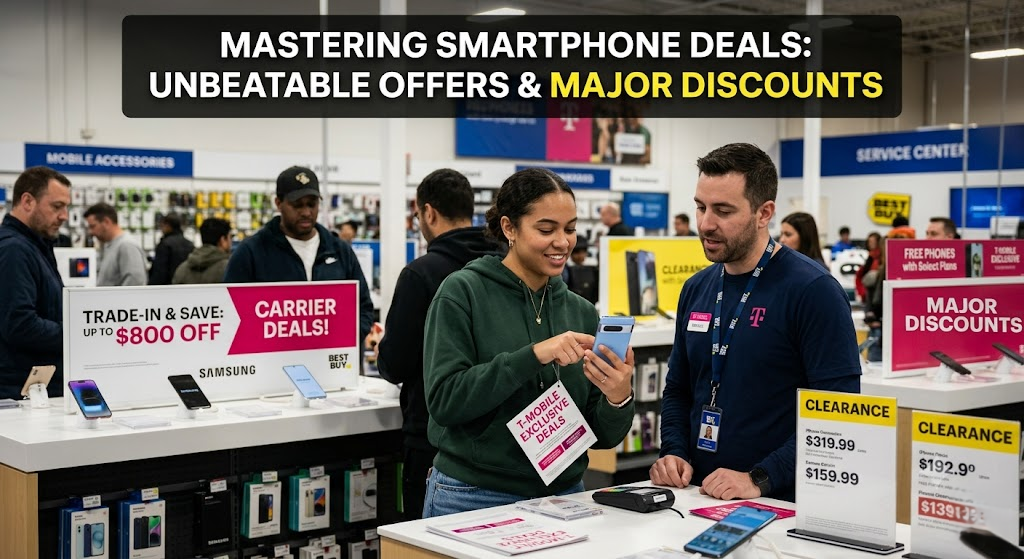
One of the biggest mistakes consumers make is buying a new phone exactly when their old one breaks, which leaves them at the mercy of whatever retail prices happen to be that day. To truly score a massive discount, you need to align your purchase with the industry’s predictable sales calendar.
Black Friday and Cyber Monday
It might sound like a cliché, but the late November shopping frenzy remains the undisputed king of smartphone deals. Retailers like Best Buy, Amazon, and Walmart, alongside direct manufacturers and cellular carriers, aggressively compete for your holiday spending dollars. During Black Friday and Cyber Monday, you can expect to see direct cash discounts on unlocked phones, heavily boosted trade-in values, and bundled accessories like free wireless earbuds or smartwatches. Retailers often slash prices on Android devices significantly during this period, while Apple devices tend to see strong gift card promotions bundled with the purchase of a device at retail price.
Amazon Prime Day
Typically held in mid-July, Prime Day has effectively manufactured a second major shopping holiday right in the middle of the summer slump. While Prime Day is phenomenal for Amazon’s own hardware, it has also become a battleground for unlocked Android devices. Brands like Motorola, Google, and Samsung frequently offer steep, limited-time discounts. Because other major retailers like Target and Best Buy run counter-sales to compete with Amazon, July has quietly become one of the smartest times of the year to hunt for a mobile upgrade.
The “Previous Generation” Launch Window
If you want top-tier performance but refuse to pay top-tier prices, your best strategy is to purchase last year’s flagship exactly when the new one is announced. The tech industry runs on a very strict, predictable clock. Apple almost universally announces new iPhones in September. Samsung unveils its Galaxy S series in January or February, and Google typically reveals its new Pixel lineup in the fall. The moment a new device is unveiled, the previous model officially becomes “old tech” in the eyes of the market, even though its processor, camera, and battery are still incredibly capable. Retailers desperately want to clear out this existing inventory to make room for the new boxes. By purchasing a phone that has just been replaced, you can easily save anywhere from two hundred to four hundred dollars while still getting a brand-new device that will receive software updates for years to come.
Decoding Carrier Deals: The “Free” Phone Illusion
You have undoubtedly seen the flashy television commercials: “Get the newest smartphone absolutely free!” It sounds too good to be true, and from a purely financial perspective, it usually is. Understanding how these carrier promotions operate is crucial to determining if you are actually getting a deal or just signing up for a very expensive financing plan.
The Reality of Bill Credits
When a major network carrier like Verizon, AT&T, or T-Mobile offers you a heavily discounted or free device, they do not simply hand you a phone and wave goodbye. Instead, they require you to finance the phone on an installment plan—usually stretching out over 36 months. The carrier then applies a monthly “bill credit” to your account that offsets the cost of the phone. While this effectively makes the device free on a month-to-month basis, it serves as a modern-day contract. If you decide to switch carriers, cancel your line, or upgrade early before those 36 months are up, the remaining balance of the phone immediately becomes due, and the promotional credits vanish instantly.
Premium Unlimited Data Requirements
The other major catch with aggressive carrier smartphone deals is the plan requirement. To qualify for that “free” flagship device, carriers almost always require you to be enrolled in their most expensive, top-tier unlimited data plans. If you are currently on a legacy plan or a cheaper basic tier, the carrier will force you to upgrade. Over the course of three years, the extra twenty or thirty dollars you pay per month for that premium unlimited plan will often eclipse the retail value of the phone you supposedly got for free. Before jumping on a carrier deal, calculate the total cost of ownership: multiply the required monthly plan cost by 36 months. You might find that buying an unlocked phone and using a cheaper service plan is far more economical.
Unlocked Phones and MVNOs: The Long-Term Savings Strategy
For those who prefer absolute financial freedom, purchasing an “unlocked” smartphone directly from the manufacturer or a major retailer is the ultimate power move. An unlocked phone is not tethered to any specific carrier’s network, meaning you can swap SIM cards or eSIMs at will. This opens the door to using Mobile Virtual Network Operators (MVNOs).
MVNOs are smaller wireless providers—such as Mint Mobile, Visible, US Mobile, and Cricket Wireless—that lease network space from the big three towers (AT&T, Verizon, and T-Mobile) and sell access to consumers at a massive discount. While a post-paid plan from a major carrier might cost seventy dollars a month, an MVNO can provide identical coverage for as little as fifteen to thirty dollars a month. Buying a smartphone outright during a seasonal sale and pairing it with a cheap MVNO plan requires a higher upfront cost, but it will save you thousands of dollars over the lifespan of the device.
Mastering the Trade-In Ecosystem
The modern smartphone market relies heavily on the trade-in economy. Manufacturers have realized that the easiest way to convince a consumer to drop a thousand dollars on a new device is to offer them an inflated value for their old one.
To maximize your trade-in value, you must keep your current device in pristine condition. A high-quality screen protector and a rugged case are not just accessories; they are investments in your phone’s future resale value. A single scratch on the screen or a crack on the back glass can instantly slash hundreds of dollars off a trade-in quote.
It is also vital to shop around for trade-in quotes. Do not just blindly accept what your carrier offers. Check the direct trade-in values at Apple, Samsung, or Google. Then, compare those numbers against third-party buyback sites like Decluttr or Gazelle. Finally, check peer-to-peer marketplaces like Swappa. Often, selling your phone directly to another person on a dedicated tech marketplace will yield twenty to thirty percent more cash than trading it in to a corporate entity, giving you more liquid cash to put toward your new smartphone deal.
The Hidden Goldmine: Certified Refurbished
There is an unwarranted stigma surrounding the word “refurbished.” Many consumers mistakenly equate refurbished with “used and broken.” In reality, buying certified refurbished tech is arguably the smartest way to secure a massive smartphone deal without sacrificing quality.
A certified refurbished device is a phone that was returned to the manufacturer—often because the original buyer simply changed their mind within the two-week return window. By law, it cannot be resold as new. The manufacturer inspects the device, replaces the battery with a brand new one, replaces the outer shell so it looks flawless, and repackages it with fresh accessories and a full one-year warranty.
Apple’s Certified Refurbished store, for example, is legendary for its strict quality control. The phones arrive looking entirely brand new, complete with pristine packaging, but they carry a discount of fifteen to twenty percent off retail. Samsung runs a similar “Certified Re-Newed” program. If you are willing to look past the official brand stores, platforms like Amazon Renewed and Back Market offer rigorous testing standards and excellent return policies, allowing you to buy flagship phones from one or two years ago for literal fractions of their original launch price.
The Mid-Range Renaissance: Rethinking Your Needs
Perhaps the best way to secure a smartphone deal is to rethink what kind of smartphone you actually need. Five years ago, buying a mid-range phone meant suffering through sluggish performance, terrible cameras, and screens that were barely legible in the sunlight. Today, the landscape is radically different. We are currently experiencing a mid-range renaissance.
Devices like the Google Pixel A-series, the Samsung Galaxy A-series, and the iPhone SE offer incredibly robust experiences for prices hovering between four hundred and five hundred dollars. Modern mid-range phones now feature OLED displays, fast refresh rates, multi-day battery life, and camera sensors that rely on advanced computational photography to take stunning photos. Unless you are a professional mobile gamer, a demanding content creator who shoots massive video files, or a hardcore tech enthusiast who needs bleeding-edge hardware, a mid-range phone will likely handle your daily tasks—texting, social media, web browsing, and photography—with absolute ease. Opting for a mid-tier device rather than a premium flagship is an instant, guaranteed way to “save” five hundred dollars or more.
Tools of the Trade: Tracking the Best Prices
Even with all this knowledge, manually checking websites every day is tedious and inefficient. Savvy deal hunters automate the process using browser extensions and price tracking tools.
- CamelCamelCamel: If you are shopping on Amazon, this tool is indispensable. You can paste the URL of any unlocked smartphone into their tracker, and it will generate a historical graph of that item’s price. This immediately reveals whether a “sale” is actually a real discount or just an artificially inflated retail price that has been briefly lowered to look like a deal.
- Slickdeals: This is a community-driven deal sharing platform. Users post deals they find, and the community votes them up or down based on how good they are. Setting up a “Deal Alert” for terms like “unlocked iPhone” or “Samsung Galaxy” will trigger an email notification the second a highly-rated promotion is posted.
- Honey or Capital One Shopping: These browser extensions automatically test dozens of promo codes at checkout and track price drops across multiple retailers, ensuring you are never leaving money on the table.
Final Thoughts
The perfect smartphone deal is out there, but it requires patience and strategy. Avoid the trap of impulse buying when your current device acts up. Instead, anticipate your upgrade cycles. Wait for major retail holidays or new product launch windows to capitalize on price drops. Carefully calculate the long-term costs of carrier installment plans versus buying unlocked and using a cheaper monthly service. Protect your current phone to maximize its trade-in value, and never overlook the incredible value proposition of certified refurbished hardware or modern mid-range devices.
By shifting your perspective from being a passive consumer to an active, informed deal hunter, you can break the cycle of overpaying for mobile technology. Keep your eyes open, utilize price-tracking tools, and when that perfectly timed, highly discounted price finally hits your screen, you will be fully prepared to make your move.