
 salehunter.net
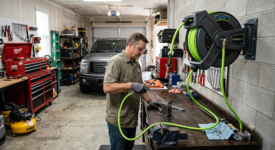
 Picture this scenario: you are right in the middle of a time-sensitive automotive repair, a weekend woodworking project, or simply airing up the tires on your family vehicle. You reach for your pneumatic impact wrench or tire inflator, and instead of experiencing a seamless workflow, you find yourself wrestling with a chaotic, tangled mess of an air hose. It is covered in shop dust, stubbornly kinked, and presents a massive tripping hazard across your garage floor. If this sounds familiar, it is time to revolutionize your workspace. Scoring a top-tier retractable air hose reel sale is not just about saving a few dollars; it is an investment in safety, efficiency, and the sheer joy of a well-organized shop.
For decades, professional mechanics and serious DIY enthusiasts have recognized that air tools are only as good as the air supply system backing them up. However, the true bottleneck in most compressor setups is not the horsepower of the compressor itself, but rather the hose management. A high-quality auto-rewind reel eliminates the frustrating ritual of manually coiling and uncoiling heavy hoses. In this comprehensive breakdown, we will explore exactly what makes a premium reel worth your hard-earned money, how to decode the specifications, and strategies to ensure you get the absolute best value during promotional events and seasonal discounts.
The Hidden Costs of Poor Air Hose Management

Before diving into the technical specifications, it is crucial to understand why upgrading to a retractable system is essential. Many hobbyists hesitate to spend money on shop infrastructure, preferring to buy new tools instead. However, sticking with a manual, loose hose setup carries hidden costs that accumulate over time.
- Safety Hazards: According to workplace safety statistics, slips, trips, and falls are among the leading causes of injury in both professional and home garages. A loose hose snaking across the floor is an accident waiting to happen. A retractable reel keeps the floor clear, dramatically reducing liability and the risk of injury.
- Premature Wear and Tear: Hoses left on the floor get stepped on, driven over, and exposed to harsh chemicals, oil, and UV light. This degrades the material, leading to microscopic leaks and eventual catastrophic blowouts. Storing the hose inside a protective housing exponentially increases its lifespan.
- Lost Time and Frustration: Time spent untangling a knotted hose or carefully looping it over a hook at the end of a long day is wasted time. An automatic rewind mechanism pulls the hose back in seconds, allowing you to wrap up your project and turn out the lights without the extra hassle.
Decoding the Anatomy: What to Look for During a Retractable Air Hose Reel Sale
When you spot an attractive price tag online or at your local hardware store, it is easy to make an impulse purchase. However, not all reels are created equal. The internal mechanics, housing materials, and the hose itself dictate whether the product will last a lifetime or fail after a single season. Here are the critical components you need to evaluate.
The Rewind Mechanism and Spring Quality
The heart of any retractable reel is the internal torsion spring. Cheaper models often use low-grade steel springs that lose their tension over time, resulting in a hose that refuses to retract the last five or ten feet. Premium brands utilize high-tensile, heavy-duty enclosed drive springs that provide a smooth, consistent pull for thousands of cycles. Additionally, look for a multi-position ratcheting gear. This allows you to lock the hose at exactly the length you need, rather than fighting the spring tension while you work.
Housing Materials: Steel vs. High-Impact Polypropylene
The outer shell of the reel protects the internal components and the hose. Heavy-duty steel housings, often powder-coated to resist rust and corrosion, are the gold standard for industrial environments and professional automotive shops. They can take a beating and survive accidental impacts. On the other hand, high-impact polypropylene (hard plastic) housings have become incredibly popular for home garages. They are lightweight, completely impervious to rust, and often feature a more enclosed design that keeps dust and debris out of the spool mechanism.
Roller Guides and Swivel Joints
As the hose enters and exits the housing, it passes through an opening. Look for four-way directional rollers. These reduce friction and prevent the hose material from wearing out against the edge of the reel, regardless of what angle you are pulling from. Inside the reel, the swivel joint connects the rotating spool to your fixed air compressor line. Solid brass or machined aluminum swivels are mandatory. Avoid any reel that utilizes plastic swivel components, as they are guaranteed to leak under high pressure or cold temperatures.
Selecting the Perfect Hose Material
Even the most robust reel is useless if the hose attached to it is frustrating to use. During a major retractable air hose reel sale, you will typically encounter three main types of hose materials. Understanding the differences will dictate your buying decision.
- Standard PVC (Polyvinyl Chloride): This is the most budget-friendly option. PVC is lightweight and easy to clean. However, its major downfall is flexibility. In cold weather, PVC hoses become incredibly stiff, retaining their coiled “memory” and becoming difficult to maneuver around tight corners.
- Heavy-Duty Rubber: The traditional choice for professional shops. Rubber hoses lay perfectly flat on the ground, do not kink easily, and remain flexible even in sub-zero temperatures. The downside is that they are heavy, making them harder to drag around, and they can leave scuff marks on painted surfaces.
- Hybrid Polymer Blends: The modern sweet spot. Brands have developed hybrid materials (like polyurethane blends) that offer the extreme flexibility and cold-weather performance of rubber, but with the lightweight and non-marring properties of PVC. If you find a sale on a reel featuring a premium hybrid hose, it is usually the smartest purchase for a mixed-use garage.
Sizing It Up: Length and Diameter Requirements
Bigger is not always better when it comes to air hoses. You need to match the specifications of the reel to your specific air compressor and the tools you intend to run. The two primary measurements to consider are the inner diameter (ID) of the hose and the total length.
For the vast majority of DIYers and light automotive work, a 3/8-inch inner diameter hose is the absolute standard. It provides more than enough Cubic Feet per Minute (CFM) to power nail guns, impact drivers, die grinders, and paint sprayers. If you are running heavy-duty 3/4-inch or 1-inch impact wrenches for diesel mechanics or commercial equipment, you will need to step up to a 1/2-inch hose to prevent air starvation, though these reels are significantly larger and more expensive.
Regarding length, 50 feet is universally considered the ideal sweet spot for a standard two-car garage. It provides enough reach to get out to the driveway to fill up tires without leaving a massive amount of hose coiled inside the housing. While 100-foot reels are available, they require a massive housing and a very strong recoil spring, which can be overkill for residential setups. Always check the pressure rating as well; a standard rating of 300 PSI is sufficient for almost all single-stage and two-stage shop compressors.
Strategic Timing: How to Maximize Savings
Finding a phenomenal retractable air hose reel sale requires a bit of strategic patience. Hardware retailers and automotive suppliers run distinct promotional cycles throughout the year. If you know when to look, you can easily save between twenty to forty percent off the retail price, or score bundled deals that include premium fittings and accessories.
The first major window occurs during the “Spring Black Friday” events hosted by major big-box home improvement stores, typically in April. As people prepare their garages for spring cleaning and summer projects, retailers aggressively discount shop organization gear. Father’s Day in June is another prime target, with heavy promotions focused on tool gifts. Naturally, traditional Black Friday and Cyber Monday in November offer deep discounts, though you may be dealing with colder weather and less immediate motivation to install garage infrastructure.
Beyond seasonal timing, pay attention to what is actually included in the sale. A lower price tag is great, but true value is found in the details. Does the sale include a high-quality lead hose (the short hose that connects your compressor to the reel)? Are the quick-connect couplers included, or will you have to spend an extra twenty dollars buying them separately? Furthermore, always verify the warranty. A highly discounted reel with a 90-day warranty is a poor investment compared to a slightly more expensive reel backed by a 2-year or lifetime guarantee against manufacturer defects.
Installation Best Practices for Maximum Efficiency
Once you have taken advantage of a great sale and your new reel has arrived, proper installation is the final hurdle. The location you choose will dictate how useful the tool actually is. Never mount a heavy reel directly into drywall. These units endure significant dynamic loads as you pull and jerk the hose. You must locate a solid wood stud or use heavy-duty masonry anchors if mounting to a concrete block wall.
Ceiling mounting is an excellent option for saving wall space and allowing a 360-degree pull radius, but it requires a reel specifically designed for overhead mounting with an adjustable guide arm. If you are mounting on a wall, position the reel at about chest height. This makes it easy to reach the hose stop and comfortable to guide the hose back in during the rewind process. Ensure that your lead hose is not stretched tight; there should be a gentle loop between your compressor manifold and the reel inlet to prevent strain on the brass fittings.
Maintaining Your Investment
A high-quality air hose reel is a mechanical device, and like all shop tools, it requires a minimum amount of maintenance to ensure decades of reliable service. First, keep the hose clean. While wiping down fifty feet of hose sounds tedious, running a damp rag over it as it retracts prevents dirt and grit from entering the internal housing. Over time, heavy grit can bind the internal rollers and wear down the rewind gear.
During extreme winter months, if your garage is unheated, be gentle with the first few pulls. Even cold-weather rated hoses will be stiffer, and violently yanking the hose can put undue stress on the internal plastic gears of the ratchet mechanism. Finally, check your inlet and outlet fittings periodically with a spray bottle of soapy water. Small air leaks at the swivel joint will cause your compressor to cycle on unnecessarily, wasting electricity and putting wear on your compressor motor. If bubbles form, a quick tightening or a fresh wrap of Teflon tape is usually all it takes to resolve the issue.
Transforming your workspace from a cluttered hazard zone into a highly efficient environment is an incredibly satisfying process. By understanding the mechanical components, selecting the right materials for your climate and workflow, and timing your purchase to align with a major retractable air hose reel sale, you are making one of the smartest upgrades possible for your garage or professional shop. Stop fighting your equipment and start enjoying the seamless, professional workflow you deserve.