
 salehunter.net
 For decades, the American holiday shopping season was defined by a single, chaotic day. The Friday following Thanksgiving was a cultural event marked by pre-dawn alarms, long lines snaking around department stores, and a frantic rush through automatic doors to secure highly coveted doorbusters. However, the retail landscape has undergone a dramatic transformation over the last few years. The traditional shopping holiday has evolved from a frantic 24-hour sprint into a month-long marathon. Today, pre-Black Friday deals have become the main event, fundamentally altering how, when, and why consumers spend their holiday budgets.
This shift did not happen overnight, nor is it merely a marketing gimmick. It represents a calculated response to shifting consumer psychology, complex global supply chain realities, and the rise of dominant e-commerce ecosystems. For the modern consumer, understanding the mechanics of early November sales is no longer optional—it is the cornerstone of maximizing holiday savings. By navigating these early promotions strategically, shoppers can avoid the stress of stock shortages, bypass shipping bottlenecks, and secure genuine discounts well before the Thanksgiving turkey is even carved.
The Phenomenon of Black Friday Creep
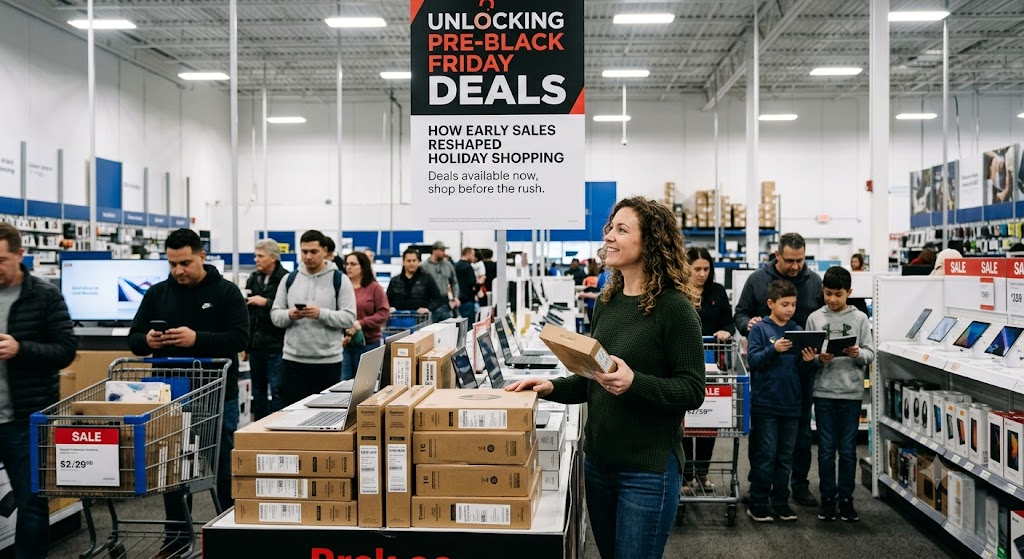
Industry analysts often refer to this prolonged promotional period as “Black Friday Creep.” Initially, retailers began opening their doors late on Thanksgiving evening, pushing the starting line back by just a few hours. Then, online retailers started launching their digital deals the Wednesday before Thanksgiving. Eventually, major retail giants like Amazon, Walmart, and Target realized that confining their most lucrative sales period to a single weekend was an unnecessary logistical bottleneck.
The turning point for pre-Black Friday deals occurred significantly around 2020 and 2021. Facing unprecedented global supply chain disruptions, retailers were terrified of container ships stuck at ports and bare shelves during the critical holiday rush. To mitigate this risk, they actively encouraged consumers to shop in October and early November. They offered massive discounts early to clear out existing inventory and smooth out the fulfillment curve for their warehouses and shipping partners like UPS, FedEx, and the USPS.
What began as a logistical necessity quickly became the new retail standard. Consumers discovered that they loved the convenience of shopping early. They enjoyed spreading their holiday expenses over multiple paychecks rather than taking a massive financial hit in a single weekend. Retailers, in turn, discovered that a longer promotional window resulted in higher overall seasonal revenue and reduced the immense pressure on their digital infrastructure. Consequently, October and early November are now saturated with highly competitive promotional events designed to capture consumer spending before the traditional shopping weekend even begins.
The Secret of the “Derivative” Product
To truly understand the value of pre-Black Friday deals, consumers must be aware of one of the retail industry’s most closely guarded secrets: the derivative product. When you flip through a traditional Black Friday circular and see a name-brand 65-inch television selling for an impossibly low price, you are rarely looking at the manufacturer’s flagship model.
Major electronics manufacturers often partner with big-box retailers to produce specific “Black Friday” models. These derivative televisions, laptops, and appliances may look identical to the premium versions, but they are internally downgraded to hit that rock-bottom price point. They might feature fewer HDMI ports, lower-quality display panels, inferior internal components, or a lack of smart features. These products are manufactured specifically for the November rush and are often discontinued immediately afterward.
This is where early shopping becomes incredibly advantageous. Pre-Black Friday deals are typically focused on discounting standard, high-quality inventory. Retailers use early November sales to clear out excess stock of their premium lines to make physical space in their stockrooms for the influx of cheap, derivative holiday items. By shopping early, consumers are much more likely to secure a substantial discount on a top-tier product that will last for years, rather than wasting their money on a stripped-down model designed to last just past the warranty period.
Why Pre-Black Friday Beats the Main Event
Beyond avoiding inferior products, there are several distinct advantages to locking in your holiday purchases during the early weeks of November. The traditional shopping weekend is increasingly becoming a time for supplementary purchases rather than the primary shopping haul.
1. Inventory Security and Guaranteed Availability
The most frustrating aspect of holiday shopping is the dreaded “Out of Stock” notification. Popular items—whether it is the latest video game console, a viral beauty product, or the season’s hottest toy—will inevitably sell out. By waiting for the deepest possible discount on the day after Thanksgiving, you run a massive risk of missing out on the item entirely. Early sales offer the perfect balance: a respectable discount combined with the peace of mind that the item is physically in the warehouse and ready to ship to your door.
2. Holiday Price Match Guarantees
One of the main reasons consumers hesitate to buy early is the fear that the item will be cheaper later in the month. Retailers have brilliantly countered this anxiety by introducing comprehensive holiday price match guarantees. Major players like Target and Best Buy now offer policies stating that if you purchase an item during an early sale and the price drops lower before Christmas, they will refund you the difference. This completely removes the risk of early shopping. You secure the inventory immediately, but you still benefit from the lowest possible price of the season. Always check the specific terms and conditions of a retailer’s price match policy, as some doorbusters and third-party sellers are excluded.
3. Easing the Shipping Crunch
The logistics network in the United States faces extreme strain between Black Friday and Christmas Eve. Weather delays, labor shortages, and sheer volume can turn two-day shipping into two-week shipping. Ordering items during pre-Black Friday deals ensures that your packages are navigating the postal system before the absolute peak of the holiday rush. If a package is lost or delayed when ordered in early November, you have ample time to contact customer service and arrange a replacement. If a package goes missing on December 15th, your options are severely limited.
Category Breakdown: What to Buy Early
Not all product categories are treated equally during the extended holiday promotional period. Savvy shoppers track historical pricing data to know exactly which items to target during early sales and which to hold off on.
Consumer Electronics and Smart Home Devices
As mentioned, this is the prime time to buy standard, high-quality electronics. Look for excellent deals on Apple products, premium Samsung and Sony televisions, and smart home ecosystems from Google and Amazon. Tech companies frequently use early November to discount previous-generation models right after announcing their new fall lineups. You can often find incredible pre-Black Friday deals on noise-canceling headphones, smartwatches, and tablets that are only one generation behind the bleeding edge.
Large Appliances and Home Goods
Retailers like Home Depot, Lowe’s, and Best Buy treat November as essentially a month-long appliance sale. If you need a new refrigerator, washer, or dryer, the deals available in the first two weeks of November are generally identical to the prices offered later in the month. Furthermore, buying large appliances early means you have a better chance of scheduling a convenient delivery and installation date before the holiday hosting season kicks into high gear. High-end vacuums, espresso machines, and stand mixers also see steep discounts early in the month.
Apparel, Footwear, and Winter Gear
Clothing retailers use early November to push heavy winter gear. You will frequently find store-wide percentage-off sales (e.g., 40% off everything) well before Thanksgiving. This is the optimal time to purchase expensive, staple wardrobe items like wool coats, waterproof boots, and cashmere sweaters. By late November, the most common sizes (medium and large) and the most popular colors are usually picked clean from both physical and digital racks.
Retailer Strategies: Who Dominates Early November?
Understanding the specific strategies of the major retail players can help you plan your shopping calendar effectively. Each big-box store has its own unique approach to the early holiday season.
- Amazon: Amazon has essentially created its own early shopping holidays, such as the Prime Big Deal Days in October. Throughout November, they rely heavily on “Lightning Deals”—time-sensitive, limited-quantity discounts that keep consumers obsessively checking the app. Amazon is the undisputed leader in early discounts on their proprietary devices (Echo, Kindle, Fire TV).
- Target: Target is famous for its “Deal Days,” which often run concurrently with Amazon’s major sales events. Target excels in bundling deals, offering significant gift card bonuses with the purchase of household essentials or electronics. Their Target Circle membership program also offers personalized, early access discounts to loyal shoppers.
- Walmart: Walmart’s “Deals for Days” events are usually structured in phases throughout November. They drop a wave of deep discounts early in the month, followed by another wave mid-month. Walmart is particularly aggressive with early discounts on toys, affordable electronics, and home goods.
- Best Buy: Best Buy leans heavily into its membership tiers (My Best Buy Plus and Total). They frequently lock their most aggressive pre-Black Friday deals behind these paywalls, offering early access and deeper discounts to subscribers. For frequent tech buyers, the cost of the membership is often offset by the early holiday savings alone.
Digital Defense: Avoiding Scams During Early Deal Drops
The unfortunate reality of the extended holiday shopping season is that it also provides an extended window for cybercriminals to operate. As inboxes flood with promotional emails and social media feeds fill with targeted advertisements, consumers must remain vigilant.
Phishing scams are incredibly prevalent during pre-Black Friday sales. Scammers will send highly sophisticated emails that look identical to official communications from Amazon, PayPal, or FedEx, claiming there is an issue with your account or a delayed shipment. These emails contain malicious links designed to steal your login credentials or credit card information. Always navigate directly to the retailer’s official website or app rather than clicking links in unsolicited emails.
Furthermore, be wary of deals advertised on social media that seem too good to be true. Scammers frequently create fake e-commerce storefronts that perfectly mimic legitimate brands. They will advertise massive discounts on highly sought-after items, collect your payment information, and never ship the product. Stick to established, reputable retailers during the holiday season. If you are purchasing from a lesser-known boutique online, thoroughly research their reviews on independent consumer protection sites before entering your credit card details.
Advanced Tools for the Modern Deal Hunter
To truly master pre-Black Friday deals, you need to rely on more than just gut feeling and flashy advertisements. The modern consumer has access to a wealth of digital tools designed to expose fake discounts and highlight genuine bargains. The most valuable asset in your shopping arsenal is a price tracking tool.
Browser extensions and websites like CamelCamelCamel (for Amazon) or Keepa allow you to view the entire pricing history of a specific product. Retailers are infamous for artificially inflating the “list price” of an item in late October just to offer a massive “discount” in early November. A price tracker will immediately show you if that $200 television was already selling for $200 back in August, revealing the current pre-Black Friday deal as an illusion. By combining historical data with an understanding of retail trends, you can navigate the early holiday sales with confidence, securing the best products at the lowest legitimate prices without the stress of the traditional shopping rush.
Conclusion
The era of treating the Friday after Thanksgiving as the sole opportunity for holiday savings is officially over. By embracing the reality of pre-Black Friday deals, consumers can transform a highly stressful shopping experience into a methodical, budget-friendly process. Start your research early, set clear financial boundaries, utilize price-tracking technology, and take advantage of holiday price match guarantees. By acting decisively in early November, you can secure the inventory you need, avoid the logistical nightmare of late shipping, and spend the actual holiday weekend relaxing with family rather than fighting crowds in a big-box retail store.


