 salehunter.net
 Every American medicine cabinet shares a common resident: that familiar little green and yellow tube. Whether you are dealing with a kitchen burn, a scraped knee from a driveway bike spill, or a stubborn paper cut, topical antibiotics are a non-negotiable household staple. However, the next time you walk down the first-aid aisle at your local pharmacy, you might experience a mild case of sticker shock. A standard one-ounce tube of name-brand Neosporin can easily set you back $8 to $12 depending on your zip code.
When inflation pinches the household grocery budget, paying ten dollars for an ounce of ointment feels tough to swallow. The good news? You almost never have to pay full retail price for it. Because first-aid ointments sit at the intersection of consumer retail and over-the-counter healthcare, they are attached to a massive ecosystem of rebates, loyalty rewards, and tax savings. This guide explores every legitimate avenue to secure a Neosporin discount, alongside a few insider retail secrets that will permanently lower your out-of-pocket first-aid costs.
The Economics of the Green Tube: Why Does It Cost So Much?
To understand how to get a discount on Neosporin, it helps to understand why the baseline price is high. Introduced to the market in the 1950s, Neosporin is a “triple antibiotic” ointment consisting of three active antimicrobial agents: bacitracin zinc, neomycin sulfate, and polymyxin B sulfate.
When you buy the name brand, you are not just paying for those three synthesized compounds; you are paying for brand heritage, patented suspension bases (like their proprietary *Helioblock* technology designed to minimize scarring), and massive national television advertising campaigns. In 2023, Johnson & Johnson officially spun off its consumer health division into a new publicly traded company named Kenvue. With a new corporate parent managing the brand, marketing strategies—and more importantly, digital coupon distribution channels—have shifted significantly.
6 Actionable Ways to Get a Legit Neosporin Discount
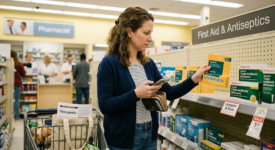
If you are standing in the aisle right now or putting together an online pickup order, work your way down this checklist of savings strategies.
1. Tap into the Kenvue Care Club Portal

Because of the recent corporate restructuring, many old Johnson & Johnson printable coupon bookmarks are dead links. Today, the direct hub for manufacturer discounts is the Kenvue Care Club. By registering a free account on the official Neosporin or brand-family website, you get direct access to digital manufacturer coupons—usually ranging from $1.00 to $2.50 off any single product. Furthermore, the portal operates a points-for-purchases system where uploading your standard grocery store receipts earns you digital gift cards toward future healthcare buys.
2. Master “The Pharmacy Triangle” Stacking Method
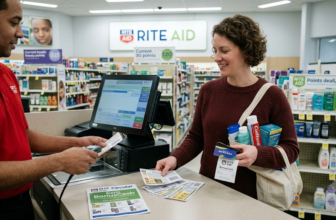
In the United States, the lowest possible price on over-the-counter topicals is almost always achieved at the big three pharmacies (CVS, Walgreens, or Rite Aid), rather than big-box supermarkets—provided you stack three specific discounts:
- The Store Sale: Wait for a “Buy One, Get One 50% Off” (BOGO) or “Buy 2, Get $5 in Store Cash” weekly circular promotion.
- The Digital Clip: Open the pharmacy’s smartphone app and clip the digital manufacturer coupon to your loyalty account.
- The Store Reward: Pay for the balance using previously earned CVS ExtraBucks or Walgreens Cash.
When executed correctly during a seasonal sale, this stacking method routinely brings the net cost of a $9.49 tube down to roughly $2.10.
3. Time Your Purchase to “First-Aid Season”
Retail algorithms dictate coupon releases. Manufacturers flood the Sunday newspaper inserts (like *Save* and *SmartSource*) and digital cashback apps with Neosporin discounts twice a year:
- Late May through June: Coinciding with Memorial Day, the start of summer camp prep, and National Safety Month.
- Late August through September: Coinciding with the Back-to-School rush and fall youth sports registrations.
If you buy your year’s supply of ointment during these two windows, your baseline price will automatically sit 20% lower than it does in November or February.
4. Unlock the Amazon “Subscribe & Save” Tier Hack
If you prefer online shopping, Amazon frequently attaches a “Clip 20% Off Coupon” box directly to the Neosporin product listing. However, the real discount relies on the checkout mechanics. If you add the ointment to a monthly *Subscribe & Save* delivery tier that already contains five or more household items (like paper towels, trash bags, or coffee beans), Amazon lops an additional 15% off the top. Once the box arrives at your front door, you can go into your account settings and cancel the ointment subscription with zero penalty.
5. Turn Your Pre-Tax Dollars into an Instant Discount
One of the most overlooked ways to get a “discount” on Neosporin is to stop paying for it with your net post-tax income. Under the CARES Act passed in 2020, over-the-counter medications were permanently reinstated as eligible expenses for Flexible Spending Accounts (FSA) and Health Savings Accounts (HSA) without needing a doctor’s prescription.
Triple antibiotic ointment is 100% FSA/HSA eligible. If you sit in the 22% federal income tax bracket and face a 5% state income tax, using your FSA debit card at the pharmacy counter equates to an instant, guaranteed 27% discount on the product because you are buying it with money the government never touched.
6. Sweep the Receipt-Scanning Apps
Before throwing your pharmacy or grocery receipt into the trash, run it through cashback apps like Ibotta, Fetch Rewards, and Checkout 51. Kenvue frequently runs backend promotions with Ibotta offering $1.50 cash back per tube, with a redemption limit of three per receipt. If you bought a twin-pack on sale at Target, scanning that barcode can drop four dollars back into your PayPal account in sixty seconds.
The Ultimate “Discount”: Understanding Store Brands
No honest conversation about saving money on Neosporin is complete without addressing the elephant in the first-aid aisle: generic equivalents.
In the United States, over-the-counter drug manufacturing is heavily regulated by the FDA under a system called an OTC Monograph. This means that if a generic product packages itself as “Triple Antibiotic Ointment,” it is legally required to contain the exact same United States Pharmacopeia (USP) grade active ingredients, in the exact same milligram concentrations, as the branded original.
Here is a little-known retail industry fact: the vast majority of store-brand topicals in the U.S.—whether you buy them at Walmart (Equate), Target (Up&Up), CVS, or Kroger—are manufactured by a single third-party pharmaceutical powerhouse named Perrigo Company plc. When you buy the store brand, you are essentially buying the exact same active healing agents derived from the same regional manufacturing hubs, minus the corporate overhead.
The price discrepancy is staggering:
- Name Brand Neosporin + Pain Relief (1 oz): ~$9.79
- Target Up&Up Triple Antibiotic + Pain Relief (1 oz): ~$3.99
Opting for the generic gives you an immediate 59% discount without clipping a single coupon. The only scenario where the name brand justifies its price premium is if a patient has a documented sensitivity to generic petrolatum suspension bases, or if you are specifically purchasing one of Kenvue’s niche specialty variations, such as their *Lip Health* overnight formula or *Eczema Essentials* cream.
The Warehouse Club Trap: When Bulk Isn’t a Bargain
Shoppers looking for a steep discount often head straight to Costco or Sam’s Club. These warehouse giants typically sell a custom multi-pack containing two 1-ounce tubes and one 0.5-ounce travel tube (2.5 ounces total) for roughly $13.99. On a price-per-ounce basis ($5.59/oz), this crushes the standard grocery store unit price.
However, consumer advocates warn against the “expiration trap.” Ointments degrade over time; heat and oxygen slowly break down polymyxin B. The average shelf life of an unopened tube is 24 months, while an opened tube should ideally be replaced after 12 months. Unless you are purchasing first-aid supplies for a commercial job site, a daycare center, or a household with three active toddlers, the average single adult or couple will never finish 2.5 ounces of antibiotic ointment before the active ingredients lose their potency. Buying bulk ointment that gets tossed in the trash at the two-year mark yields a net negative discount.
Pro-Tips to Prevent Ointment Waste
Getting a great deal at the register is only half the battle; maximizing the usable life of the product protects your investment. Use these three habits to stretch your discounted tube:
- Never practice direct contact application: Never squeeze the tube directly onto an open wound or touch the plastic applicator tip with your bare finger. This introduces skin flora and bacteria into the nozzle, contaminating the remaining ointment and forcing an early trip to the trash can. Always squeeze a dab onto a sterile cotton swab.
- Mind the glovebox climate: Never store your primary tube of Neosporin in your vehicle’s glove compartment during the summer. Sustained temperatures over 86°F (30°C) cause the petrolatum base to separate permanently from the suspended zinc compounds, ruining the suspension.
- Use the “Toothpaste Roll”: Because ointment is highly viscous, casual squeezing leaves up to 15% of the product trapped in the upper shoulders of the tube. Invest $4 in a stainless steel rolling tube-squeezer (the kind artists use for oil paints) to flatten the aluminum packaging completely flat as you work your way up.
Frequently Asked Questions
Can I use a prescription GoodRx coupon to buy Neosporin?
Generally, no. GoodRx and similar pharmacy discount cards are calibrated for drugs processed through the National Drug Code (NDC) database via a physician’s prescription. Because Neosporin is sold over-the-counter, retail billing systems cannot apply a pharmacy prescription discount code to it, even if a doctor writes it down on a script pad for you.
Does Dollar Tree sell real Neosporin?
Extreme discount stores like Dollar Tree and Dollar General occasionally receive diverted name-brand stock, but they predominantly sell 0.33-ounce mini tubes of off-brand triple antibiotic ointment. If you find actual branded Neosporin at a deep-discount liquidator, check the crimped tail of the tube immediately; these stores frequently purchase close-out lots that are within 60 to 90 days of their legal expiration date.
Is it safe to use expired Neosporin if I got it on clearance?
According to medical professionals, using antibiotic ointment 3 to 6 months past its printed expiration date is unlikely to cause physical harm, as the petroleum jelly base acts as a formidable barrier against mold growth. However, the antibiotic properties will be compromised. You are effectively applying an expensive tube of plain Vaseline to the cut—which keeps the wound moist (the primary driver of fast healing), but offers zero guaranteed protection against staph or strep bacteria.