
 salehunter.net
 If you have ever been in a rush for a morning meeting only to find your favorite silk necktie crumpled in a drawer or lying on the dusty floor of your wardrobe, you already know the frustration of poor closet organization. Many professionals invest a significant amount of money in their neckwear collection, carefully selecting patterns, fabrics, and widths to match their tailored suits. Yet, when it comes to storing these essential accessories, they often resort to throwing them over a standard wire hanger or rolling them haphazardly into a sock drawer. The good news is that you do not need to spend a fortune to protect your wardrobe. Finding a highly functional and durable tie rack for closet cheap is entirely possible, and it can completely transform your morning routine while preserving the lifespan of your ties.
In this comprehensive guide, we will explore the best budget-friendly tie organization methods, evaluate different types of racks available on the market, offer some incredibly clever DIY solutions, and provide pro tips on how to arrange your accessories for maximum visual appeal and efficiency. Whether you own five ties or fifty, you will find a low-cost solution that fits your exact spatial needs and budget.
The Hidden Cost of Poor Tie Storage
Before we dive into the affordable solutions, it is crucial to understand why a dedicated tie rack is a necessity rather than a luxury. Ties are delicate. The vast majority of high-quality ties are made from silk, wool, cashmere, or linen. These natural fibers are highly susceptible to creasing, stretching, and permanent distortion if not stored correctly.
When you drape multiple ties over a single clothes hanger, several negative things happen. First, the ties at the bottom bear the weight and friction of the ties on top, which can crush the delicate rolled edges of a silk tie. Second, traditional hangers lack a non-slip coating. This means that the moment you brush past your clothes, half of your collection inevitably slides onto the closet floor, where they gather dust or get stepped on. Finally, leaving knots tied—a common habit for those who lack proper storage space—permanently stretches the fabric and ruins the inner lining of the tie.
Investing in a cheap tie rack eliminates these issues entirely. By giving each tie its own dedicated peg or slot, you allow the fabric to drape naturally. This helps any minor wrinkles acquired during the day to fall out on their own overnight, saving you from dangerous and fabric-damaging ironing sessions.
Top Styles of Cheap Tie Racks
When searching for a tie rack for closet cheap, you will quickly discover that affordability does not mean a lack of options. The market is flooded with ingenious designs that maximize space without draining your wallet. Here are the most popular and budget-friendly styles to consider:
1. The Cross X-Style Hanger
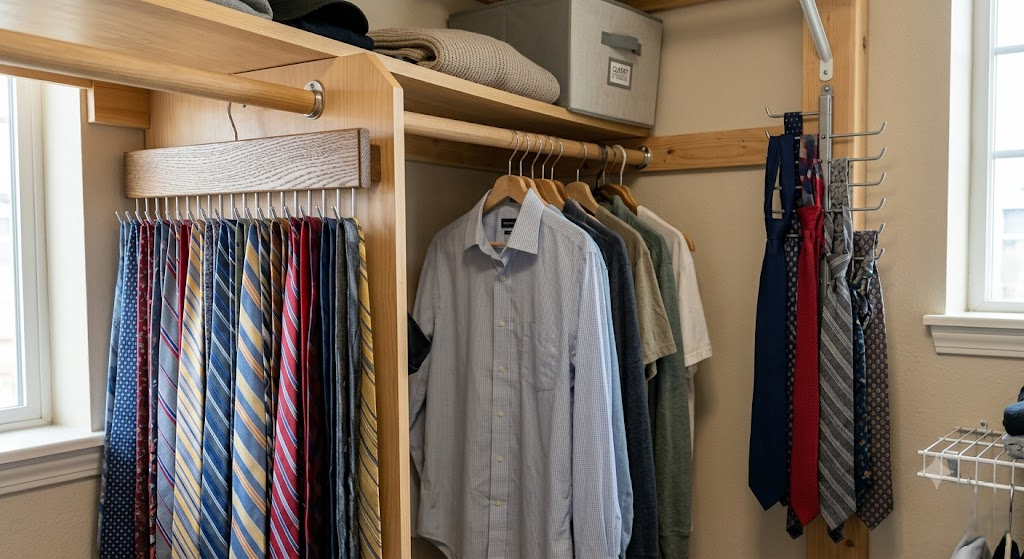
One of the most popular and economical choices is the X-style plastic or wood hanger. These racks look like a standard clothes hanger but feature two intersecting arms equipped with up to 20 or 30 small hooks. To use it, you simply hang it on your closet rod. When you need to select a tie, you pull the arms outward into an ‘X’ shape, giving you a full 360-degree view of your collection. Because they are often made from lightweight plastic or composite materials, these organizers routinely cost under ten dollars. They are excellent for small closets because they take up no more horizontal rod space than a single winter coat.
2. Wall-Mounted Peg Racks
If your closet rod is already overcrowded with shirts and suits, you need to utilize your vertical wall space or the inside of your closet door. Simple wooden or plastic wall-mounted racks are exceptionally cheap and highly effective. These typically consist of a horizontal strip with multiple pegs projecting outward. You can easily mount them using standard screws, or if you are renting and want to avoid drilling holes, you can use heavy-duty adhesive strips. A basic wooden peg rack adds a touch of classic elegance to your closet and can easily be found at discount home goods stores for just a few dollars.
3. Velvet-Coated Multi-Tier Hangers
Velvet hangers have taken the home organization world by storm, and tie racks have adopted this fantastic material as well. You can purchase tiered hangers that feature a soft, flocked velvet coating over a metal frame. The friction provided by the velvet is the ultimate solution for slippery silk ties. Even if you bump into the rack while reaching for a shirt, your ties will stay firmly planted. These are slightly more expensive than basic plastic models but still well within the budget-friendly category, offering a premium feel at a discount price.
4. Over-the-Door Organizers
For the true neckwear aficionado with a massive collection and a small budget, an over-the-door organizer is a game-changer. These racks hook securely over the top of your standard closet or bedroom door. They often feature multiple rows of metal or plastic loops. While they are sometimes marketed as shoe or jewelry organizers, specific tie-and-belt variants exist that can hold upwards of 50 to 100 ties. Utilizing the back of a door is one of the smartest ways to create storage out of thin air.
Brilliant DIY Tie Rack Solutions on a Shoestring Budget
If you are truly committed to saving money and love a good weekend project, you can easily create your own tie rack using items you probably already have lying around the house or can purchase for pennies at a local hardware store. Here are three highly effective DIY methods:
- The Shower Ring Hack: This is arguably the cheapest and most popular closet hack in existence. Purchase a pack of standard plastic or metal shower curtain rings (the kind that snap open and closed). Take a sturdy wooden clothes hanger and clip all the rings onto the bottom bar of the hanger. Thread one tie through each ring. A single hanger can hold 10 to 15 ties effortlessly. The whole project costs less than five dollars and takes three minutes to assemble.
- The Tension Rod Trick: If you have an empty alcove in your closet or a small gap between two shelving units, buy a cheap, short spring-loaded tension rod. Install the tension rod horizontally in the gap. You can now drape your ties directly over the rod. Because the rod is stationary, the ties are less likely to slide off compared to a swinging hanger. This creates a beautiful, boutique-style display for very little cash.
- Repurposed Pegboard: Hardware stores sell small squares of pegboard for incredibly low prices. Mount a small square of pegboard to your closet door or wall, and buy a pack of metal pegboard hooks. You can arrange the hooks in any pattern you like, customizing the spacing perfectly to fit both wide ties and skinny ties. As your collection grows, you simply plug in more hooks.
What to Look for When Buying a Budget Tie Rack
Even when you are shopping for a bargain, you want to ensure you are getting a product that will last and function properly. Keep the following factors in mind while browsing for your cheap closet organizer:
Material Matters
While plastic is the cheapest option, it can sometimes become brittle and snap over time, especially if overloaded. If you opt for plastic, look for ABS plastic, which has a bit more flex and durability. Metal wire racks are incredibly sturdy, but ensure they have a rubberized or vinyl coating on the tips; exposed metal edges can snag delicate silk and ruin a tie instantly. Wood offers the best aesthetic, but cheap wood can sometimes be unfinished and rough. If you buy a budget wooden rack, run your fingers over the pegs to ensure there are no splinters.
Capacity vs. Spacing
Do not just look at the total number of ties a rack can hold; look at the spacing between the hooks. A rack that claims to hold 50 ties might pack them so tightly together that you have to take off three ties just to get to the one you want. Look for a rack that offers at least half an inch of clearance between each hook for easy retrieval.
Swivel Functionality
If you are purchasing a hanger-style rack that sits on your closet rod, a 360-degree swivel hook is an absolute must-have feature. Closets can be dark and cramped. Being able to rotate the entire rack with a flick of your wrist allows you to see your entire collection without having to remove the rack from the closet.
How to Organize Your Ties Like a Menswear Professional
Once you have secured your cheap tie rack, the final step in your closet makeover is the actual organization process. Throwing your ties onto the new rack randomly will still result in a chaotic morning. To truly optimize your space and elevate your style, try implementing one of these professional sorting methods:
Sort by Color Gradient
Organizing your ties by color—moving from light to dark, or following the spectrum of the rainbow—is visually stunning. Not only does this make your closet look like a high-end menswear boutique, but it is incredibly practical. When you put on a navy suit and a light blue shirt, you instantly know to reach for the section of your tie rack housing the burgundy, gold, or complementary blue options.
Sort by Pattern and Texture
Another excellent method is to group your ties by their physical characteristics. Keep all your solid silk ties in one section, your striped collegiate ties in another, and your textured knit or wool ties in a third. Because different textures are suited for different seasons and occasions—wool for winter, linen for summer, silk for year-round formal wear—this method helps you quickly match your tie to the seasonality of your outfit.
Sort by Frequency of Use
If you have a strict weekly routine, pragmatic organization is the key. Place your five most-worn “workhorse” ties front and center on the rack. Keep your novelty ties, ultra-formal tuxedo bowties, and brightly colored statement pieces toward the back or on the lower pegs. This functional approach shaves precious minutes off your early morning routine.
Caring for Your Neckwear: Beyond the Rack
A great budget tie rack will do wonders for your closet, but maintaining your neckwear requires a few additional habits. First and foremost, never, under any circumstances, leave the knot in your tie when you take it off. The temptation to loosen the knot and slip it over your head to save time tomorrow is strong, but this is the fastest way to ruin a tie. It crushes the delicate inner lining (the interlining) and leaves permanent, ugly creases. Always fully untie the knot by reversing the steps you used to tie it, rather than just pulling the skinny end through.
Secondly, give your ties a rest. Just like leather dress shoes, fine ties need time to recover after a full day of being knotted and stretched. Try to rotate your ties so that you are not wearing the same one two days in a row. Hanging them on your newly acquired rack will allow the fibers to relax and return to their original shape.
Finally, address stains immediately. If you spill coffee or drop food on a silk tie, do not rub it with water, as this can permanently alter the dye and leave a water ring. Instead, gently dab the stain with a dry cloth and take it to a professional dry cleaner who specializes in neckwear as soon as possible.
Transform Your Closet Today
Achieving a perfectly organized wardrobe does not require hiring a professional closet designer or spending hundreds of dollars on custom cabinetry. The humble tie rack is a testament to the fact that smart design and clever engineering can solve everyday annoyances for just a few dollars. By utilizing vertical wall space, taking advantage of over-the-door solutions, or simply upgrading to a specialized multi-hanger, you can protect your valuable accessories and streamline your daily routine.
Whether you choose a sleek velvet-coated hanger, a classic wooden peg rack, or decide to build your own using tension rods and shower rings, adding a tie rack for closet cheap is a small upgrade that yields massive returns in both convenience and garment care. Take a few moments this weekend to evaluate your current storage situation, clear out the ties you no longer wear, and invest in an affordable organization system. Your closet—and your morning schedule—will thank you for it.