 salehunter.net
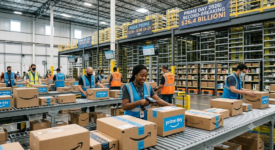
 The digital checkout registers have finally stopped spinning, the automated fulfillment center conveyor belts have cooled down, and the macroeconomic receipts are officially in. Amazon’s 12th annual Prime Day is in the books, leaving behind a staggering $26.4 billion footprint across the American e-commerce landscape. For 96 relentless hours between June 23 and June 26, millions of households across the United States navigated a complex labyrinth of algorithmic markdowns, limited-time inventory drops, and flash sales.
Yet, looking beneath the surface of this record-shattering 9.3% year-over-year retail surge reveals an American consumer base undergoing a profound psychological transformation. Shopping patterns from this year’s event show a fascinating divide: shoppers simultaneously splurged on next-generation wellness wearables while aggressively leaning on buy-now-pay-later financing to stock up on basic household groceries. Here is the inside story of how Prime Day 2026 played out, the pricing mechanics that governed the week, and the lingering deals you can still quietly capture.
The Great June Calendar Shift: Why Amazon Broke Tradition

Historically, American shoppers have associated mid-July with scorching summer heatwaves and cardboard smile-boxes piling up on front porches. But in 2026, Amazon executed a rare strategic pivot, pulling its flagship event forward into late June for only the second time in company history. Retail analysts point to a calculated corporate chess move designed to capture consumer liquidity right at the intersection of several massive cultural moments: the immediate aftermath of Father’s Day, the buildup to mid-summer sporting events, and early household preparations for the nation’s historic America 250 Independence Day celebrations.
By striking in June, Amazon effectively front-ran its traditional brick-and-mortar rivals. Retail giants like Walmart, Target, and Best Buy were forced to scramble, launching hastily assembled counter-promotions to defend their market share. More importantly, Amazon intercepted household vacation budgets before families hit the interstate highways and airports for peak July travel. The strategy paid off immensely, generating a four-day online spending volume that market data firm Adobe noted was roughly equivalent to combining the entire nation’s Black Friday and Cyber Monday totals from just a few years prior.
The Standout Tech Winners That Dominated Shopping Carts
While Amazon aggressively advertised discounts across more than 35 distinct product categories, the undeniable gravity of consumer spending concentrated heavily in premium personal electronics, automated smart home hardware, and advanced biometric health tracking.
Wearables and the Smart Ring Takeover
The undisputed runaway success of the 2026 event was the smart ring sector. The Oura Ring 4 saw unprecedented sales velocity after Amazon dropped exclusive member-only bundles featuring a massive $240 discount across select metallic finishes. Consumers looking for continuous, low-profile sleep and metabolic tracking increasingly bypassed traditional bulky wristbands. Meanwhile, smartwatch loyalists seized on the Apple Watch Series 11, which hit its lowest recorded retail price at 30% off MSRP, particularly in the highly sought-after 46mm GPS aluminum configurations.
Home Robotics and Kitchen Upgrades
American homeowners utilized the 96-hour promotional window to permanently outsource tedious household chores to silicon hardware. Top performers across the domestic vertical included:
- iRobot Roomba Max 705: This flagship mapping vacuum saw an aggressive 45% price slash (translating to over $400 in direct savings), winning over pet owners with its enhanced debris identification and automatic repeat-cleaning passes.
- Dreame L40 Ultra Gen 2: Capturing the high-end wet-dry floor maintenance market, this self-cleaning automated mopping station became one of the fastest-moving ticket items in the home appliance sector.
- Philips Sonicare 7300 Series: On the personal care front, this Bluetooth-enabled electric toothbrush—equipped with real-time SmarTimer and BrushPacer technology—dropped by 50%, proving that practical daily oral hygiene upgrades frequently outperform novelty gadgets.
- Our Place Wonder Oven: The photogenic 6-in-1 steam-infusion countertop oven captured the culinary design crowd with a steep 38% markdown.
The Reading Revolution: Kindle Colorsoft
Proprietary Amazon hardware historically serves as the loss-leader anchor for Prime Day, but 2026 marked a major evolutionary milestone for digital bibliophiles. The Kindle Colorsoft Signature Edition (boasting 32GB of onboard storage and seamless wireless charging) saw massive mainstream adoption. Unlike traditional monochrome e-readers, the glare-free 7-inch color e-ink display successfully converted graphic novel readers, cookbook collectors, and digital magazine subscribers who had previously resisted digital screens.
The Under-$100 Economy: Pragmatism Over Luxury
Despite the flashy tech blog headlines spotlighting four-figure OLED televisions and high-end gaming monitors, a massive sub-current of Prime Day 2026 was defined by strict financial discipline. With persistent grocery inflation still influencing supermarket checkout behavior, millions of American shoppers established a strict $100 ceiling on their discretionary purchases.
Within this budget tier, the $90 Fitbit Charge 6 emerged as an unexpected champion. Even well into its product lifecycle, its reliable AMOLED touchscreen, built-in GPS, and stress-tracking capabilities proved that everyday buyers are increasingly rejecting annual planned obsolescence in favor of proven utility. Similarly, high-capacity 25,000mAh portable power banks—capable of simultaneously fast-charging smartphones and USB-C laptops—flew off virtual shelves at the $96 mark. The Nutribullet Ultra 1200-watt personal blender rounded out the budget podium at exactly $100, appealing to health-conscious apartment dwellers looking to bypass $15 commercial smoothie shop prices.
The Lightning Deal Illusion and AI Pricing Mechanics
Successfully navigating Prime Day 2026 required significantly more technological sophistication than previous iterations, largely due to Amazon’s aggressive deployment of dynamic algorithmic pricing.
The Psychology of the 15-Minute Timer
Throughout the four-day marathon, Amazon dropped curated “Today’s Big Deals” three times daily—at midnight, 8:00 AM, and 1:00 PM Pacific Time. However, the true digital combat occurred inside the volatile Lightning Deals catalog. These strictly time-bound markdowns created immense checkout anxiety. As consumer advocacy groups and national news outlets warned throughout the week, shoppers who hesitated to complete their transactions within the allotted 15-minute cart hold window routinely watched items snap back to full retail price as automated waitlists triggered.
Enter the AI Shopping Agent
The June event served as the first massive commercial stress test for “Alexa for Shopping,” Amazon’s newly integrated artificial intelligence agent merging its Rufus architecture with voice-assisted commerce. Shoppers who spent May organizing detailed digital wishlists allowed the AI agent to monitor inventory drops autonomously. Instead of manually refreshing browser tabs, savvy users received instant smartphone push notifications the exact second a targeted item crossed into their desired discount threshold.
However, independent pricing research from market analysts suggested that buyers still needed to keep their guard up. Data tracking dozens of major retail brands revealed that nearly 40% of participating companies subtly inflated their baseline listed prices in late May. This classic retail maneuver allowed standard 15% markdowns to appear as dramatic 35% Prime Day slashes, reinforcing the critical necessity of checking third-party historical price charts before clicking the buy button.
The Hidden Engine: How Buy Now, Pay Later Fueled the Numbers
Perhaps the most telling economic indicator embedded within the Prime Day 2026 data was the explosive reliance on deferred payment infrastructure. Buy Now, Pay Later (BNPL) services surged by 9.5% compared to the previous year, accounting for roughly $2.1 billion of the total checkout volume.
Unlike earlier phases of the e-commerce boom where installment loans were primarily reserved for luxury fitness equipment or home theater installations, 2026 saw everyday Americans financing basic daily survival. Retail data indicated a sharp spike in BNPL usage for household consumables purchased through the budget-focused “Amazon Haul” storefront, bulk non-perishable groceries, and early back-to-school wardrobe essentials. This behavioral shift illustrates a dual-speed consumer economy: while affluent households snapped up Apple hardware and automated espresso machines, working-class families utilized zero-interest installment plans to smooth out the financial friction of stocking the summer pantry.
The Aftershocks: Deals You Can Still Quietly Score Right Now
While the official Prime Day promotional banners vanished from Amazon’s homepage at midnight on June 26, the algorithmic reality of modern inventory management means the savings haven’t completely evaporated.
Due to excess warehouse stock and third-party merchants attempting to maintain their search ranking velocity, hundreds of products remain quietly suppressed at their Prime Day pricing tiers as July begins. Furthermore, competing big-box retailers frequently leave their automated price-matching algorithms active for several days post-event to capture spillover traffic from shoppers who missed the official Amazon window. Standout lingering hardware markdowns currently include entry-level smart home tech like the Blink Mini 2 security camera (still hovering near 68% off) and the Keurig K-Elite single-serve coffee maker.
For Prime subscribers looking toward household expenses later in the year, Amazon has pivoted its promotional engine toward brick-and-mortar grocery integration. Through October 8, active Prime members can claim an exclusive $15 discount on physical in-store purchases of $55 or more at Amazon Fresh supermarket locations—a transparent play to solidify grocery habits ahead of the autumn months.
Looking Ahead: The Playbook for Autumn Big Deal Days
If historical retail cycles hold true, the massive June blowout is simply Act One of Amazon’s second-half dominance. Market watchers are already anticipating the formal announcement of “Prime Big Deal Days,” Amazon’s signature October shopping event engineered to officially kick off the Q4 holiday gifting season.
For American consumers looking to optimize their digital wallets ahead of the autumn rush, the data gathered from June offers clear strategic directives:
- Audit Your Membership Status Early: Ensure your Prime subscription is active at least two weeks prior to October announcements to ensure eligibility for invite-only hardware queues.
- Train Your AI Agent Now: Populate your digital shopping carts and saved lists immediately. The longer an item sits dormant in your account profile, the more aggressive the algorithmic promotional prompts tend to be when major sales trigger.
- Look Beyond the Splash Page: The deepest percentage cuts rarely appear on the main promotional landing page; they typically lurk within brand-specific sub-storefronts and bundled accessory packages.
As e-commerce continues to blur the traditional boundaries of retail seasons, Prime Day 2026 proved that the modern American consumer must operate less like a casual window shopper and more like a disciplined financial analyst. The record-setting deals are out there, but capturing them requires patience, historical data verification, and an ironclad household budget.