
 salehunter.net
 There is a unique thrill that comes with finding a high-quality product for a fraction of its original retail price. As economic shifts dictate consumer spending habits, savvy shoppers are increasingly looking beyond traditional retail storefronts and turning their attention to the secondary market. If you have ever typed “liquidation sales near me” into your search engine, you are already tapping into a multi-billion-dollar retail ecosystem that operates just beneath the surface of the mainstream shopping experience.
Every year, American consumers return hundreds of billions of dollars worth of merchandise. Combined with seasonal overstock, canceled wholesale orders, and unfortunate store closures, this creates a massive backlog of perfectly good inventory. Retailers cannot simply put all these items back on the shelves. Instead, they liquidate them. Understanding how this shadow industry works, where to find local liquidation centers, and how to navigate the pricing structures can save you thousands of dollars annually on everything from electronics and apparel to home improvement supplies and daily household essentials.
The Anatomy of a Liquidation Sale
Before you embark on your bargain-hunting journey, it is crucial to understand that not all liquidation sales are created equal. The term “liquidation” is a broad umbrella that covers several different types of inventory disposal methods. Knowing which type of sale you are walking into will drastically dictate the kinds of deals you can expect to find.

1. Store Closings and Going Out of Business Sales
When a brick-and-mortar retail chain declares bankruptcy or decides to close underperforming locations, they hold store-closing sales to liquidate the inventory on hand. These are highly publicized events. However, there is a lesser-known reality behind these sales: the original retailer is rarely the one managing them. Third-party liquidation firms, such as Gordon Brothers or Hilco Global, usually step in, purchase the inventory, and run the sale. A common tactic used by these firms is to revert all items back to the Manufacturer’s Suggested Retail Price (MSRP) before applying the “liquidation discount.” This means that early in the sale, you might actually pay more than you would have during a standard weekly promotion. The real bargains at store-closing sales typically happen in the final weeks, though the selection will be heavily picked over.
2. Overstock and Shelf Pulls
Retailers are bound by seasons and retail calendars. When winter turns to spring, heavy coats and space heaters must immediately make way for swimsuits and lawnmowers. Items that did not sell are known as “shelf pulls.” Similarly, “overstock” refers to items that never even made it to the store floor because the retailer ordered too many. Liquidation warehouses purchase these goods by the truckload. Because these items are essentially brand new and often still in their original packaging, local sales featuring overstock and shelf pulls offer some of the highest-quality bargains available.
3. Customer Returns and Reverse Logistics
In the age of e-commerce, return rates have skyrocketed. When an online shopper returns a coffee maker or a pair of boots, it is often too labor-intensive and costly for the retailer to inspect, repackage, and restock the item. Instead, they palletize the returns and sell them to liquidators for pennies on the dollar. This process is known as reverse logistics. If you find a local liquidation center dealing in returns, you can score incredible deals, but you must be prepared for the fact that some items might be gently used, missing a manual, or occasionally defective.
How to Find Liquidation Sales Near Me
The biggest challenge for most consumers is simply locating these hidden retail hubs. While massive store closing sales will have neon signs draped across the building, the more consistent, year-round liquidation businesses operate quietly in industrial parks or unassuming strip malls. Here are the most effective strategies for finding them in your local area.
The Rise of the Liquidation Bin Store
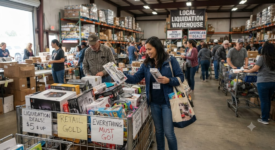
One of the fastest-growing trends in the American liquidation market is the “bin store” concept. These storefronts buy truckloads of Amazon, Target, and Walmart returns, dump the items into massive wooden or cardboard bins, and implement a falling-price model. For example, the store might restock on a Friday, and every item in the store will be priced at $10. By Saturday, the price drops to $8. By Wednesday, whatever is left is sold for $1. To find these in your area, search social media platforms or search engines for terms like “discount bin store,” “Amazon return store near me,” or “falling price liquidation.”
Local Cash-and-Carry Warehouses
Many large liquidation companies act as middlemen. They buy directly from major retailers and then sell smaller pallets or individual items to the public out of large, no-frills warehouses. These businesses rarely spend money on traditional advertising, relying instead on word-of-mouth and local classifieds. Searching platforms like Facebook Marketplace, Craigslist, or OfferUp for keywords such as “liquidation,” “surplus,” “open box,” or “overstock” will frequently lead you directly to the accounts of these warehouse owners. Once you locate one, you can visit their facility to shop their deeply discounted inventory in person.
Local Auctions and Estate Liquidators
Do not ignore the power of local auction houses. Many independent auctioneers have shifted from selling antiques to auctioning off pallets of returned merchandise, unclaimed freight, and business liquidations. Websites like AuctionZip or local state auctioneer directories can help you pinpoint weekly sales in your county. These auctions allow you to bid on everything from individual high-end electronics to massive bulk lots.
The Pallet Flipping Side Hustle
While most people search for local liquidation sales to buy items for personal use, a significant subculture has emerged around buying liquidation pallets to resell. You do not need a massive commercial warehouse to participate in this. Many local liquidation hubs offer “cash and carry” pallets specifically designed for the general public.
A single pallet might contain fifty assorted home goods items, a hundred pieces of seasonal clothing, or a mixed box of consumer electronics. The buyer pays a flat rate for the pallet—sometimes as low as $150 or $200—and hauls it away. They then sort through the merchandise, keep what they want, and sell the rest at flea markets, yard sales, or online via eBay and Poshmark. If you decide to try pallet buying, always ask the warehouse manager for the manifest (a list of what is supposedly on the pallet) if one is available. Keep in mind that “unmanifested” returns carry a higher risk but also offer the potential for higher rewards if you find a high-ticket item buried at the bottom of the box.
Red Flags: Avoiding Scams and Fake Liquidations
Because the word “liquidation” triggers an immediate psychological expectation of a good deal, many predatory businesses use the term misleadingly. It is vital to protect yourself and your wallet by recognizing the warning signs of a fake liquidation.
- The Perpetual “Going Out of Business” Sale: We have all seen that one local furniture or rug store that has supposedly been going out of business for three years. This is a common deceptive marketing tactic used to create a false sense of urgency. True retail liquidations have a definitive end date dictated by bankruptcy courts or commercial lease expirations.
- Artificially Inflated MSRPs: As mentioned earlier, true store-closing sales often hike prices back to their original MSRP before discounting. Always use your smartphone to scan barcodes or search for the item online while you are standing in the store. A “40% off” sticker means nothing if the base price has been doubled.
- “White Van” Speaker Scams: This is a classic local scam that has evolved over the years. Someone will approach you in a parking lot claiming they have surplus electronics or home theater systems from a recent liquidation and offer them to you for a fraction of the price. These items are invariably cheap, counterfeit knockoffs. Legitimate liquidators sell from established warehouses, storefronts, or verified online portals.
Pro-Level Tactics for Shopping Liquidation Sales
To truly master the art of local liquidation shopping, you need to treat it differently than a casual trip to the mall. It requires preparation, a critical eye, and a solid understanding of retail policies.
Assume All Sales Are Final
The golden rule of liquidation is “As Is, Where Is.” Because liquidators are operating on razor-thin margins and are actively trying to clear space, they generally do not accept returns. If you buy a television that will not turn on, that is your loss. Therefore, it is imperative that you test items before handing over your cash. Most reputable bin stores and warehouses have a designated “testing station” equipped with power outlets and batteries. Take the item out of the box, plug it in, and make sure it functions.
Inspect Open-Box Items Rigorously
If a product is marked as a customer return, you must become a detective. Why was it returned? Sometimes it is simple buyer’s remorse, but other times, parts are missing. If you are buying a piece of ready-to-assemble furniture, open the box and ensure the bag of screws and hardware is present. If you are buying a coffee maker, check to see if the carafe is cracked. A 70% discount is useless if the item cannot be assembled or operated.
Negotiation is Often Welcomed
Unlike big-box retail stores where the price on the tag is absolute, local independent liquidators and warehouse managers are often open to negotiation, especially if you are buying in volume. If you see multiple items you want, or if you spot a cosmetic flaw on a piece of merchandise, respectfully ask if they can do better on the price. Toward the end of the month, or right before a new truckload of inventory is scheduled to arrive, these managers are highly motivated to clear floor space and will be much more flexible on pricing.
The Best (and Worst) Items to Buy at Liquidation
Experience will quickly teach you that certain categories of merchandise are much safer to buy on the secondary market than others. Knowing what to target can save you a lot of frustration.
The Best Items to Target:
- Tools and Hardware: Wrenches, hammers, and power tools are highly durable. Even if a returned power drill has a few scuffs on the casing, it will likely perform perfectly for years.
- Seasonal Decor: Buying Christmas lights in January or patio furniture in October from a liquidation warehouse is one of the smartest ways to save money. These are almost always overstock items, meaning they are brand new and untouched.
- Apparel with Tags: Clothing is one of the most frequently returned items simply due to sizing issues. You can routinely find brand-new, name-brand clothing with the original tags still attached for pennies on the dollar.
The Items to Approach with Caution:
- Complex Electronics: Laptops, smartphones, and drones are risky. A return might look physically perfect but suffer from internal software glitches, water damage, or locked iCloud accounts that make the device totally unusable.
- Baby Car Seats and Helmets: Safety equipment should generally be avoided on the secondary market. You have no way of knowing if a car seat or a motorcycle helmet has been involved in an impact that compromised its structural integrity.
- Mattresses: Even if wrapped in plastic, buying used or returned mattresses carries a high risk of bedbugs and allergens. Unless you can verify it is absolute overstock direct from the manufacturer, it is usually better to pass.
Embracing the Bargain Hunter’s Lifestyle
Ultimately, diving into the world of local liquidation sales is about shifting your perspective on how and where you acquire the things you need. It requires a bit more time, patience, and elbow grease than simply clicking “Add to Cart” on a pristine retail website. However, the financial rewards are undeniable. By understanding the flow of reverse logistics, learning how to spot genuine overstock, and navigating your local bin stores and warehouses with a discerning eye, you can bypass retail markups entirely. The next time you find yourself wondering about “liquidation sales near me,” remember that you are not just looking for a discount; you are learning to intercept the retail supply chain to your absolute advantage.


