
 salehunter.net
 If you were browsing the internet in the early 2010s, you likely remember the daily deal gold rush. Inbox subject lines screamed about 80% discounts on sunset harbor cruises, local Italian eateries, and boutique spa treatments. Today, the manic hype surrounding flash-sale websites has quieted down, but a lucrative secret remains: LivingSocial is still one of the most powerful digital discount engines in the United States.
While the average American consumer defaults to clipping digital grocery coupons or waiting for Amazon Prime Day, power-shoppers are quietly using LivingSocial to routinely score 50% to 70% off local dining, luxury medical spas, weekend resort getaways, and family entertainment. However, utilizing the platform in the modern era requires a completely different strategy than it did a decade ago.
The algorithms have changed, merchant agreements have evolved, and the digital fine print has grown tighter. If you simply log on and click “Buy” on the first flashy banner you see, you are likely leaving money on the table—or worse, buying a voucher you can never use. This guide breaks down the modern mechanics of the platform and delivers an actionable playbook to help you extract maximum value from every LivingSocial discount.
The Groupon Connection: Understanding the Modern Platform
To master LivingSocial today, you first have to understand who pulls the strings behind the curtain. In late 2016, Groupon officially acquired LivingSocial. Many consumers assumed the brand would be folded into Groupon and shut down, but the parent company kept the LivingSocial domain alive for a very specific strategic reason: it serves as a parallel testing ground for algorithmic pricing.
Today, LivingSocial and Groupon share the exact same merchant database. If a local bowling alley lists a deal on Groupon, it automatically populates on LivingSocial. However, their promotional cycles are rarely synchronized. A boutique hotel in upstate New York might be sitting at $179 a night on Groupon, but simultaneously feature a hidden “LIVING20” promo banner on LivingSocial that drops the exact same room to $143. Recognizing that these two sites act as identical twins with completely different closets is your first weapon as a bargain hunter.
The Anatomy of the Catalog: Tiers of Inventory
When you land on the site, the inventory is sorted into three distinct ecosystems. Treating them all with the same buying logic is a rookie mistake.
- Local Experiences: This is the site’s bread and butter. It consists of regional services like oil changes, escape rooms, carpet cleaning, restaurants, and golf rounds. These offer the highest genuine savings.
- LivingSocial Escapes: Curated domestic and international travel packages. These range from two-night stays at a Bed & Breakfast in Savannah to all-inclusive resorts in Cabo San Lucas.
- The Shop Tab: Physical retail goods shipped to your door. Proceed with extreme caution here. While there are occasional genuine brand markdowns, a vast majority of this tab consists of unbranded, white-label dropshipped items inflated with artificial “original” retail prices to make the discount look massive.
7 Pro-Level Strategies to Multiply Your Savings
Finding a deal on the homepage is step zero. To get the price down to bottom-dollar territory, you need to layer your savings using the following seven tactics.
1. The Cross-Platform Mirror Check
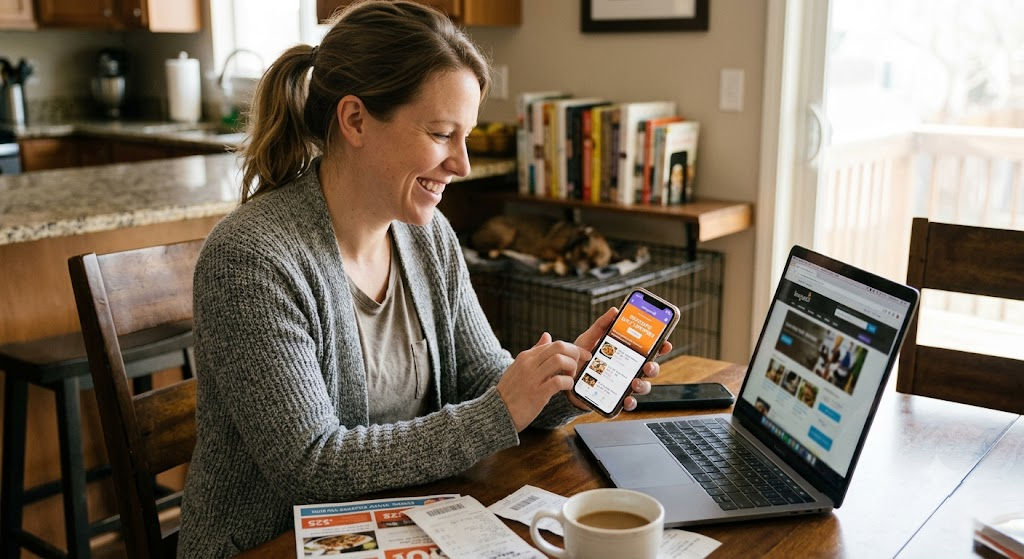
Never buy a high-ticket local experience on LivingSocial without opening a second tab for Groupon. Because the promotional algorithms operate independently, one site will frequently run a 15% to 25% “sitewide flash code” while the other is offering standard retail pricing. Takes 30 seconds; saves twenty bucks.
2. Exploit the “Cart Abandonment” Trigger
LivingSocial’s automated marketing software hates an empty checkout funnel. If you have your eye on a $200 couples massage package, make sure you are logged into your account, add the voucher to your cart, navigate all the way to the final payment screen—and then simply close the tab. In roughly 60% of test cases, the platform’s system will ping your email inbox within 24 to 48 hours with a subject line reading “Did you forget something?” accompanied by a unique, single-use 15% or 20% off promo code to nudge you over the finish line.
3. Double-Dip with Cashback Portals
Before you type “livingsocial.com” into your browser, route your visit through a major shopping portal like Rakuten, TopCashback, or BeFrugal. These portals routinely offer anywhere from 3% to 12% cash back on LivingSocial purchases. When you stack a site markdown (50% off), a seasonal promo code (20% off), and a cashback portal portal (8% back), you are effectively paying pennies on the dollar.
4. The Direct Merchant Bypass
Here is a guerrilla tactic the daily deal platforms actively hope you never figure out. LivingSocial takes a massive commission from local businesses for marketing their services—often ranging from 30% to 50% of the voucher price. If a local restaurant offers a $60 dinner package for $30 on the site, the restaurant is likely only pocketing $15 after platform fees.
Before you hit buy, call the business directly. Speak to the manager and say: “Hi, I was about to buy your $30 dining package on LivingSocial, but I know the platform takes a heavy cut. If I book a table directly with you for this Thursday, would you be willing to honor the $30 price in cash?” Seven times out of ten, independent business owners will enthusiastically agree. You get the exact same price, the local business keeps 100% of the revenue, and you build instant goodwill with the staff.
5. Hunt the “New to Platform” Badge
When searching for services, filter or scan specifically for listings tagged as “New.” Brand-new merchants on the platform are desperate for their first twenty 5-star reviews so the algorithm pushes them to the top of the default search page. To acquire those initial users, they intentionally offer deeply subsidized “loss-leader” pricing that they have no intention of maintaining long-term.
6. Understand “Paid Value” vs. “Promotional Value”
This is the single most important legal distinction in the daily-deal universe. If you pay $40 for a voucher that gets you $80 worth of dry cleaning, the $40 is your Paid Value, and the extra $40 is the Promotional Value. If you forget about the voucher and it passes its expiration date, you do not lose your money. Under United States consumer federal and state laws, the $40 you actually spent out-of-pocket remains valid toward standard-priced dry cleaning essentially forever (subject to local state escheatment laws). Only the bonus $40 promotional credit expires.
7. Master the Promo Code Reset Cycle
LivingSocial frequently runs banner promos that state “Max 1 use per customer.” If you want to buy three separate vouchers for different family members using a 20% off code, do not try to put all three in the same checkout cart—the code will only apply to one item. Instead, purchase the first voucher. Clear your browser cookies or open an Incognito window, check out as a “Guest” using a secondary email address, and apply the promo code a second time.
The Green List vs. The Red List: What to Buy
Over a decade of consumer data shows clear trends regarding which categories deliver fantastic experiences, and which reliably result in buyer’s remorse.
The Green List (High ROI)
- Aesthetic & MedSpa Services: Treatments like Botox, Dysport, microdermabrasion, and laser hair removal carry massive retail markups. MedSpas use LivingSocial strictly to fill empty midday technician chairs. Pro-tip: Always cross-reference the clinic’s medical director on your state’s medical board website before buying.
- Off-Airport Parking: If you are flying out of major hubs like LAX, ORD, JFK, or ATL, LivingSocial vouchers for secure, shuttle-serviced lots 2 miles from the terminal are consistently 40% cheaper than drive-up rates.
- Family Entertainment Centers: Trampoline parks, indoor rock climbing, go-karts, and bowling centers have fixed overhead costs. Filling a dead Tuesday afternoon lane costs them nothing, meaning their vouchers are almost always strictly legitimate savings.
- Winery Tastings & Brewery Tours: Highly reliable, standardized experiences that rarely suffer from “voucher discrimination.”
The Red List (Proceed with Caution)
- Discounted Auto Repair: Heavily discounted brake jobs or $19 synthetic oil changes are notorious bait-and-switch operations. The mechanic will frequently get your car on the lift and claim you legally need $400 worth of un-voucher-able rotor or fluid work before they can release the vehicle.
- High-End Hair Salons: When a prestige salon lists a cut-and-color package at 60% off, that appointment is almost universally handed to the newest junior stylist on staff who is trying to build a client book, rather than the master stylists.
- Luxury Bedding & Sheet Sets: Any listing claiming to sell “$180 1000-Thread Count Egyptian Cotton Sheets for $24” is selling cheap, chemically treated double-brushed microfiber.
Navigating Refunds and the “Out of Business” Trap
Even the smartest shoppers occasionally run into a snag. LivingSocial maintains a strict 3-Day Refund Policy. From the exact timestamp of your purchase, you have 72 hours to return an unredeemed voucher for a 100% original payment method refund, no questions asked. Once hour 73 hits, your money is locked in.
The most common nightmare scenario involves buying a voucher for a local boutique or restaurant, only to show up two months later and find brown paper taped over the windows because the business went bankrupt. If this happens to you:
- Do not panic. Take a smartphone photo of the shuttered storefront or screenshot their “Permanently Closed” Google Business listing.
- Log into your LivingSocial account, navigate to Customer Support, and open a chat widget.
- State clearly: “Merchant [Name] has ceased operations. I am requesting an immediate refund of my Paid Value to my original credit card due to merchant non-fulfillment.”
- If customer service attempts to offer you “LivingSocial Deal Bucks” (site credit) instead of a cash refund, politely refuse. Under the Fair Credit Billing Act, a merchant failing to deliver goods or services entitles you to a monetary reversal. If the automated agent refuses, initiate a chargeback dispute directly through your credit card issuer (American Express and Chase are notoriously swift at ruling in the consumer’s favor on deal-site disputes).
Crucial Etiquette for Redeeming Local Deals
When you walk into a local brick-and-mortar business holding a discounted voucher, you are participating in a delicate social transaction. Following three basic etiquette rules ensures you get stellar service rather than the dreaded “second-class customer” treatment.
First, always declare your voucher when making the reservation, not when the bill arrives. Many service providers allocate a strict maximum number of “deal slots” per day to keep their cash flow balanced. Springing a voucher on a waitress at the end of a busy Saturday night meal creates accounting headaches and poisons the staff’s perception of deal shoppers.
Second, tip on the original, pre-discounted retail total. If you receive a $100 massage that you purchased a voucher for at $45, your massage therapist still did $100 worth of physical labor. Tipping 20% on the $45 voucher price ($9) instead of the retail value ($20) guarantees you will never be welcomed back for a secondary booking.
Finally, read the fine print regarding “Valid Days.” If a voucher states Valid Tuesday through Thursday only, do not call the front desk begging them to squeeze you in on a holiday weekend. Businesses use daily deals to survive their slowest revenue windows; respecting those boundaries is the price of admission for getting 60% off.
Frequently Asked Questions
Can I combine a LivingSocial promo code with an existing site markdown?
Yes, but with caveats. LivingSocial routinely allows promo codes (e.g., “SAVE15”) to stack on top of vouchers that are already discounted from retail pricing. However, site banners will explicitly note if a specific tier of inventory is “Promo Code Excluded”—this happens most often with major national corporate brands or high-demand amusement park tickets.
Why did my local voucher price change inside my checkout cart?
LivingSocial utilizes dynamic demand pricing. If a specific local restaurant deal suddenly gets featured on a popular local morning news segment or a viral TikTok, a surge of traffic will hit that landing page. The platform’s automated software will incrementally tick the price up by $2 to $5 in real-time to test price elasticity. If you see this happen, clear your cache, wait 48 hours for traffic to normalize, and check back.
How do I gift a LivingSocial deal to someone else?
During the checkout flow, look directly beneath the “Buy Now” button for a toggle or hyperlink that reads “Give as a Gift.” Clicking this alters the generation of the voucher: it strips the price paid off the PDF document and allows you to input a custom recipient email address and digital delivery date. Never buy a voucher under your standard account and simply forward the PDF to a friend; many merchants check the name on the voucher against the presenting customer’s government-issued ID to prevent unauthorized voucher reselling.