
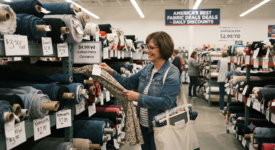
 salehunter.net
 Every sewing enthusiast knows the familiar heartache of walking into a boutique textile shop, falling head over heels for a gorgeous print, and then glancing at the price tag. When you are planning to make a flowing maxi dress, floor-length curtains, or a king-sized quilt, the cost of materials can skyrocket in an instant. This is where the hunt for cheap fabric by the yard becomes not just a necessity, but a thrilling treasure hunt. Learning how to source affordable, high-quality textiles allows you to sew more, experiment freely, and keep your creative hobbies completely sustainable for your wallet.
Many beginners falsely believe that budget-friendly materials will inherently ruin their projects. However, the textile industry is vast, and price does not always dictate quality. From mill overruns and deadstock to synthetic blends and clearance sales, there is a massive secondary market designed for the frugal crafter. If you know what to look for, where to shop, and how to treat your materials before they hit the sewing machine, you can produce stunning garments and home decor that look incredibly expensive.
The Economics of Buying Fabric by the Yard

If you have ever wandered the aisles of a major craft store, you have likely seen precut fabrics—fat quarters, charm packs, and jelly rolls. While these are wonderfully convenient for quilters who need a variety of coordinating prints, they come with a hefty “convenience tax.” When you break down the math to calculate the cost per square inch, precuts are almost always the most expensive way to buy fabric.
Purchasing cheap fabric by the yard straight off the bolt is the most economical choice a maker can make. By taking on the labor of cutting the material yourself, you immediately cut down your overall project cost. Furthermore, buying continuous yardage gives you absolute control over pattern placement, grainline alignment, and scale, which is impossible to achieve with small, precut squares. Whether you are buying one yard for a simple tote bag or ten yards for theatrical drapery, the bulk-buying principle applies: the more you buy in a single continuous cut, the better your overall value tends to be.
Top Types of Affordable Fabric for Your Projects
Not all fabrics are created equal, and some fibers are naturally much more affordable to produce than others. When you are hunting for cheap fabric by the yard, familiarizing yourself with these budget-friendly staples is the first step to successful shopping.
Cotton Calico and Broadcloth
Cotton is a staple in the sewing community, and basic weaves like calico and broadcloth are incredibly inexpensive. Calico is a plain-weave cotton that often features small, repetitive floral prints, making it a favorite for traditional quilting and rustic home decor. Broadcloth is slightly denser and smoother, making it an excellent choice for basic apparel, linings, and craft projects. Because cotton is widely grown and processed, you can often find broadcloth for just a few dollars a yard.
Polyester and Synthetic Blends
If your ultimate goal is finding the lowest price tag possible, polyester is your best friend. Synthetic fibers are manufactured quickly and cheaply, resulting in fabrics that cost a fraction of their natural counterparts (like silk or wool). While pure polyester used to have a bad reputation for lacking breathability, modern textile technology has vastly improved its feel and drape. Poly-cotton blends offer the breathability of cotton with the wrinkle resistance and low cost of polyester, making them perfect for budget-friendly uniforms, costumes, and everyday casual wear.
Muslin for Toiles and Drafting
Muslin is an unbleached, loosely woven cotton that is the unsung hero of the fashion design world. Because it is incredibly cheap fabric by the yard, sewists use muslin to create “toiles” or test garments. Before cutting into your expensive, final fashion fabric, you sew a quick version out of muslin to check the fit and make necessary pattern adjustments. You can often buy muslin in bulk bolts for an incredibly low price per yard, ensuring you always have some on hand for drafting.
Fleece and Flannel
When the weather turns cold, fleece and flannel fly off the shelves. Anti-pill fleece is an affordable, warm synthetic material that doesn’t fray when cut, making it perfect for no-sew tie blankets, scarves, and quick winter hats. Flannel, typically made of brushed cotton, provides incredible warmth and softness. Both are heavily discounted at the end of the winter season, allowing you to stock up on yardage for the following year.
Secret Spots to Find Discount Yardage
Knowing what to buy is only half the battle; knowing exactly where to look is where the real savings happen. While your local craft chain store is a convenient option, expanding your horizons will yield much better prices.
- Online Wholesale Retailers: There are numerous online fabric stores that operate on a wholesale model. Because they don’t have the overhead of a brick-and-mortar retail space, they pass the savings on to the consumer. Websites dedicated to discount textiles often sell fabric by the yard at near-wholesale prices, especially if you buy in quantities of five yards or more.
- Deadstock and Mill Overruns: Deadstock fabric refers to the surplus materials left over from fashion houses, textile mills, and garment factories. Instead of letting this fabric go to a landfill, discount retailers buy it in bulk and sell it to home sewists. Shopping for deadstock is a fantastic way to score high-end, designer-quality fabrics at dirt-cheap prices, while also practicing eco-friendly, sustainable crafting.
- Thrift Stores and Estate Sales: Think outside the traditional bolt! Thrift stores are goldmines for cheap yardage if you look in the bedding and curtain aisles. A vintage, king-sized flat sheet can yield over three yards of wide, high-quality cotton or linen blend fabric for a couple of dollars. Estate sales of former seamstresses often feature massive stashes of vintage fabric sold by the box or bag.
- Holiday Clearance Sales: Never underestimate the power of a post-holiday sale. Fabric stores desperately need to clear out seasonal novelty prints (like Halloween bats or Christmas trees) to make room for new inventory. If you plan ahead and buy your holiday fabrics by the yard the day after the holiday passes, you can routinely save up to 80% off the retail price.
How to Assess Fabric Quality When the Price is Low
The main fear associated with buying cheap fabric by the yard is that the material will be flimsy, fade quickly, or fall apart in the wash. To avoid buyer’s remorse, you need to know how to evaluate the quality of a low-cost textile.
First, look at the weave. Hold the fabric up to the light; if you can see right through a fabric that is supposed to be opaque (like a bottom-weight twill or a quilting cotton), the weave is too loose. A loose weave means the fabric will likely unravel easily, lose its shape, and lack durability. You want a tight, uniform weave, even in budget fabrics.
Next, check the grain. Sometimes fabric is heavily discounted because it was printed off-grain. Look closely at the selvedge edge and the print itself. If the pattern runs diagonally across the horizontal threads of the fabric, you will have a nightmare of a time trying to match prints or get a garment to hang correctly. It is better to pass on cheap, off-grain printed fabric and opt for a solid color instead.
Finally, if you are shopping in person, do the crush test. Grab a handful of the fabric and squeeze it tightly in your fist for a few seconds. When you let go, look at the wrinkles. If the fabric holds deep, sharp creases immediately, it is going to be high-maintenance to wear and care for. If the wrinkles fall out relatively quickly, you have found a resilient piece of yardage.
Essential Tips for Buying Discount Fabric Online
Shopping online for cheap fabric by the yard opens up a world of possibilities, but it also removes your ability to touch and feel the material. To shop successfully on the internet, you must become fluent in the language of fabric specifications.
Always pay attention to fabric weight, usually listed in GSM (grams per square meter) or ounces per square yard. A 3 oz cotton will be very thin and slightly sheer, suitable for a summer blouse or lining. A 10 oz cotton will be thick, stiff, and rugged, perfect for a canvas tote bag or upholstery. Knowing the weight prevents you from accidentally buying a heavy, cheap upholstery fabric for a delicate dress project.
Furthermore, read the fiber content carefully. A fabric might be labeled “silky satin,” but the fiber content will reveal it is 100% polyester. There is nothing wrong with polyester, but you need to know what you are buying so you can press and wash it correctly. If an online store does not list the fiber content and the weight, it is usually a red flag.
Whenever possible, order a swatch. Many online discount fabric retailers offer small fabric samples for a dollar or two. While it delays your gratification by a few days, ordering swatches for a large project (like re-upholstering a sofa or making bridesmaid dresses) will save you from spending money on ten yards of a fabric that turns out to be the wrong shade of blue.
Best Projects to Make with Budget-Friendly Yardage
Once you have amassed a stash of affordable fabrics, it is time to put them to work. Some projects are practically begging for cheap yardage, either because they require massive amounts of material or because they are subjected to heavy wear and tear.
- Backings for Quilts: The top of a quilt is where you showcase your expensive, intricate fabric pieces. The back of the quilt, however, rests against the bed or the user. Buying wide-width (108 inch) budget cotton or piecing together inexpensive yardage for a quilt back is a classic money-saving move for quilters.
- Theatrical Costumes and Cosplay: Costumes are meant to look fantastic from a stage or across a convention floor, but they aren’t subjected to daily wear and tear. Cheap satins, taffetas, and synthetic brocades are perfect for achieving a dramatic look on a strict budget.
- Children’s Clothing: Kids grow out of their clothes in the blink of an eye, and they are notoriously hard on their garments. Using affordable cottons, knits, and denims allows you to sew an entire wardrobe for your child without stressing when they inevitably spill juice or grass-stain the knees.
- Home Organization: Fabric storage bins, laundry bags, and drawer liners don’t need luxury silk. Budget canvas, duck cloth, and calico cotton are sturdy, washable, and perfect for organizing your home aesthetically for pennies on the dollar.
Crucial Pre-Washing and Care Instructions
One of the most vital steps when working with cheap fabric by the yard is the pre-wash. Inexpensive fabrics are more prone to shrinking and color bleeding than high-end textiles. If you skip pre-washing, you risk spending hours sewing a beautiful garment, only for it to shrink two sizes and bleed dye all over itself the first time it goes through the laundry.
As soon as you bring your budget fabric home, serge or zigzag stitch the raw cut edges to prevent fraying. Then, wash and dry the yardage exactly how you plan to wash the final product. If you are making a machine-washable cotton dress, wash the yardage on warm and tumble dry it. This forces all the shrinkage to happen before you ever lay out your pattern pieces. For brightly colored cheap fabrics, throw a color-catcher sheet into the wash to trap any excess, unfixed dye.
Conclusion
Sourcing cheap fabric by the yard is an invaluable skill that empowers you to create without financial boundaries. By understanding fiber types, exploring non-traditional retail avenues like deadstock suppliers and thrift stores, and knowing how to evaluate a textile’s quality, you can build an impressive fabric stash on a shoestring budget. Remember that the beauty of a handmade item doesn’t come from the price tag of its raw materials, but from the time, skill, and love you pour into the creation. Armed with these tips, you are ready to hit the bargain bins, scour the online clearance sections, and turn deeply discounted yardage into your next masterpiece.


