 salehunter.net
 As the summer heat turns up across the nation, so do the retail discounts. While the majority of the country associates Independence Day with backyard barbecues, fireworks, and trips to the lake, savvy homeowners and real estate investors know it as something entirely different: the undisputed best mid-year window to upgrade major household appliances. If your refrigerator is on its last legs, or your washing machine sounds like a commercial jet taking off, the 4th of July appliance sales present a golden opportunity to save hundreds, if not thousands, of dollars.
However, navigating the sea of red, white, and blue sale tags requires more than just a credit card. Retailers are masters of marketing, and not every “doorbuster” is a genuine bargain. To truly capitalize on these holiday promotions, you need to understand the mechanics of retail pricing, know which features actually add value, and master the art of stacking discounts. Let us dive deep into the strategies that will ensure you walk away with premium appliances at rock-bottom prices.
Why Are 4th of July Appliance Sales So Lucrative?
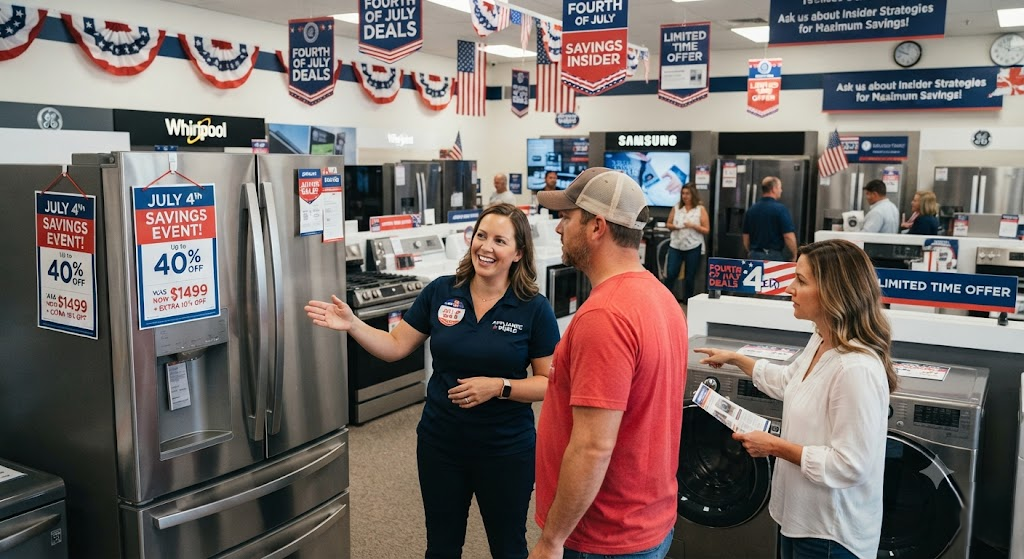
You might wonder why a holiday celebrating national independence triggers massive markdowns on dishwashers and chest freezers. The answer lies hidden in the global manufacturing calendar and retail inventory management.
Most major appliance manufacturers—including brands like Whirlpool, Samsung, LG, and GE—release their newest models in the late summer and early fall. By the time July rolls around, big-box retailers and independent dealers are feeling immense pressure to clear out their current floor models and warehouse inventory to make room for the incoming stock. The 4th of July serves as a massive, highly publicized clearance event disguised as a holiday celebration. Because the push to clear inventory is so aggressive, consumers can regularly find discounts ranging from 20% to 50% off the manufacturer’s suggested retail price (MSRP).
The Repair vs. Replace Dilemma: Timing Your Purchase
Before rushing into the sales, it is vital to determine if you actually need a new appliance. A good rule of thumb utilized by appliance technicians is the “50% rule.” If an appliance is more than halfway through its expected lifespan and the cost of repair is more than 50% of the cost of a new model, it is time to replace it.
For context, standard refrigerators typically last 10 to 13 years, washing machines average 10 to 12 years, and gas ranges can push 15 years. If your appliance is creeping up on these milestones just as the July sales begin, it is highly advisable to preemptively replace it. Waiting for the appliance to completely fail in mid-August will force you to buy at full retail price out of sheer desperation.
Which Appliances See the Deepest Discounts?
Not all appliances are discounted equally during the holiday weekend. Retailers strategically slash prices on specific categories to drive foot traffic and online clicks. Here is where you should focus your attention:
1. Refrigerators and Freezers
Refrigerators represent the largest single appliance investment for most households, which means they also offer the largest raw dollar savings during 4th of July sales. Look for aggressive markdowns on high-end French door models, which remain the most popular style in the American market. Furthermore, keep an eye out for “smart” refrigerators featuring touchscreen hubs and internal cameras. Manufacturers are heavily pushing smart technology, so older, non-smart models are often deeply discounted to move them off the floor.
2. Laundry Pairs (Washers and Dryers)
Retailers love to bundle washers and dryers during the holiday weekend. You will rarely see the best price by buying a washer alone. Instead, look for promotional pairs. Front-load washers with steam cleaning technology and large-capacity heat-pump dryers usually feature the highest percentage discounts. Heat-pump technology is particularly notable this year, as consumers look for more energy-efficient, ventless options.
3. Ranges and Ovens
If you have been considering making the switch from a traditional electric coil or gas range to an induction cooktop, July is the time to strike. Induction ranges are heavily promoted during these sales as brands attempt to capture the growing market of eco-conscious consumers looking for faster boil times and superior temperature control.
4. Outdoor Kitchens and Grills
Because July sits perfectly in the middle of summer, outdoor cooking appliances see unique pricing behavior. While premium grills (like Traeger, Weber, and Kamado Joe) rarely see massive upfront price cuts, retailers compensate by throwing in high-value extras. You might pay the standard price but walk away with free assembly, a free heavy-duty cover, bags of premium pellets, and free delivery.
Where to Shop: Big-Box Giants vs. Local Dealers
The battle for your holiday dollars is fierce, and different types of retailers offer distinct advantages.
- The Home Depot and Lowe’s: These home improvement titans dominate the 4th of July appliance space. Their primary advantage is sheer volume and logistics. They frequently offer tiered bundle savings (e.g., “Buy 2 appliances, save $100; Buy 4, save $300”) and have the infrastructure for rapid delivery.
- Best Buy: If you are specifically looking for smart appliances or complex installations, Best Buy is highly competitive. Their Geek Squad network provides a level of installation expertise for smart home integration that traditional hardware stores sometimes lack.
- Costco and Sam’s Club: Wholesale clubs often have fewer models on the floor, but their pricing is practically unbeatable. More importantly, Costco extends the manufacturer’s warranty automatically and includes delivery, installation, and haul-away in the sticker price—services that other retailers charge up to $150 for.
- Local Independent Retailers: Never underestimate the local appliance store. Independent dealers belong to massive buying groups, allowing them to match big-box prices. Furthermore, local stores offer superior customer service and are often more willing to negotiate on extended warranties and installation fees to win your business.
Advanced Savings Hacks: Beyond the Sticker Price
Seeing a sign that says “30% Off” is only the beginning of your savings journey. The true masters of holiday shopping employ layered strategies to stack discounts and extract maximum value.
Leverage Manufacturer Rebates
During the 4th of July, the discount you see at the store is provided by the retailer. However, the manufacturer (e.g., KitchenAid, Bosch) is often running simultaneous mail-in or digital rebate programs. Always search the manufacturer’s official website for active holiday rebates before purchasing. You can often buy a kitchen suite at a 30% retailer discount and then file a claim for a $500 Visa prepaid card directly from the brand.
Hunt for Open-Box and Scratch-and-Dent Deals
Holiday weekends mean chaotic retail floors and a high volume of returns from customers who failed to measure their doorways. Head straight to the clearance or “open-box” section of the store. A refrigerator with a minor scratch on the side (which will be hidden by your cabinets anyway) can be marked down an additional 20% to 40% on top of the existing 4th of July sale price. These units still carry full manufacturer warranties regarding mechanical function.
Exploit Energy Efficiency Tax Credits
Modern appliances are vastly more energy-efficient than their predecessors. When shopping the holiday sales, prioritize models with the Energy Star certification. Not only will they lower your monthly utility bills, but many local utility companies offer instant rebates (often $50 to $100) for upgrading to efficient models. Furthermore, under recent federal initiatives, upgrading to heat-pump technology (for water heaters or dryers) can qualify you for significant tax credits come tax season.
Demand Price Matching
In the digital age, prices fluctuate by the hour. If you prefer to buy from Home Depot because it is down the street, but you find the exact same LG washer cheaper on Best Buy’s website, take out your phone and show the store manager. Nearly all major retailers have aggressive price-matching guarantees during holiday sales, and some will even beat the competitor’s price by 10% just to secure the sale.
Crucial Mistakes to Avoid During the Holiday Rush
The frenzy of a holiday sale can lead to costly oversights. Keep your guard up against these common traps:
- Ignoring Hidden Fees: A $900 washer might seem like a better deal than a $950 washer until you reach checkout. Does the retailer charge $75 for delivery? Do they charge $30 for the required hoses? Do they charge $40 to haul away your old unit? Always calculate the “out-the-door” price, including tax, delivery, installation parts, and haul-away services.
- Falling for Derivative Models: Some manufacturers produce specific, lower-quality variations of popular models just for major holiday sales. These “derivative models” lack the sound insulation or durable internal components of the standard versions. Always search the exact model number on your smartphone to read long-term user reviews. If the model number only appears in ads for the current holiday weekend, proceed with extreme caution.
- Failing to Measure Perfectly: The single biggest reason appliances are returned is that they simply do not fit. Do not just measure the width, depth, and height of your cabinet cutout. You must also measure the exact width of every doorway, hallway, and staircase the appliance must pass through to get to your kitchen or laundry room. Remember to account for the swing of refrigerator doors and protruding handles.
How to Prepare in the Weeks Leading Up to the Sale
The best 4th of July appliance purchases are planned well in advance. Start tracking the prices of the specific models you want in early June. Use browser extensions or price history websites to establish a baseline. Retailers are known to occasionally inflate the “original” price just before a holiday to make the discount appear larger than it actually is. Knowing the June baseline protects you from phantom discounts.
Additionally, secure your financing beforehand. If you plan to use a store credit card to secure an extra 5% off or 18-month zero-interest financing, apply for it before the holiday weekend to avoid delays at the checkout counter.
Conclusion
The 4th of July appliance sales represent a convergence of retail pressure, manufacturer incentives, and consumer opportunity. By understanding the lifecycle of appliance manufacturing, recognizing the difference between a real markdown and a marketing gimmick, and employing advanced tactics like rebate stacking and price matching, you can upgrade your home infrastructure for a fraction of the standard cost. Equip yourself with precise measurements, a clear understanding of your household’s needs, and the patience to negotiate the final out-the-door price. When done correctly, your Independence Day shopping will yield dividends in convenience, energy savings, and home equity for a decade to come.