 salehunter.net
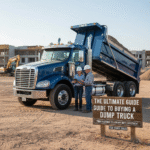
 So, you’re in the market for a dump truck. Whether you’re an established construction mogul looking to expand your fleet, a landscaping artist ready to haul your own materials, or an ambitious entrepreneur starting a new hauling business, this purchase is a massive step. A dump truck isn’t just a vehicle; it’s a powerhouse, a business partner, and a significant financial investment. Navigating the world of “dump truck for sale” listings can feel like driving through a muddy construction site without a map. But don’t worry, we’re here to be your GPS. This guide will steer you through everything you need to know, from understanding the different types of trucks to securing financing and kicking the tires like a pro.
First Things First: Know Your Dirt (and Your Truck)
Before you even start browsing online listings or visiting dealerships, you need to do some homework. The term “dump truck” is a broad one, covering a wide range of vehicles designed for different jobs, terrains, and load capacities. Buying the wrong truck is like bringing a shovel to a job that needs an excavator—inefficient and costly. Let’s break down the main players in the dump truck world.
Standard Dump Truck
This is the quintessential dump truck most people picture. It consists of a truck chassis with a dump body mounted on the frame. The hydraulic ram that lifts the front of the body is what gives it its dumping action. These are the workhorses of many industries, great for their maneuverability and versatility. They’re perfect for everything from hauling gravel for a new driveway to moving dirt on a small-to-medium-sized construction site.
- Best for: General construction, landscaping, municipal work, and smaller hauling jobs.
- Key Feature: Excellent maneuverability compared to larger, more specialized trucks.
Transfer Dump Truck
Think of the transfer truck as a standard dump truck with a sidekick. It pulls a separate trailer, also known as a “pup” trailer, which also carries a movable cargo container. The main truck can dump its load, and then the container on the trailer can be rolled off the trailer and into the now-empty main dump box to be dumped as well. This setup allows for hauling a much larger volume of material in one trip while still maintaining decent maneuverability, as the trailer can be detached in tight spots. It’s a clever way to maximize payload per trip, especially in states with strict gross vehicle weight restrictions.
- Best for: Hauling materials over longer distances and maximizing payload on highways.
- Key Feature: Increased capacity without sacrificing too much agility.

Super Dump Truck
The Super Dump is the standard dump truck on steroids. It features a trailing axle, which is a liftable, load-bearing axle that allows it to carry significantly heavier loads than a standard dump truck—often rivaling the capacity of a semi-trailer dump. This trailing axle increases the truck’s overall length and wheelbase, distributing the weight more effectively and allowing it to meet federal bridge formula standards. This is the truck you want for serious heavy-hauling tasks.
- Best for: Heavy-duty material hauling, large-scale construction, and mining operations.
- Key Feature: Massive payload capacity in a single-chassis configuration.
Articulated Dump Truck (ADT)
Also known as a haul truck or dump hauler, the ADT is a beast designed for the most rugged, off-road conditions. It features a pivot joint between the cab and the dump body, allowing it to “articulate” or bend in the middle. This gives it incredible off-road capabilities, making it the king of mines, quarries, and large, undeveloped earth-moving sites. These are not typically street-legal and are built for one purpose: moving massive amounts of material over rough terrain.
- Best for: Off-road applications, large-scale mining, quarry work, and major infrastructure projects.
- Key Feature: Unmatched off-road performance and durability.
New vs. Used: The Million-Dollar Question (Sometimes Literally)
One of the biggest decisions you’ll face is whether to buy a brand-new, shiny dump truck or a seasoned, pre-owned veteran. There are compelling arguments for both, and the right choice depends entirely on your budget, business needs, and tolerance for risk.
The Case for a New Dump Truck
There’s nothing quite like the feeling of being the first owner. A new truck comes with the latest technology, better fuel efficiency, and, most importantly, a full manufacturer’s warranty. This peace of mind is invaluable, as unexpected repairs on a heavy-duty truck can be financially crippling. You know the truck’s complete history (because you’re creating it), and you won’t have to worry about hidden problems from a previous owner’s neglect. Furthermore, financing a new vehicle is often easier, with lenders offering more favorable rates and terms.
- Pros: Full warranty, latest technology, better fuel economy, easier financing, no hidden history.
- Cons: Higher initial cost, rapid depreciation in the first few years.
The Allure of a Used Dump Truck
The most significant advantage of buying used is, of course, the price. You can save tens of thousands, or even hundreds of thousands, of dollars compared to a new model. This lower entry cost can be a game-changer for a new business or an owner-operator. A well-maintained used truck from a reputable brand like Peterbilt, Kenworth, or Mack can still have a long, productive life ahead of it. These machines are built to last. The key is to do your due diligence and avoid buying someone else’s problem.
- Pros: Significantly lower purchase price, less initial depreciation, proven reliability of older models.
- Cons: No warranty (usually), potential for hidden mechanical issues, higher maintenance costs, potentially harder to finance.
The Inspection Gauntlet: Your Pre-Purchase Checklist
Whether you’re buying new or used, a thorough inspection is non-negotiable. For a used truck, it’s absolutely critical. If you’re not a seasoned mechanic, it is 100% worth the money to hire a professional heavy-duty mechanic to perform a pre-purchase inspection. They know exactly what to look for. Here’s a checklist to guide you.
1. The Frame and Chassis
The frame is the backbone of the truck. Get underneath it with a good flashlight. Look for any signs of cracking, bending, or sagging. Pay close attention to the welds. Are they original factory welds or signs of a major repair? Rust is another major enemy. Surface rust might be okay, but deep, flaking rust that compromises the integrity of the frame is a giant red flag. A freshly painted frame on a used truck can sometimes be a sign that someone is trying to hide something.
2. The Engine and Transmission
The heart of the beast. Ask for maintenance records. A diligent owner will have a detailed history of oil changes, filter replacements, and other services. Check the engine for leaks (oil, coolant, fuel). When you start it up, does it fire up easily? Watch for excessive smoke from the exhaust. White smoke can indicate coolant issues, blue smoke means it’s burning oil, and black smoke suggests a fuel system problem. During the test drive, pay attention to how the transmission shifts. Is it smooth or jerky? Does it hesitate or slip? An automatic transmission rebuild can cost a fortune.
3. The Hydraulic System
This is what makes a dump truck a dump truck. Operate the dump body several times. It should raise and lower smoothly and without any shuddering or strange noises. Check all hydraulic lines and cylinders for leaks. A slow leak might seem minor, but it can lead to a catastrophic failure under load. Check the hydraulic fluid itself; if it’s milky or has a burnt smell, the system has problems.
4. The Dump Body
The box itself takes a lot of abuse. Look at the floor and the sides. Is the steel warped, dented, or worn thin? Check for cracks, especially around the hinges and the tailgate. A well-used but well-cared-for box will show scratches, but it shouldn’t be falling apart.
5. Tires and Brakes
Tires on a truck this size are a major expense. Check the tread depth on all tires, including the inside duals. Look for uneven wear patterns, which could indicate alignment or suspension problems. Inspect the brakes. Ask when they were last serviced. On an air brake system, listen for leaks and make sure the compressor builds pressure correctly.
Financing Your Rig: Making the Numbers Work
Unless you’re paying cash, you’ll need to secure financing. Financing a commercial vehicle is different from getting a car loan. Lenders will look closely at your business history, credit score, and financial health. It’s wise to get pre-approved for a loan before you start shopping. This gives you a clear budget to work with and shows sellers that you’re a serious buyer.
- Dealership Financing: Often the most convenient option, but may not offer the best rates.
- Banks and Credit Unions: Can offer competitive rates, especially if you have an existing relationship with them.
- Third-Party Lenders: Many companies specialize in commercial truck financing and may be more flexible, especially for buyers with less-than-perfect credit or new businesses.
Be prepared to provide a business plan, financial statements, and a significant down payment, typically ranging from 10% to 25% of the purchase price.
Where to Find Your Perfect Dump Truck for Sale
Now for the fun part: the hunt! There are several avenues to explore when searching for a dump truck.
- Dealerships: Both new and used dealerships offer a wide selection. The benefit here is that the trucks are often inspected, serviced, and ready to go. You also have some recourse if something goes wrong shortly after the sale.
- Online Marketplaces: Websites like Truck Paper, Commercial Truck Trader, and even eBay Motors have thousands of listings from dealers and private sellers across the country. This is a great way to compare prices and find specific models.
- Auctions: Ritchie Bros., IronPlanet, and other heavy equipment auctioneers are a popular choice. You can sometimes find incredible deals, but it’s a high-risk, high-reward environment. Inspections are often limited, and all sales are final. This is a place for experienced buyers.
- Private Sellers: Buying directly from another owner-operator or construction company can be a good way to get a well-maintained truck with a known history. You’ll deal directly with the person who used the truck, who can give you the full story.
The Bottom Line: A Smart Purchase Pays Off
Buying a dump truck is a journey, not a sprint. It requires research, patience, and a healthy dose of skepticism. Rushing into a purchase can lead to years of headaches and financial strain. But taking your time, doing your homework, and making an informed decision will set you up with a reliable piece of equipment that will be the foundation of your business’s success. This truck will be your partner in grit and gravel, so choose wisely. Get out there, kick some tires, and find the heavy-duty hero that’s ready to help you build your future, one load at a time.