
 salehunter.net
 So, you’re in the market for a box truck. Whether you’re launching a new delivery service, expanding your moving company, or taking your skilled trade on the road, a box truck isn’t just a vehicle—it’s a rolling headquarters, a mobile warehouse, and a critical business asset. But navigating the world of “box trucks for sale” can feel overwhelming. You’re faced with a sea of options: different sizes, engine types, new versus used, and a whole dictionary of acronyms like GVWR and CDL.
Fear not. This comprehensive guide is designed to demystify the process from start to finish. We’ll break down everything you need to consider, turning you into a confident, informed buyer ready to find the perfect truck to drive your business forward. Let’s get rolling.
Chapter 1: The Anatomy of a Box Truck – More Than Just a Box on Wheels
Before we dive into the specifics of buying, let’s establish a baseline. What exactly are we talking about? A box truck, also known as a cube van, box van, or straight truck, is a simple yet brilliant concept: it consists of a chassis cab (the front part with the engine and driver’s cabin) and a separate, enclosed rectangular cargo area (the “box”).
Unlike a cargo van where the cabin and cargo area are one continuous unit, the separation in a box truck allows for larger, more standardized cargo spaces and heavier-duty frames. They are the backbone of local and regional logistics, used for everything from:
- Last-Mile Delivery: Transporting packages from distribution centers to front doors.
- Moving Companies: Hauling household goods across town or across the state.
- Skilled Trades: Plumbers, electricians, and contractors use them as mobile workshops.
- Food & Beverage Distribution: Delivering goods to restaurants and grocery stores (often with refrigeration).
- Mobile Businesses: From food trucks to mobile pet grooming and pop-up retail shops.
Understanding your specific use case is the first and most crucial step in your buying journey. The job the truck needs to do will dictate everything else, especially its size.
Chapter 2: Sizing It Up – Finding Your “Goldilocks” Truck
Box trucks come in a range of sizes, typically measured by the length of the cargo box. Choosing the right size is a delicate balance. Too small, and you’ll be making multiple trips, wasting fuel and time. Too big, and you’ll be paying for capacity you don’t use and struggling to navigate tight city streets and parking lots.
Small Box Trucks (10 ft – 14 ft)
These are the nimble navigators of the box truck world. Their shorter wheelbase makes them perfect for dense urban environments where maneuverability is key. They are often built on a van chassis, making them feel more like driving a large van than a commercial truck.
- Ideal For: Parcel delivery, appliance repair, catering, florists, and small-scale junk removal.
- Pros: Easy to drive and park, better fuel economy, lower initial cost.
- Cons: Limited cargo capacity, may not have a loading ramp.
Medium Box Trucks (16 ft – 20 ft)
This is often the sweet spot for a huge number of businesses. A 16-foot box truck offers a significant jump in cargo space over a van without becoming overly cumbersome. It can typically handle the contents of a one or two-bedroom apartment, making it a favorite for local movers. They often come equipped with a loading ramp or even a hydraulic liftgate.
- Ideal For: Small moving companies, furniture delivery, larger trade operations, regional distribution.
- Pros: Excellent balance of capacity and maneuverability, widely available on the used market.
- Cons: Can be challenging to park in very tight urban cores.
Large Box Trucks (22 ft – 26 ft)
These are the heavy haulers of the non-CDL world (more on that later). A 26-foot truck offers a cavernous amount of space, capable of handling the contents of a medium-sized home or a significant amount of commercial freight. They are the standard for larger moving operations and serious logistics companies.
- Ideal For: Full-service moving companies, freight hauling, large event logistics.
- Pros: Massive cargo volume, typically built on a very robust chassis.
- Cons: Difficult to maneuver in tight spaces, lower fuel economy, can be intimidating for inexperienced drivers.
Chapter 3: New vs. Used – The $50,000 Question
This is one of the biggest decisions you’ll make. The right choice depends entirely on your budget, risk tolerance, and business needs.
The Case for a New Box Truck
There’s nothing like the smell of a new truck. Beyond the pristine cab and unblemished box, buying new offers tangible business advantages.
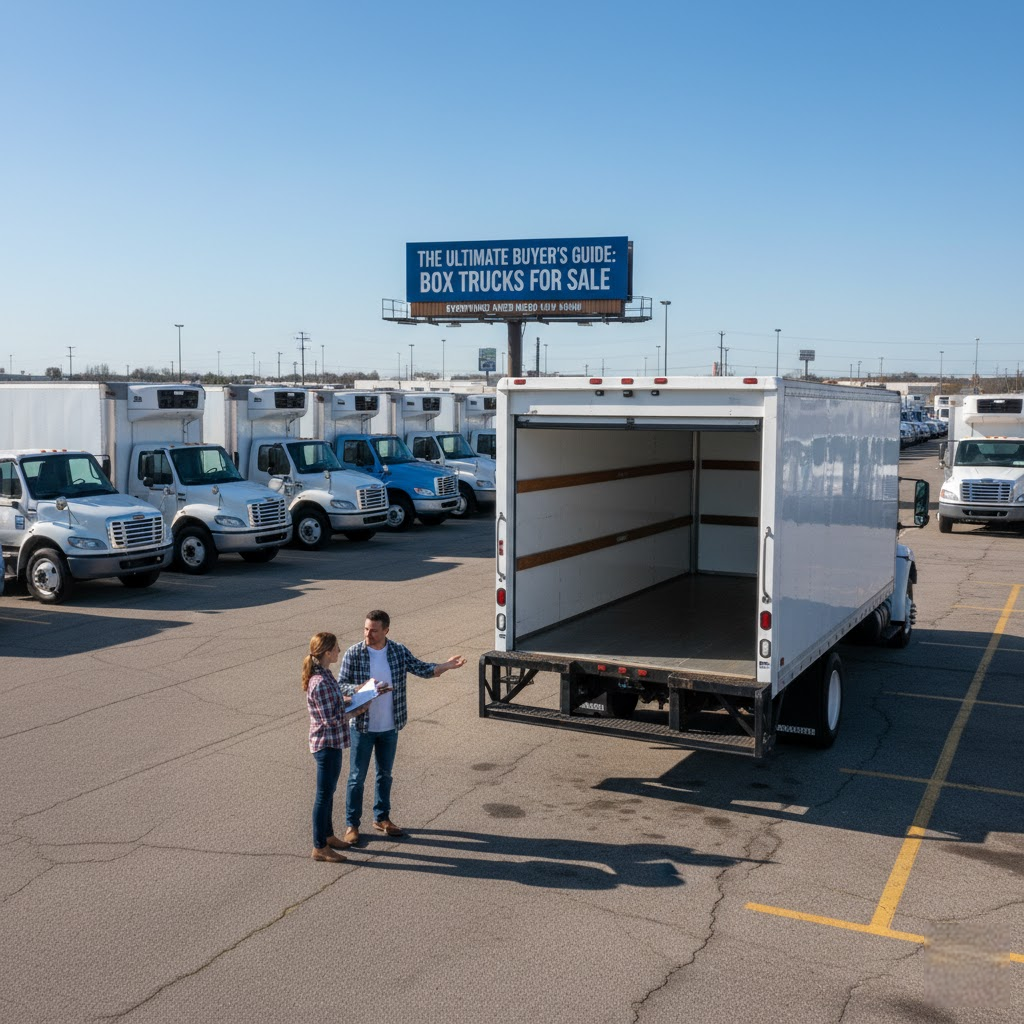
- Reliability and Warranty: This is the number one reason to buy new. A new truck comes with a full manufacturer’s warranty, meaning unexpected, costly repairs are covered for the first few years. For a business, uptime is money, and a new truck offers the most peace of mind.
- Modern Technology and Fuel Efficiency: Newer engines are more fuel-efficient and environmentally friendly. The cabs come with modern conveniences and safety features like backup cameras, collision avoidance, and better infotainment systems.
- Customization: When you order new, you can spec the truck exactly to your needs—the right box size, liftgate type, shelving, and more.
- Financing: Lenders often offer more favorable interest rates and terms on new vehicles.
The obvious downside is the cost. A new box truck is a major capital investment, and it will depreciate significantly the moment you drive it off the lot.
The Allure of a Used Box Truck
For many small businesses and owner-operators, the used market is the only viable option. And it’s a fantastic one, provided you do your homework.
- Lower Initial Cost: This is the biggest draw. You can often buy a well-maintained, three-to-five-year-old box truck for less than half the price of a new one. This frees up capital for other essential business expenses like insurance, marketing, and fuel.
- Slower Depreciation: The first owner took the biggest depreciation hit. Your used truck will hold its value much better over time.
- Proven Platforms: Buying a truck that’s been on the road for a few years means you’re getting a model whose quirks and common issues are well-documented online and by mechanics.
The trade-off is risk. A used truck is out of warranty, and its history might be a mystery. A thorough inspection isn’t just recommended; it’s absolutely essential.
Chapter 4: The Ultimate Used Box Truck Inspection Checklist
Found a promising used truck? Great. Now it’s time to play detective. Go through this list methodically. If you’re not mechanically inclined, pay a trusted independent diesel mechanic for a pre-purchase inspection. It’s the best money you’ll ever spend.
Engine & Drivetrain
- Start it Cold: Ask the seller not to warm up the truck before you arrive. A cold start can reveal issues like hard starting or excessive smoke.
- Check Fluids: Pull the engine oil dipstick. Is the oil milky (potential head gasket issue) or gritty? Check the transmission fluid; it should be reddish and not smell burnt.
- Look for Leaks: Get on the ground with a flashlight. Check the engine block, transmission, axles, and power steering lines for active drips.
- Listen Carefully: With the engine running, listen for any knocking, tapping, or grinding sounds.
The Box (Cargo Area)
- Roof Leaks: The silent killer. Get inside the box, close the door, and look for any pinpricks of daylight. Check the ceiling and upper corners for water stains or delamination.
- Floor Condition: Is the wood floor solid or are there soft spots, deep gouges, or holes? A damaged floor can be a safety hazard.
- Door Operation: Test the rear door repeatedly. If it’s a roll-up door, does it move smoothly or does it fight you? The springs may be worn. If they are swing doors, do they latch securely and are the seals intact?
Chassis, Frame & Suspension
- Rust is the Enemy: Surface rust is normal, but look for deep, flaky rust or rot on the frame rails, especially around suspension mounts and cross members. Tap suspicious areas with a hammer; it should sound solid.
- Tires are Telltales: Check the tread depth on all tires (including the inside duals). Look for uneven wear patterns, which can signal alignment, suspension, or frame problems. Check the four-digit date code on the tire sidewall (e.g., “3222” means the 32nd week of 2022). Tires older than 6-7 years should be replaced, regardless of tread depth.
Special Equipment: The Liftgate
If the truck has a hydraulic liftgate, operate it up and down several times, both empty and with a load on it if possible. Look for any hydraulic fluid leaks from the cylinders or hoses. Does it drift down on its own? This is a sign of internal seal failure.
Paperwork & History
Ask for service records. A thick folder of maintenance receipts from a reputable shop is a massive green flag. Run a vehicle history report (like CarFax for commercial trucks) to check for accident history and verify mileage.
Chapter 5: Gas vs. Diesel – The Heart of Your Truck
The engine choice has a long-term impact on your operational costs and performance.
Gasoline Engines: Typically found in lighter-duty box trucks (up to around 16-18 feet).
- Pros: Lower purchase price, cheaper and more widely available fuel, simpler and less expensive maintenance.
- Cons: Lower torque (less pulling power), worse fuel economy under heavy load, generally shorter lifespan.
- Best for: Lighter loads, local routes with lots of stop-and-go driving.
Diesel Engines: The standard for medium and heavy-duty trucks.
- Pros: Massive torque for heavy loads and hills, better fuel efficiency, extremely long engine life (500,000+ miles is common).
- Cons: Higher purchase price, more expensive and complex maintenance (especially modern emissions systems like DPF and DEF), louder operation.
- Best for: Heavy hauling, highway miles, and long-term durability.
Chapter 6: The CDL Question – Understanding GVWR
This is a critical legal point that trips up many first-time buyers. Whether or not you need a Commercial Driver’s License (CDL) to operate your box truck depends on its Gross Vehicle Weight Rating (GVWR).
The GVWR is the maximum operating weight of the truck as determined by the manufacturer, including the truck itself plus all fuel, passengers, and cargo. You can find this number on a sticker inside the driver’s side door jamb.
- GVWR of 26,000 lbs or Less: NO CDL is required. This is the magic number. It’s why 26-foot box trucks are so popular—they are typically designed with a GVWR of exactly 26,000 lbs to maximize capacity while avoiding CDL requirements.
- GVWR of 26,001 lbs or More: A CDL is REQUIRED. These are heavier-duty trucks, and operating one without the proper license can result in massive fines and legal trouble.
Always, always check the GVWR sticker on the specific truck you plan to buy. Do not assume.
Chapter 7: Where to Find Your Perfect Box Truck
Now that you know what you’re looking for, where do you find it?
- Online Marketplaces: Websites like Commercial Truck Trader, Truck Paper, and My Little Salesman are dedicated to commercial vehicles and have extensive listings from dealers and private sellers across the country.
- Fleet Remarketing Websites: This is a hidden gem. Companies like Penske Used Trucks, Ryder Used Vehicles, and U-Haul Truck Sales sell their vehicles directly to the public after they reach a certain age or mileage. These trucks are often an excellent value because they come with complete maintenance histories and have been fleet-maintained to a high standard.
- Dealerships: Both new and used truck dealerships offer a wide selection and can often help with financing.
- Auctions: You can find bargains at auctions, but it’s a high-risk environment. It’s best suited for experienced buyers and mechanics who can spot problems quickly.
Conclusion: Your Business is Ready to Roll
Buying a box truck is a significant step for any business. It’s an investment that, when chosen wisely, will pay dividends for years to come. By defining your needs, deciding between new and used, performing a meticulous inspection, understanding the legalities of GVWR, and budgeting for the total cost of ownership, you are no longer just a shopper; you are an educated buyer.
Take your time, do your research, and trust your gut. The right truck is out there waiting to become the workhorse of your company and a key player in your success story. Happy trucking!