

 salehunter.net
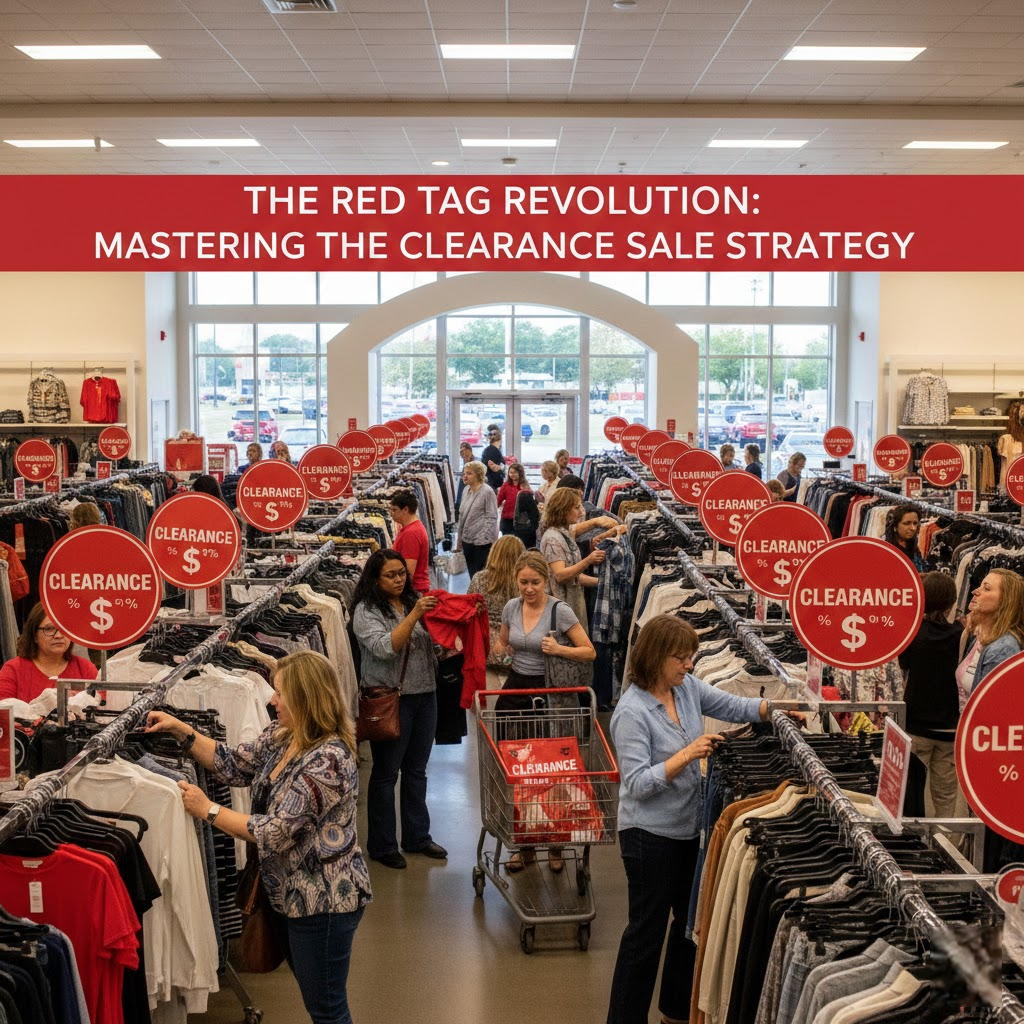
 There is a specific, visceral thrill known only to the dedicated shopper. It isn’t found in the pristine, perfectly folded stacks of the “New Arrivals” section, nor is it found in the window displays of Fifth Avenue. It is found at the back of the store, often under harsh fluorescent lighting, amidst jumbled hangers and slightly chaotic shelves. It is the thrill of the red tag. The clearance sale is not merely a transaction; for many in the United States, it is a sport, a science, and a necessary strategy for maintaining a lifestyle in an increasingly expensive world.
However, navigating the world of clearance involves more than just looking for a markdown sticker. It requires an understanding of retail psychology, inventory lifecycles, and the hidden language of price tags. To truly capitalize on a clearance sale, one must stop shopping like a consumer and start thinking like a retailer. This deep dive explores the mechanics of the markdown, the timing of the hunt, and how to distinguish a genuine bargain from a “final sale” trap.
Defining the Terms: Sale vs. Clearance vs. Closeout
Before emptying your wallet, it is vital to understand the terminology, as retailers use these words to signal different levels of urgency and product quality.
- Standard Sales: These are temporary price reductions used to drive traffic. A “Weekend Sale” or “Columbus Day Sale” usually implies the price will go back up. The inventory is current, and the retailer intends to keep selling it.
- Clearance: This is a one-way street. The price has been lowered permanently to remove the item from inventory. Retailers do this to clear shelf space for new seasons. Once it’s gone, it’s gone. Clearance items often undergo a “waterfall” effect, where the price drops incrementally (e.g., 30% off, then 50%, then 70%) until the item sells.
- Closeout/Liquidation: This usually applies to a specific model or an entire brand going out of business. This is common in electronics (when a new TV model arrives) or when a store is shuttering a location. These offer the highest discounts but often come with the strictest “no return” policies.
The Retail Lifecycle: Why Stores Dump Inventory
To master the clearance sale, you must understand the retailer’s pain points. Inventory is a liability. Every day a winter coat sits on a rack in March, it costs the store money—specifically in “opportunity cost.” That square footage could be used for spring swimwear, which has a higher profit margin at that time of year.
Retailers in the USA operate on rigid calendars. The fashion industry, for instance, works 6 to 9 months ahead. Winter clothes arrive in August; by December, the “freshness” of the inventory has expired. This is why you see clearance racks swelling in January (post-holiday) and July (post-summer). The goal of the retailer is not to make a profit on clearance items; often, they are selling at cost or even a slight loss just to free up cash flow. This desperation is your leverage.
The Secret Language of Price Tags
One of the most fascinating aspects of American retail is the coding systems used on price tags. Savvy shoppers have reverse-engineered these codes to know if a price will drop further or if it is the absolute final markdown.
While policies change, historical data from major retailers offers a roadmap:
- The “.97” Ending: At many big-box home improvement stores and major tech retailers, a price ending in .97 often indicates a clearance item that will not be marked down further. It is a “buy now or never” signal.
- The “.00” or “.88” Ending: High-end fashion retailers often use whole numbers (like $19.00) or specific cents endings to indicate “final sale” status. If you see this, double-check the garment for defects, as it likely cannot be returned.
- The Asterisk (*): At warehouse clubs like Costco, an asterisk in the top right corner of a price sign is the “Death Star.” It means the item has been deleted from the inventory system. It will not be restocked. If the price is also ending in .97, it is the absolute lowest price you will see.
- Target’s Markdown Schedule: Historically, avid shoppers have noted that specific departments are marked down on specific days of the week. For example, women’s clothing might be marked down on Tuesdays, while electronics happen on Mondays. Checking the tiny number in the corner of the red clearance sticker can tell you the percentage off (e.g., “70” means 70% off the original price).
Strategic Timing: The Calendar of Savings
Timing is everything. Walking into a store without a calendar strategy is relying on luck. To maximize savings, you must align your shopping with the natural end of retail seasons.
The “Out-of-Season” Rule
The golden rule of clearance hunting is to buy what you don’t need right now. Buying a swimsuit in May is expensive; buying it in September is a bargain. Here is a rough breakdown of when to hunt for major categories:
- January: Winter apparel, Christmas décor (up to 90% off), and linens (historically “White Sales”).
- February: TVs and home theater audio (pre-Super Bowl clearance of older models) and winter coats.
- April: Sneakers and running shoes (clearing out for summer styles).
- July/August: Summer apparel, patio furniture, and outdoor gear.
- September: Back-to-school supplies (wait until the school year actually starts for the deep discounts) and large appliances (new models hit floors in Sept/Oct).
- November: Halloween candy and costumes (starting Nov 1st).
Digital Clearance vs. Brick-and-Mortar
The internet has changed the clearance game. Online, the “clearance rack” is usually a tab in the navigation bar, but the dynamics are different. In a physical store, items get lost. A $200 jacket might slide behind a rack of t-shirts and sit there for weeks until it’s marked down to $20. You can find these “hidden gems” by physically digging.
Online, inventory is centralized. Thousands of people are looking at the same clearance page simultaneously. The “good stuff” (common sizes like Medium or Large) vanishes in seconds. However, online shopping allows for “stacking.”
The Power of Promo Code Stacking
One of the few advantages online shopping has over physical retail is the ability to apply digital leverage. Many retailers allow you to use a promo code on top of a clearance price. This is where the real magic happens.
For example, if a retailer is offering an “Extra 30% off Clearance” event, look for codes that can stack. While specific codes change daily, there are “evergreen” formats to try if you can’t find a current one:
- Sign-up Codes: Almost every major US retailer offers a 15% or 20% off code for signing up for their email newsletter. Often, this unique code (e.g.,
WELCOME20or a randomly generated string) will apply to clearance items unless specifically excluded in the fine print. - Abandoned Cart Codes: Put the clearance items in your cart, go to checkout, enter your email, and then close the tab. Wait 24 hours. Many automated systems will email you a code (like
COMEBACK10) to incentivize you to finish the purchase. - Student/Military Discounts: Platforms like ID.me or UNiDAYS verify status and provide unique codes that often work on markdown inventory.
The Outlet Store Myth
A critical warning for the clearance hunter involves Outlet Malls. Twenty years ago, outlets were destinations for clearance stock—damaged goods, last season’s leftovers, and returns. Today, that has changed.
Most major brands now manufacture clothing specifically for their outlet locations. These items are made with lower-quality fabrics, less stitching, and cheaper hardware to hit a lower price point. You aren’t getting a $100 shirt for $40; you are getting a $40 shirt for $40.
How to spot the difference: Check the tags. Brands often use a different logo, a specific shape (like three diamonds on a label), or the words “Factory” on the tag to denote made-for-outlet items. True clearance hunting is usually more fruitful at the back of the main-line store than at the outlet mall.
Inspection: The Physical Audit
When you find an item on a physical clearance rack, your job is only half done. There is a reason it is there. Sometimes it’s just overstock, but often it is a return or a damaged item. In the rush of seeing a low price, shoppers often overlook flaws.
Perform the “Three-Point Check” before heading to the register:
- Seams and Zippers: Pull gently on the seams. Are they holding? Run the zipper up and down twice. A broken zipper is a repair that often costs more than the item is worth.
- Stains (The Deodorant Test): Look at the collar and the underarms. Makeup and deodorant stains are common on clearance clothes that have been tried on dozens of times. While some wash out, others (like lipstick) are permanent.
- Missing Components: Does the coat have its belt? Does the dress have its sash? Does the gadget have its charging cable? Retailers rarely discount an item further because a button is missing, but you should ask.
Pro Tip: If you find a flaw (like a small snag or a missing button) on a clearance item that is not marked “As Is,” ask the cashier for an additional discount. Many managers have the authority to knock an extra 10-15% off to get the damaged item out of the store.
The Psychological Trap of “Final Sale”
Retailers are masters of psychological manipulation. The red tag triggers a dopamine release. We feel like we are “winning” against the system. This can lead to the “Spender’s Fallacy”—the idea that you are “saving money” by spending it.
If you buy a $200 blender for $100, but you already have a working blender, you didn’t save $100. You spent $100. This is particularly dangerous with “Final Sale” items. Returns are the safety net of retail. When that net is removed, the risk profile of the purchase skyrockets.
Rule of Thumb: Only buy a “Final Sale” item if you have physically tried it on (if it’s clothing) or if you are intimately familiar with the brand’s sizing and quality. Never buy shoes on Final Sale online unless you own that exact model already.
Specific Tactics for Major Categories
Electronics and Tech
Tech clearance is volatile. The best deals are usually on “Open Box” items. Retailers like Best Buy have specific sections for items returned by customers who simply changed their minds. These are inspected by the Geek Squad and certified working. An “Open Box – Excellent” laptop can be 20% cheaper than the new one sitting three feet away.
Home Goods and Furniture
Floor models are your best friend. Sofas, dining tables, and lamps that have been on the showroom floor are eventually sold as clearance. They may have minor scuffs, but the structural integrity is usually sound. The negotiation potential here is high. If you see a scratch on a floor model table, point it out. You can often negotiate free delivery or a deeper discount.
Groceries
Yes, clearance exists in the grocery store. It is usually found in a secluded corner of the bakery (day-old bread) or a designated section of the meat department (“Manager’s Special”). The meat is usually nearing its “sell-by” date. If you buy this, you must freeze it or cook it immediately. It is a fantastic way to stock a freezer with high-quality protein for half the price.
The Ethics of Clearance: A Note on Sustainability
It is impossible to discuss modern clearance sales without touching on the environmental impact. The cycle of “buy cheap, wear once, discard” is fueled by the clearance rack. Fast fashion brands produce excess inventory knowing it will eventually be liquidated.
However, clearance shopping can also be a tool for sustainability if approached with the right mindset. By rescuing items from the clearance rack, you are preventing them from potentially ending up in a landfill (unsold inventory is sometimes destroyed by luxury brands to maintain exclusivity). The key is to buy high-quality items on clearance that you will use for years, rather than buying low-quality items just because they are cheap.
Conclusion: The Disciplined Hunter
Mastering the clearance sale is not about hoarding; it is about precision. It is about knowing that the patio set you want in June will be 60% cheaper in September. It is about understanding that the code on the tag tells a story about the item’s future price. It is about patience.
The next time you see that sea of red tags, take a breath. Check the seams. Compare the price online. Ask yourself if you would buy it at full price. If the answer is “no,” put it back. But if the answer is “yes,” and the price ends in a .97, and you have a promo code in your back pocket? Take it to the register. You’ve won the game.


