 salehunter.net
 It is 5:00 PM on a Thursday. You have just logged off your computer, closed your laptop, and stepped out of the office. The work day is officially behind you, and the evening stretches out ahead. For millions of Americans, this exact moment triggers a familiar and beloved ritual: the search for the perfect happy hour deal. It is a cultural cornerstone, a bridge between the high-stress environment of the modern workplace and the relaxed sanctuary of home. But what exactly transforms a simple post-work drink into a truly exceptional happy hour experience?
Finding a fantastic happy hour deal is about much more than just identifying the cheapest domestic beer in town. It is a delicate balance of atmosphere, culinary quality, craft beverages, and genuine value. In today’s bustling hospitality landscape, restaurants and bars are constantly competing for the after-work crowd, leading to incredibly innovative and generous promotions. Whether you are seeking freshly shucked dollar oysters, heavily discounted craft cocktails, or simply a vibrant environment to decompress with colleagues, understanding the mechanics of a great happy hour can significantly elevate your social life while keeping your budget intact.
In this comprehensive exploration, we will dive deep into the fascinating history of happy hour, uncover the complex legal landscape that governs drink discounts across the United States, and provide you with actionable insider tips to help you track down and maximize the best happy hour deals in your city.
The Surprising Origins of the Happy Hour
Before we can fully appreciate the modern happy hour deal, it is essential to understand where the concept originated. You might assume it was invented by a clever marketing executive in the 1980s, but the true history of happy hour is far more interesting and dates back over a century.
The term “happy hour” actually has its roots in the United States Navy. Around 1913, a group of sailors aboard the USS Arkansas formed something called the “Happy Hour Club.” However, this club had absolutely nothing to do with discounted alcohol. Instead, it was a designated period of scheduled entertainment designed to relieve the immense boredom and stress of long stints at sea. During these maritime happy hours, sailors would engage in boxing and wrestling matches, watch movies, and host dance nights. The phrase quickly caught on throughout the Navy as a universal term for a period of rest and recreation.
The shift from naval entertainment to alcohol consumption occurred during the Prohibition era of the 1920s. With the sale and consumption of alcohol outlawed across the United States, citizens turned to illegal speakeasies. Because dining out at legitimate restaurants meant eating without the accompaniment of wine or spirits, people began adopting the habit of visiting speakeasies for a quick, illicit cocktail before heading out to a restaurant for dinner. They co-opted the Navy’s term, calling this pre-dinner drinking session “happy hour.”
Following the repeal of Prohibition, the concept lingered but evolved. By the 1970s and 1980s, corporate culture in the United States had reached a fever pitch, and the post-work drink became a ubiquitous ritual. Bars and restaurants recognized an opportunity to attract massive crowds during the typically slow period between the end of the workday (5:00 PM) and the traditional dinner rush (7:00 PM). They began offering heavily discounted drinks and free buffets, officially cementing the modern happy hour deal into the American cultural lexicon.
The Economics Behind a Great Happy Hour Deal
From a consumer’s perspective, a happy hour deal feels like a lucky break—a rare opportunity to get high-quality food and drinks for a fraction of their normal cost. But from the perspective of a bar or restaurant owner, happy hour is a carefully calculated economic strategy designed to boost overall profitability.
In the restaurant industry, the hours between 3:00 PM and 6:00 PM are notoriously slow. The lunch crowd has long since departed, and the dinner crowd is still at work or commuting. During these “dead zones,” establishments still have to pay for overhead costs, including electricity, rent, and staff wages. A smartly designed happy hour deal acts as a magnet, pulling in customers who otherwise would have gone straight home.
Many bars use what is known in retail as a “loss leader” strategy. They might offer a popular item, such as a local draft beer or a plate of sliders, at a price that barely covers the cost of making it. The goal is not to make a massive profit on that specific item, but rather to get bodies through the door. Once you are settled in a booth with your discounted drink, human psychology and hunger often take over. You might decide to order a full-priced entrée, stay for a second round of premium cocktails after the happy hour window closes, or return to the establishment on a weekend when regular prices apply. By sacrificing a small amount of profit margin during the late afternoon, restaurants build customer loyalty and drive long-term revenue.
The Legal Landscape: Why Happy Hour Deals Vary by State
If you travel frequently across the United States, you may have noticed that the availability and structure of happy hour deals change dramatically depending on where you are. This is not due to a lack of hospitality in certain regions, but rather a complex web of state-level liquor laws.
In the mid-1980s, public awareness regarding the dangers of drunk driving surged, largely spearheaded by advocacy groups like Mothers Against Drunk Driving (MADD). In response, several states passed legislation aimed at curbing binge drinking. One of the primary targets of these laws was the traditional happy hour deal.
- Massachusetts: In 1984, Massachusetts became the first state to completely ban happy hours. To this day, bars in Boston and across the state are strictly prohibited from altering the price of an alcoholic beverage for a specific block of time during the day. If a drink is discounted, that discount must apply for the entire calendar week.
- Utah: Known for its strict liquor laws, Utah also prohibits time-specific drink discounts. Establishments cannot offer two-for-one specials or temporary price reductions on alcohol.
- Indiana and North Carolina: These states have historically had strict regulations regarding timed discounts. While laws are slowly modernizing, bars in these areas often have to rely on daily drink specials (e.g., “$5 Margarita Thursdays” that last all day) rather than a traditional 4:00 PM to 6:00 PM happy hour window.
In states where traditional happy hour deals on alcohol are banned, local hospitality scenes have adapted creatively. Establishments in these regions often focus heavily on food happy hours. You might not be able to get a half-priced martini in Boston at 5:00 PM, but you can certainly find incredible deals on appetizers, half-priced pizzas, and discounted raw bars. Understanding your local regulations is key to knowing what kind of deals to look for.
Decoding the Menu: What Makes a Happy Hour Deal Truly Worth It?
Not all happy hour deals are created equal. A sign boasting “$2 Well Drinks” might seem like a steal, but if those well drinks are made with bottom-shelf, low-quality spirits that leave you with a headache, the value rapidly diminishes. A truly excellent happy hour deal offers a combination of high-quality products, a welcoming atmosphere, and genuine savings. Here is what to look for when evaluating a local special.
The Drink-to-Dollar Ratio
The best happy hours offer discounts on beverages you actually want to drink. Look for bars that discount their signature craft cocktails by a few dollars, or offer steep reductions on local craft beer flights and quality wines by the glass. A fantastic deal is one where a $15 artisanal cocktail is temporarily reduced to $9. It allows you to experience the mixologist’s best work at an accessible price point.
High-Quality Bites and Small Plates
Gone are the days when a happy hour food menu consisted solely of stale peanuts and lukewarm mozzarella sticks. Today’s top-tier establishments use happy hour to showcase their culinary prowess. Seek out restaurants that offer miniature versions of their best-selling entrees. Common indicators of a high-value food happy hour include discounted charcuterie boards, gourmet sliders made with wagyu beef, artisanal flatbreads, and fresh, locally sourced seafood. Half-priced oysters have become a particularly popular and highly sought-after happy hour staple in coastal American cities.
Atmosphere and Vibe
A great deal loses its appeal if the environment is overly cramped, too loud to hold a conversation, or chronically understaffed. The ultimate happy hour spot strikes a balance: it is lively and energetic, yet comfortable enough to allow you to decompress. The best venues ensure they have adequate staff on hand during the happy hour rush so that you are not spending half of your discounted window simply trying to get the bartender’s attention.
The Rise of Reverse Happy Hours and Modern Trends
The concept of the happy hour deal is constantly evolving to match shifts in modern lifestyle and work culture. In recent years, several new trends have emerged that are changing the way Americans experience this post-work tradition.
One of the most popular innovations is the Reverse Happy Hour. Traditionally, happy hour ends just as the dinner rush begins, usually around 6:00 PM or 7:00 PM. However, to attract late-night crowds and service industry workers who are just clocking out, many bars now offer a secondary happy hour that kicks off late at night—typically from 10:00 PM until closing time. This has become incredibly popular in major metropolitan areas and cities known for their nightlife, offering the same great drink and food discounts for the night owl demographic.
Another major shift is the rise of the Zero-Proof Happy Hour. As the sober-curious movement gains massive traction across the United States, bars and restaurants are realizing that not everyone wants an alcoholic beverage at 5:00 PM. Forward-thinking establishments are now including high-end, complex mocktails and non-alcoholic craft beers in their happy hour deals. This inclusive approach ensures that everyone in the office can participate in the post-work social ritual, regardless of their drinking preferences.
Furthermore, the explosion of remote work has blurred the lines of the traditional 9-to-5 schedule. In response, many neighborhood bars have started their happy hour deals earlier in the afternoon. It is no longer uncommon to see “Work From Bar” specials starting at 3:00 PM, featuring free Wi-Fi, discounted coffees, and early-bird appetizer specials, catering to remote workers looking for a change of scenery.
Expert Tips for Maximizing Your Happy Hour Experience
Now that you understand the history, economics, and landscape of the happy hour deal, it is time to put that knowledge into practice. To truly hack your local happy hour scene and get the absolute best bang for your buck, consider these insider strategies.
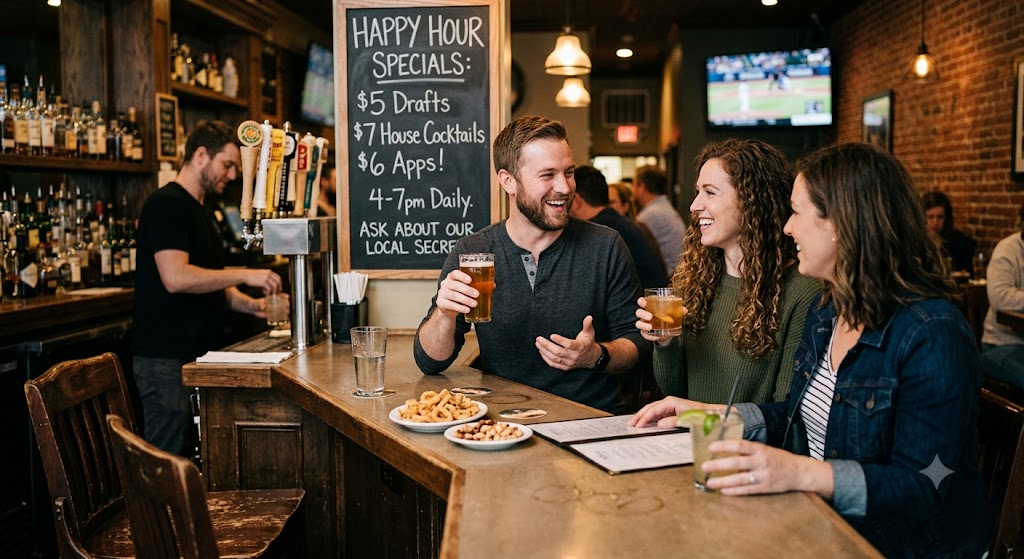
- Always Sit at the Bar: If you are attending happy hour in a full-service restaurant, try to snag a seat at the physical bar rather than a table. Many establishments restrict their happy hour deals exclusively to the bar area or lounge to keep the main dining room open for full-paying dinner guests. Sitting at the bar also guarantees faster service during the rush.
- Arrive Early or Strategize Your Timing: The best happy hour spots fill up incredibly fast, especially on Thursdays and Fridays. If the deal runs from 4:00 PM to 6:00 PM, arriving at 5:45 PM might mean standing in a corner waiting for a drink. Try to arrive in the first hour to secure comfortable seating and get your orders in before the kitchen gets backed up.
- Ask About Off-Menu Specials: Sometimes the best deals are not printed on the table tent. Bartenders will frequently have a specific beer they need to kick (finish the keg) or a daily wine special that didn’t make it onto the printed menu. Politely asking the bartender what they recommend for happy hour can unlock hidden gems.
- Don’t Ignore the Neighborhood Joints: While trendy downtown restaurants often advertise heavily, the most generous happy hour deals are usually found in neighborhood dive bars and local pubs. These establishments rely on regular, repeat customers and often reward them with incredibly cheap domestic pitchers, hearty pub grub specials, and heavy pours.
- Tip on the Original Amount: This is the golden rule of happy hour etiquette. If you ordered $50 worth of food and drinks, but your happy hour bill comes out to $25, you should calculate your tip based on the original $50. The bartender and serving staff are doing the exact same amount of work, dealing with higher volume, and moving at a faster pace. Tipping generously on discounted tabs is the quickest way to endear yourself to the staff and guarantee impeccable service on your next visit.
The Enduring Appeal of the 5 O’Clock Tradition
The happy hour deal is much more than a simple financial transaction. It is a dedicated space for camaraderie, networking, and relaxation. It provides a transitional buffer between the pressures of professional life and the responsibilities of personal life. By understanding how to spot a high-value menu, navigating your local state laws, and practicing good bar etiquette, you can transform an ordinary Tuesday afternoon into a memorable culinary experience.
As the hospitality industry continues to innovate with reverse happy hours, expansive non-alcoholic options, and gourmet small plates, the American happy hour is poised to remain a beloved institution for decades to come. So the next time the clock strikes five, step out with confidence, find a stool at your favorite local watering hole, and toast to the art of the perfect happy hour deal.