

 salehunter.net
 In today’s fast-paced digital economy, paying full price is rapidly becoming a thing of the past. Whether you are navigating the pressure of inflation or simply love the undeniable thrill of scoring a massive bargain, understanding how to navigate the complex landscape of USA discount deals is an essential life skill. The American retail market is vast, fiercely competitive, and overflowing with opportunities for savvy shoppers to keep more of their hard-earned dollars in their wallets. However, finding these deals requires more than just luck; it demands strategy, timing, and a deep understanding of modern retail algorithms.
This comprehensive breakdown will take you far beyond the standard advice of “wait for a sale.” We are diving deep into the seasonal rhythms of American consumerism, the cutting-edge digital tools that automate your savings, the highly lucrative practice of coupon stacking, and the hidden retail policies that can save you hundreds of dollars a year. Get ready to transform your approach to online shopping and become a master of the discount deal.
The American Retail Calendar: Timing Is Everything
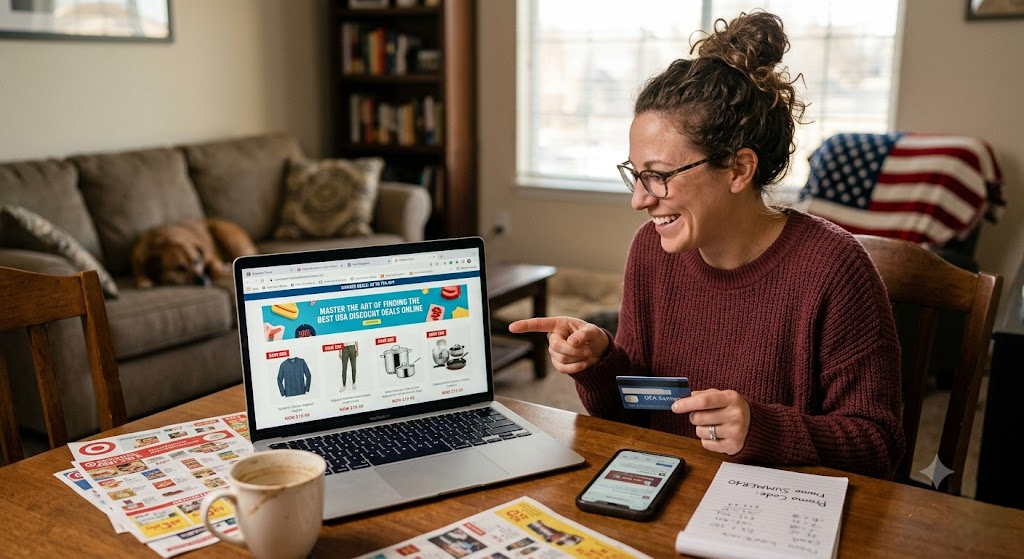
The most fundamental rule of scoring the best USA discount deals is understanding that retail operates on a very predictable, highly structured calendar. Retailers do not discount items randomly; they slash prices to clear out old inventory, meet quarterly sales quotas, or capitalize on national holidays. If you can align your purchasing needs with these historical markdown periods, you will instantly maximize your savings.
- January (White Sales and Fitness): The new year kicks off with “White Sales,” a tradition dating back over a century where retailers offer massive discounts on bedding, linens, and towels. Additionally, as millions of Americans make New Year’s resolutions, fitness equipment, activewear, and gym memberships see some of the deepest discounts of the year.
- February (Presidents’ Day): Presidents’ Day weekend is the first major blowout of the calendar year. It is historically the absolute best time to buy large home appliances, mattresses, and winter apparel that retailers are desperate to clear out before the spring inventory arrives.
- Spring (Memorial Day): Memorial Day marks the unofficial start of summer. Shoppers can expect sweeping discounts on patio furniture, grills, spring clothing, and outdoor gear. It is also an excellent time to look for travel deals as airlines and hotels try to secure early summer bookings.
- Mid-Summer (Amazon Prime Day and The 4th of July): July is a blockbuster month for USA discount deals. Amazon Prime Day has created a mid-summer Black Friday effect, forcing competitors like Walmart, Target, and Best Buy to launch their own massive counter-sales. Expect rock-bottom prices on electronics, smart home devices, and Amazon-branded tech. The 4th of July brings heavy discounts on summer apparel, outdoor furniture, and sporting goods.
- Late Summer (Back-to-School and Labor Day): As August rolls in, back-to-school sales dominate. This is the optimal time to buy laptops, tablets, office supplies, and children’s clothing. Labor Day weekend in early September serves as the retail world’s farewell to summer, offering the year’s lowest prices on summer clearance, mattresses, and large appliances.
- November (Black Friday and Cyber Monday): The crown jewels of American discount hunting. While Black Friday has morphed from a single day into a month-long event, the deepest discounts on televisions, gaming consoles, toys, and luxury electronics still occur during this late-November window.
- December (After-Christmas Clearance): The days immediately following December 25th offer some of the most aggressive discounts of the entire year. Retailers slash prices on holiday decor, gift sets, winter clothing, and consumer electronics to clear the shelves before the end of their fiscal year.
Essential Digital Tools for the Modern Deal Hunter
Memorizing the retail calendar is only the first step. To truly dominate the world of USA discount deals, you must leverage technology. The modern bargain hunter relies on an arsenal of browser extensions, cashback portals, and price-tracking applications to automate the savings process.
Cashback Portals: Websites like Rakuten, TopCashback, and RetailMeNot act as affiliate marketers for major retailers. When you click through their links to make a purchase, the retailer pays them a commission, which they then split with you in the form of a “cash back” check or PayPal deposit. During major holidays, these portals frequently run promotions offering anywhere from 10% to 15% cash back at hundreds of popular stores. Making this a standard step in your shopping routine is essentially earning free money on purchases you were already going to make.
Browser Extensions: Tools like Honey, Capital One Shopping, and Coupert have revolutionized online shopping. Once installed on your web browser, these extensions automatically scour the internet for active promo codes and apply the best combination to your cart at checkout. They eliminate the tedious process of copying and pasting expired codes from random coupon websites. Furthermore, many of these extensions have built-in price comparison features, alerting you if the exact item you are viewing is available for a lower price on another website.
Price Trackers: Retailers are notorious for utilizing dynamic pricing, meaning the price of an item can fluctuate wildly based on demand, time of day, and inventory levels. For Amazon shoppers, a tool like CamelCamelCamel is non-negotiable. It allows you to input any Amazon product URL and view its complete price history chart. You can see exactly when the item hit its lowest price and set up email alerts so you are notified the moment the price drops to your target threshold. This prevents you from falling for fake “sales” where the retailer artificially inflated the price just to mark it down.
The Advanced Art of Deal Stacking
If there is a secret weapon in the arsenal of extreme bargain hunters, it is the concept of “deal stacking.” Deal stacking involves layering multiple different types of discounts on top of a single purchase to drive the final out-of-pocket cost down to a fraction of the retail price. While some retailers strictly prohibit combining offers, many of the largest American retail chains have systems that actually encourage it if you know how to play the game.
A classic example of deal stacking can often be executed at department stores like Kohl’s or Macy’s. Let us break down a hypothetical, yet highly realistic, scenario:
- Step 1: The Base Sale. You find a winter coat originally priced at $100 that is currently on a seasonal clearance sale for 40% off, bringing the price to $60.
- Step 2: The Store Promo Code. You apply a widely available store-wide coupon code (often found on the retailer’s homepage or through a browser extension) for an additional 20% off your entire purchase. This drops the coat to $48.
- Step 3: Cashback Portal. You initiated this shopping trip by clicking through a portal like Rakuten, which happens to be offering 10% cash back at this specific store today. You will eventually get $4.80 back, effectively lowering your cost to $43.20.
- Step 4: The Rewards Credit Card. You pay for the transaction using a cashback credit card that offers 2% back on all purchases, saving you an additional $0.96.
- Step 5: Store Loyalty Cash. The retailer happens to be running a promotion where you earn $10 in “Store Cash” for every $50 spent. Because your pre-tax total was close enough (or you added a tiny filler item), you earn a $10 voucher for a future purchase.
Through the strategic application of deal stacking, a $100 coat was effectively purchased for a net cost of around $32. Mastering this technique requires patience and organization, but the financial payoff is extraordinary.
Hidden Strategies: Price Matching and Abandoned Carts
Beyond sales and coupons, there are psychological and policy-driven tactics that can secure you an exclusive USA discount deal. One of the most effective, yet underutilized, consumer rights is the price match guarantee. Massive retail giants like Target, Best Buy, and Walmart (to varying extents) have price-matching policies to prevent you from abandoning them for a competitor. If you find an identical item cheaper at a major competitor like Amazon or a local big-box store, simply show the customer service desk the active listing on your phone. In most cases, they will immediately adjust the price. This allows you to get the lowest possible online price while enjoying the immediate gratification of in-store pickup.
Another clever trick is the “Abandoned Cart” strategy. Online retailers are hyper-focused on conversion rates, and they hate it when a customer builds a cart but leaves before paying. If you have an account with an online retailer and you are logged in, try adding the items you want to your cart and then simply closing the browser window. Wait 24 to 48 hours. Very often, the retailer’s automated marketing system will trigger an email to you, reminding you of the items left behind and sweetening the deal with a unique, one-time-use promo code (typically 10% to 20% off) to encourage you to complete the checkout process.
Protecting Yourself: How to Spot Fake Discounts and Scams
While the hunt for the best USA discount deals is exciting, the internet is unfortunately rife with traps designed to exploit eager shoppers. The most common deceptive practice is price anchoring, where a retailer displays an outrageously high “original” price next to the sale price to make the discount seem monumental. Always use independent price trackers to verify the item’s true historical value rather than taking the retailer’s “MSRP” at face value.
Furthermore, be incredibly wary of deals found on social media platforms that seem too good to be true, particularly during the holiday shopping season. Scammers frequently set up sophisticated, temporary websites that perfectly mimic legitimate brands, offering luxury goods, popular electronics, or trendy apparel at 80% to 90% off. These are almost always phishing schemes designed to steal your credit card information. Always verify the website URL, look for secure checkout indicators (https), and read independent reviews of the website on platforms like Trustpilot before entering your payment details.
The Final Verdict on Smart Shopping
Mastering the digital landscape of USA discount deals is an ongoing journey, but the financial rewards are well worth the effort. By understanding the seasonal retail calendar, deploying automated browser extensions, utilizing cashback portals, and learning the advanced techniques of deal stacking and price matching, you can systematically lower your cost of living. Keep your wits about you to avoid deceptive pricing, and you will find that a premium lifestyle is entirely attainable on a budget. Happy hunting, and may your shopping cart always reflect the smartest possible price.