 salehunter.net
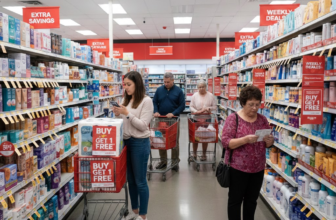
 Walk down the personal care aisle of any major American supermarket or drugstore, and you will encounter one of modern retail’s most frustrating sights: replacement razor cartridges locked securely behind thick, anti-theft plastic glass. When you press the call button and an employee finally arrives to unlock the case, the sticker shock hits you. A simple eight-pack of name-brand multi-blade cartridges can easily set you back $35 to $45.
For decades, American consumers accepted this as the standard cost of grooming. However, the economics of shaving have fundamentally broken wide open. Between direct-to-consumer (DTC) disruptors, international supply chain transparency, and the massive revival of traditional wet shaving, buying razor blades cheap online is no longer a gamble on low-quality steel—it is a basic consumer literacy skill.
If you are tired of paying what amounts to a “Gillette Tax” every time you need a fresh edge, this guide will break down the exact math, the best online storefronts, the metallurgy secrets the big brands hide, and how to protect your face from counterfeit blades.
The Economics of the Blade: Why Retail is a Trap
To understand how to find cheap razor blades online, you first have to understand why store-bought blades are so expensive. The shaving industry operates on the famous “razor-and-blades business model,” popularized in the early 20th century by King Camp Gillette. The strategy is simple: sell the permanent handle at a loss or razor-thin margin to get it into the consumer’s bathroom, then hold that consumer captive to proprietary snap-on cartridges sold at a 4,000% markup.
When you buy a $42 pack of cartridges at a brick-and-mortar retail store, your money is being distributed across several non-shaving costs:

- Slotting fees: The massive price brands pay Walmart or Target just to sit on eye-level shelves.
- Shrinkage overhead: Because razor cartridges are small, lightweight, and high-value, they are one of the most shoplifted items in North America. Retailers pass the cost of stolen inventory directly onto honest buyers.
- Legacy television marketing: National NFL broadcasts and high-budget celebrity endorsement campaigns.
When you transition your blade shopping strictly to the internet, you instantly bypass the retail middleman, the anti-theft logistics overhead, and the shelf-space bidding wars.
The Three Tiers of Buying Cheap Blades Online
Navigating e-commerce for shaving supplies generally splits buyers into three distinct pathways, depending on how attached they are to modern cartridge systems versus traditional steel.
1. The Direct-to-Consumer (DTC) Cartridge Clubs
Companies like Dollar Shave Club, Harry’s, Billie, and Jeremy’s Razors pioneered the online subscription model. While these brands have gradually crept up in price over the last five years, they still comfortably beat retail drugstore pricing.
The Insider Reality: Most DTC brands do not own massive steel foundries; they are master marketers sourcing high-grade white-label cartridges. For example, Dollar Shave Club originally built its entire empire by buying cartridges in bulk from Dorco (a South Korean manufacturing giant) and repackaging them with witty branding. Today, savvy online shoppers skip the subscription middleman entirely and buy Dorco-branded systems directly on Amazon or via bulk restaurant/hotel supply websites for pennies on the dollar.
2. Bulk Mega-Retailers (Amazon, Walmart.com, and Costco Next)
If you refuse to give up your Gillette Fusion5 or Schick Hydro, buying online via bulk digital storefronts is your only defense against retail markups.
The trick here is mastering the **Cost-Per-Cartridge (CPC)** metric rather than looking at the box price. On Amazon, a standard 4-pack of name-brand refills often hovers around a CPC of $4.10. However, if you dig into the 12-pack or 16-pack “Amazon Frustration-Free Packaging” listings combined with a ‘Subscribe & Save’ 15% discount tier, that exact same blade drops to roughly $2.45 per cartridge.
3. The Double-Edge (DE) Safety Razor Boutique Shops
If your sole objective is to acquire the absolute cheapest razor blades online without sacrificing skin safety, you must abandon plastic cartridges entirely and adopt the standard Double-Edge (DE) safety razor. This is where the math becomes almost comical.
Standardized DE razor blades have not changed their physical patent shape since the 1930s. Because no single corporation owns the patent to the shape of a flat piece of double-sided steel, hundreds of factories globally compete strictly on price and steel quality.
Specialty US online retailers such as Maggard Razors, West Coast Shaving, and The Italian Barber sell 100-packs of world-class razor blades for between $8.00 and $15.00 total. That breaks down to roughly 8 to 15 cents per blade. Even if you throw away the blade after just two shaves, a single $12 purchase online will keep an daily shaver supplied for over seven months.
Blade Metallurgy: What “Cheap” Actually Means
A common fear among first-time online budget shoppers is that buying cheap blades means dragging crude, unrefined scrap metal across their jawlines. This is a misconception born from brand brainwashing. The sharpness and comfort of a razor blade rely on three specific engineering factors, all of which are widely available in sub-$15 bulk online packs:
- The Steel Base: Almost all reputable budget blades use Japanese or Swedish stainless steel. Carbon steel exists (often cheaper), but it rusts within 48 hours in a humid bathroom; stick strictly to stainless.
- The Grinding Angle: High-end budget blades (like the famous Japanese-made *Feather* blades) are ground to a steep 15-to-20-degree angle, making them surgically sharp. More forgiving budget blades (like *Derby* or *Astra*) use a slightly wider bevel for sensitive skin.
- The Fluoropolymer Coating: Raw steel grabs skin. Quality cheap blades are sprayed with microscopic layers of PTFE (Teflon) to reduce drag, alongside sputtered Platinum or Chrome to harden the microscopic edge against rapid degradation.
When shopping online, look at the fine print on the product listing. If an ultra-cheap bulk pack explicitly lists *”Stainless Steel, PTFE & Platinum Coated,”* you are getting identical engineering to a $4.00 drugstore cartridge edge.
The Danger Zone: How to Spot Counterfeit Blades Online
Because brand-name razor cartridges hold high resale value, third-party online marketplaces are flooded with sophisticated counterfeit products. If you see a third-party seller on eBay, Walmart Marketplace, or Amazon offering a 16-pack of Gillette ProGlide cartridges for $18.99, **do not buy them.** They are almost certainly knockoffs manufactured in unregulated facilities using soft, unsharpened iron that will cause severe razor burn or skin infections.
Use this four-point checklist to vet cheap online blade sellers:
- Check the “Ships From / Sold By” tag: On Amazon, only buy high-ticket brand cartridges if the listing explicitly states *“Ships from Amazon.com / Sold by Amazon.com”* or direct from the brand’s official storefront. Avoid generic storefront names like “DailyDeals_USA_99.”
- Inspect the lubricating strip: On genuine multi-blade cartridges, the moisture strip is neatly poured and sits flush with the plastic casing. Counterfeits almost universally feature crooked, bubbled, or oddly neon-colored lubricating strips.
- Look for laser-etched serial numbers: Authentic modern cartridges feature faint, alphanumeric batch codes stamped directly into the plastic spine or the steel of the blade head. Counterfeiters rarely spend the money to replicate laser-etching.
- Examine the packaging typography: Counterfeit box printers regularly struggle with crisp, micro-printed legal text on the back of razor boxes. If the copyright symbol (©) or the distributor address looks slightly blurred or uses a generic Arial font substitute, initiate a return immediately.
5 Insider Hacks to Stretch Your Online Blade Haul
Once you have secured a cheap shipment of blades online, your next goal should be stretching their lifespan. Most shavers discard blades far too early because they mistake *mineral buildup* and *oxidation* for a dull edge.
1. Never Wipe the Blade with a Towel
After rinsing your razor, your instinct is likely to wipe it dry on a bathroom towel. **Stop doing this.** The friction of cotton loops against an ultra-thin razor edge instantly strips away the microscopic Teflon and Platinum coatings. To dry a blade, simply shake it vigorously or blast it for two seconds with a hair dryer.
2. The Mineral Oil Dip
Water left sitting on a steel edge causes microscopic flash-rusting at the apex of the blade, which makes it feel dull on your next shave. Keep a small, two-ounce dropper bottle of pure mineral oil (available online for $4) on your sink. After shaking your razor dry, put one drop of oil across the blades. The oil displaces 100% of the oxygen and water, preserving the factory edge for twice as many shaves.
3. The Denim Strop Trick
If a cartridge feels like it is beginning to tug slightly, take an old pair of denim jeans, lay them flat on the counter, and push the dry razor **backward** (away from the cutting edge) up the thigh of the jeans 10 to 15 times. The tough denim acts as a traditional barber’s leather strop, realigning the microscopic rolled burrs on the steel back into a straight, sharp line.
4. Buy a “Blade Sampler Pack” First
If you decide to take the plunge into cheap Double-Edge safety razors, do not immediately buy a 100-pack of one brand. Human hair coarseness and facial skin thickness vary wildly. Go to a dedicated shaving website and order a **$6.00 Custom Sampler Pack**. This gets you 5 blades each of six different global brands (e.g., *Personna, Voskhod, Astra, Feather, Bic, Treet*). Spend a month finding the exact steel temperament your face prefers before ordering the $10 bulk brick.
5. Ditch Canned Shave Foam
Cheap blades get a bad reputation online because users pair them with cheap, aerosol-propelled shaving creams. Aerosol foams rely on harsh propellants and drying detergents that rob the skin of lubrication. If you switch to buying cheap replacement blades, spend $8.00 online on a tub of traditional Italian soft shaving soap (such as *Proraso* or *Cella*). The high tallow and glycerin content will make a 10-cent blade glide across your neck smoother than a $5.00 cartridge wrapped in synthetic slime.
The Bottom Line
The days of standing awkwardly in a retail aisle waiting for a store clerk to unlock a plastic vault of overpriced steel are officially over. Whether you choose to hunt down white-label cartridge suppliers, optimize bulk digital subscriptions, or make the permanent leap to 10-cent safety razor blades, the internet has democratized the morning shave. Armed with a basic understanding of blade metallurgy and a sharp eye for third-party counterfeits, you can permanently slash your annual grooming budget by up to 85%—and get a closer, more comfortable shave in the process.