
 salehunter.net
 The gentle lapping of waves against the hull, the sun on your face, and the endless horizon calling your name – the dream of boat ownership is a powerful one. It represents freedom, adventure, and countless memories waiting to be made with family and friends. But turning that dream into a reality can feel daunting, especially when you start typing “boat for sale near me” into a search engine. The sheer volume of listings, the unfamiliar terminology, and the fear of making a bad investment can quickly turn excitement into anxiety. Fear not, future captain! This comprehensive guide is your compass, designed to navigate you through the process of finding and purchasing the perfect boat in your local area. We’ll explore everything from defining your needs to sealing the deal, ensuring you embark on your boating journey with confidence and a vessel that’s just right for you.
Step 1: Defining Your Boating Dream – What Kind of Captain Are You?
Before you dive headfirst into online marketplaces and local marinas, it’s crucial to take a step back and envision your ideal day on the water. The type of boat you need depends entirely on how you plan to use it. Are you an avid angler, dreaming of early mornings spent chasing the big one? Or perhaps you’re a thrill-seeker, with visions of waterskiing and wakeboarding with the kids. Maybe a leisurely cruise with sunset cocktails is more your speed. Each of these scenarios calls for a different type of vessel. Let’s break down some of the most popular boat categories to help you narrow down your search:
- Fishing Boats: This is a broad category with a wide range of options. For inshore and freshwater fishing, you might consider a bass boat, a flats boat, or a bay boat. These are typically smaller, more agile, and designed for navigating shallower waters. If your ambitions lie offshore, you’ll want to look at center consoles, walkarounds, or even larger sportfishing yachts, which are built to handle rougher seas and have the range to venture far from the coast.
- Family and Leisure Boats: For those who prioritize comfort and versatility, a pontoon boat is an excellent choice. With their spacious decks, comfortable seating, and stable ride, they’re perfect for entertaining a crowd, swimming, or simply relaxing in the sun. Deck boats offer a similar amount of space but with a V-hull design that provides a more traditional boating experience. Bowriders are another popular option, with open seating in the bow that’s perfect for soaking up the rays.
- Watersports Boats: If you’ve got an adrenaline-fueled family, a ski boat or a wakeboard boat is a must-have. These boats are specifically designed to create the perfect wake for a variety of watersports. They often come equipped with powerful engines, tow towers, and ballast systems to customize the wake to your liking.
- Cruising Boats: For those who dream of weekend getaways or even longer voyages, a cabin cruiser or a trawler might be the right fit. These boats feature sleeping quarters, a galley (kitchen), and a head (bathroom), allowing you to live aboard for extended periods. They come in a wide range of sizes, from compact weekenders to luxurious motor yachts.
Once you have a general idea of the type of boat that suits your lifestyle, it’s time to consider the practicalities. Think about your budget, not just for the initial purchase but also for ongoing costs like insurance, storage, maintenance, and fuel. Be realistic about the size of the boat you can comfortably handle and where you’ll keep it. A trailered boat offers the flexibility to explore different bodies of water, while a boat kept at a marina provides convenience and easy access.
Step 2: The Hunt Begins – Where to Find Your Future Vessel
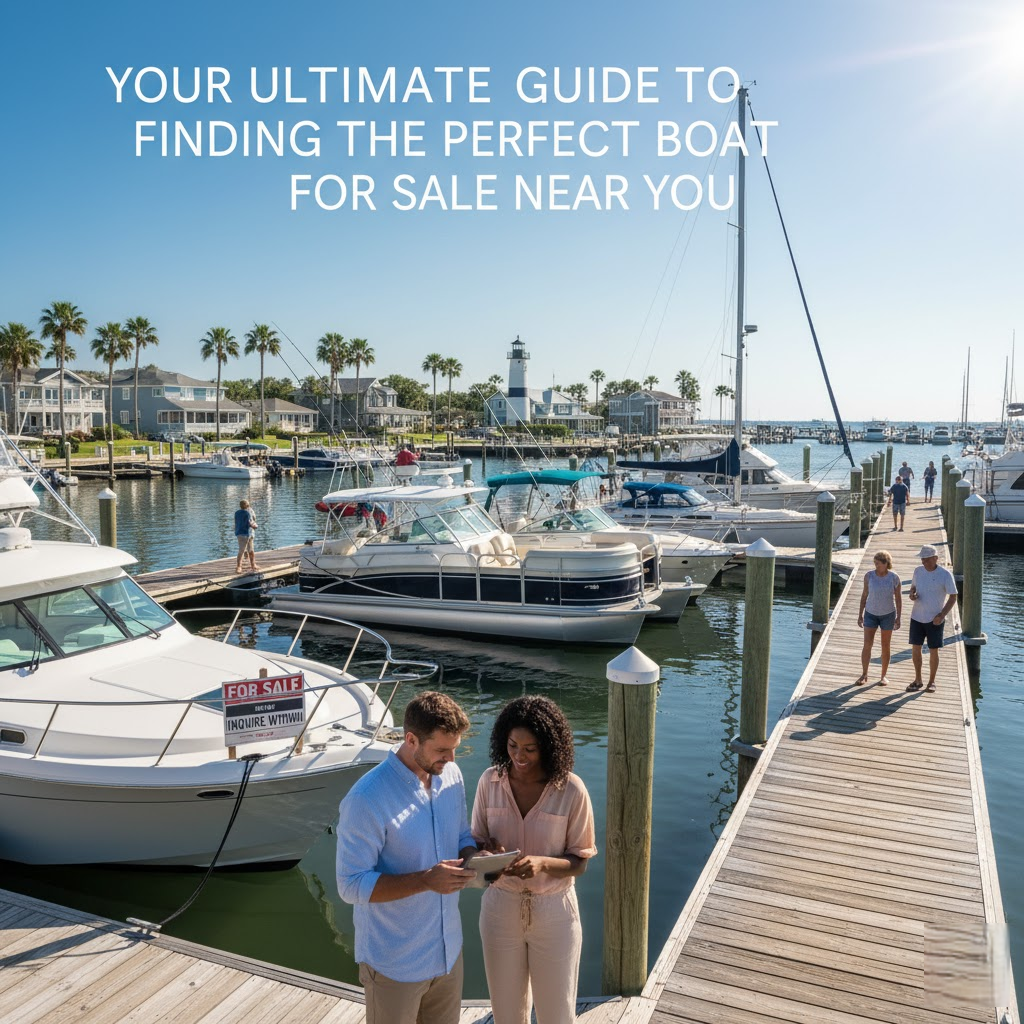
Now that you’ve got a clear picture of what you’re looking for, it’s time to start your search. The good news is, there are more resources than ever to help you find a “boat for sale near me.” Here are some of the best places to look:
- Online Marketplaces: Websites like Boat Trader, YachtWorld, and Boats.com are the go-to resources for boat buyers. They feature thousands of listings from both private sellers and professional brokers, with detailed descriptions, photos, and often, video tours. You can filter your search by location, boat type, price, and a variety of other criteria to quickly narrow down your options. Don’t forget to check out more general marketplaces like Facebook Marketplace and Craigslist, as you can sometimes find hidden gems there.
- Local Boat Dealerships and Brokers: Visiting a local boat dealer or broker can be a great way to see a variety of boats in person and get expert advice. Brokers act as intermediaries between buyers and sellers, and they can be invaluable in helping you navigate the complexities of a boat purchase. They often have a deep understanding of the local market and can help you find boats that may not be publicly listed.
- Marinas and Yacht Clubs: Take a stroll through your local marinas and yacht clubs. You’ll often find “for sale” signs on boats in their slips. This can be a great way to find a boat that has been well-maintained and is already in a convenient location. It also gives you a chance to chat with other boat owners and get a feel for the local boating community.
- Boat Shows: Boat shows are a fantastic opportunity to see a wide variety of new and used boats all in one place. You can climb aboard different models, compare features, and talk to representatives from various manufacturers and dealerships. Even if you’re not ready to buy, a boat show is a great way to do your research and get a better sense of what’s available.
Step 3: The Inspection – Kicking the Tires (and the Hull)
You’ve found a boat that looks promising online, and now it’s time to see it in person. This is arguably the most critical stage of the buying process, and it’s where you need to put on your detective hat. Don’t be swayed by a shiny exterior; what lies beneath the surface is what truly matters. Here’s a checklist of what to look for during your initial inspection:
- The Hull and Deck: Carefully examine the hull for any signs of damage, such as cracks, blisters, or previous repairs. Look for stress cracks, especially around fittings and high-stress areas. Walk around the deck and feel for any soft spots, which could indicate water intrusion and rot in the core. Check the condition of the gelcoat; a chalky or faded finish could be a sign of neglect.
- The Engine: The engine is the heart of any powerboat, and a major engine failure can be a costly nightmare. If the boat is out of the water, check the engine for any visible leaks, corrosion, or frayed wires. Look at the oil; it should be clean and free of any milky appearance, which could indicate water in the engine. If possible, ask the seller to start the engine and listen for any unusual noises.
- Systems and Electronics: Test all of the boat’s systems, including the lights, bilge pumps, horn, and any electronics like the GPS and fishfinder. Check the condition of the wiring; it should be neat, organized, and free of corrosion.
- Upholstery and Canvas: The condition of the upholstery and canvas can tell you a lot about how the boat has been cared for. Look for rips, tears, and mold or mildew. Replacing canvas and upholstery can be expensive, so factor that into your offer if they’re in poor condition.
- The Trailer: If the boat comes with a trailer, give it a thorough inspection as well. Check the tires for wear and tear, test the lights, and look for any signs of rust or corrosion on the frame.
If the boat passes your initial inspection and you’re still serious about buying it, it’s highly recommended that you take the next two steps: a sea trial and a professional survey.
- The Sea Trial: A sea trial is your opportunity to see how the boat performs on the water. This is where you’ll get a feel for the handling, the acceleration, and the overall ride. Pay attention to how the engine sounds at different speeds and watch the gauges to make sure everything is operating within the normal range. Don’t be afraid to put the boat through its paces; this is your chance to uncover any potential issues that might not be apparent at the dock.
- The Professional Survey: For any significant boat purchase, a professional marine survey is a must. A qualified marine surveyor will conduct a thorough, unbiased inspection of the boat, both in and out of the water. They have the expertise and the tools to identify potential problems that you might miss, such as hidden structural damage, moisture in the hull, or impending engine failure. The cost of a survey is a small price to pay for the peace of mind it provides, and it can often save you from making a very costly mistake. A good survey report can also be a powerful negotiation tool.
Step 4: Making an Offer and Sealing the Deal
You’ve done your due diligence, and you’re confident that you’ve found the right boat. Now it’s time to make an offer. Your offer should be based on your research of comparable boats in your area and the findings of your inspection and survey. Don’t be afraid to negotiate; it’s a standard part of the boat buying process. Be prepared to go back and forth with the seller a few times before you reach an agreement.
Once you’ve agreed on a price, it’s time to handle the paperwork. This will typically involve a purchase agreement, which should outline all of the terms of the sale, including the price, the closing date, and any contingencies (such as a satisfactory survey). You’ll also need to transfer the title and registration into your name. If you’re working with a broker, they will guide you through this process. If you’re buying from a private seller, you can find the necessary forms and information on your state’s Department of Motor Vehicles or equivalent agency’s website.
A Final Word: Welcome to the Boating Life!
Finding the perfect “boat for sale near me” is a journey, but it’s a journey that’s well worth the effort. By taking your time, doing your research, and being a savvy shopper, you can find a vessel that will provide you with years of enjoyment and adventure. The boating community is a welcoming one, and you’ll soon discover that the friendships you make on the water are just as valuable as the boat itself. So, cast off the lines of hesitation and set a course for your boating dreams. The open water is waiting!