
 salehunter.net
 Woodworking is an incredibly rewarding craft that allows you to transform raw, natural materials into functional art, custom furniture, and lasting family heirlooms. Yet, as any seasoned woodworker will readily admit, the pursuit of this passion can quickly drain your bank account. When you start browsing the glossy catalogs of major tool manufacturers or walk the well-lit aisles of specialized, high-end lumberyards, it is easy to feel overwhelmed by the price tags. From heavy machinery and precision hand tools to exotic hardwoods and specialized finishing oils, the costs can skyrocket in a matter of minutes.
However, building a highly capable and versatile woodworking shop does not require maxing out your credit cards or emptying your savings. Finding woodworking supplies cheap is a craft unto itself—one that requires a bit of hustle, some insider knowledge, and a willingness to look well beyond the big-box hardware stores. Whether you are a complete beginner looking to build your first workbench or a seasoned veteran trying to increase your profit margins on commissioned pieces, this article explores highly effective, lesser-known strategies for outfitting your shop and sourcing materials on a strict budget.
The Secondary Market: Scoring High-Quality Tools for Less
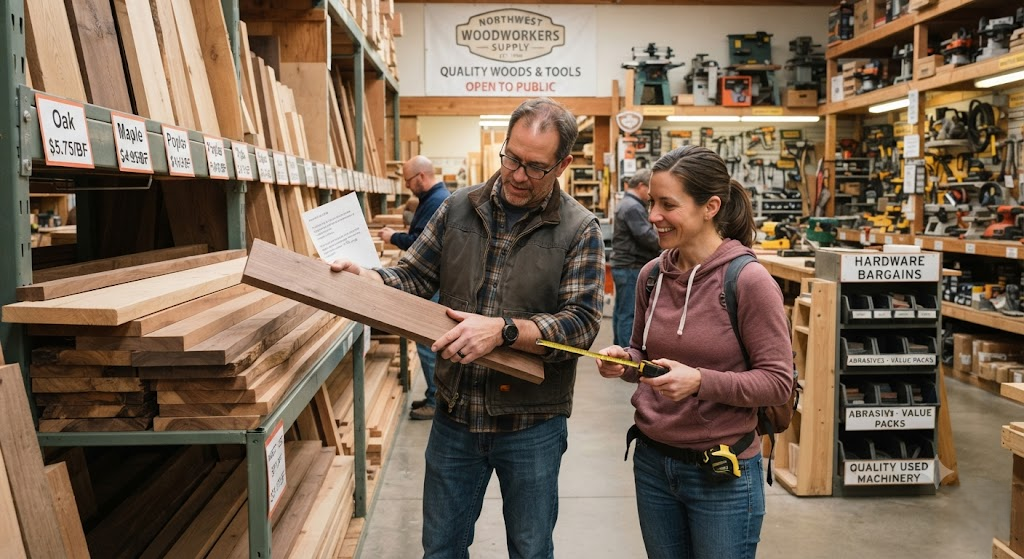
The single largest barrier to entry in woodworking is the cost of tools. While it is tempting to buy brand-new, shiny equipment with pristine factory warranties, the smart budget woodworker knows that the secondary market is where the true value lies. Tools made decades ago often feature superior metallurgy and heavier cast-iron components than their modern, budget-friendly equivalents.
Estate Sales and Farm Auctions
Garage sales are hit-or-miss, but estate sales and local farm auctions are absolute goldmines for sourcing woodworking supplies cheap. When retiring craftsmen downsize or pass away, their lifetime collections of tools are often liquidated at a fraction of their true value. To succeed at estate sales, use aggregator websites to scan photographs of the sales before you go. Look for heavy, older machinery from trusted vintage brands. Show up on the final day of the sale when liquidators are desperate to clear the house; this is when you can negotiate heavy discounts on clamps, hand planes, chisels, and even larger items like table saws or drill presses.
Reviving Vintage Hand Tools
If you want top-tier performance without the premium price, learn the art of tool restoration. A vintage hand plane from the 1930s or 1940s, found at a flea market for twenty dollars and covered in surface rust, can be restored to outperform a modern hundred-dollar tool. By utilizing simple, inexpensive rust-removal methods like white vinegar baths or evaporative rust treatments, followed by a bit of elbow grease with fine sandpaper, you can flatten the sole and polish the body. Once you learn how to properly sharpen a vintage high-carbon steel blade using cheap automotive sandpaper on a flat piece of scrap glass (a technique known as the “scary sharp” method), you will have world-class cutting tools for pennies on the dollar.
Factory Reconditioned and Blemished Power Tools
If you prefer modern power tools with safety features like riving knives and electric brakes, avoid paying retail. Instead, seek out factory-reconditioned tools. Major manufacturers often have authorized outlet websites where they sell customer returns or items with minor cosmetic blemishes. These tools have been inspected, repaired, and certified by factory technicians, and they often carry a warranty comparable to a brand-new unit. Purchasing reconditioned routers, orbital sanders, and planers can easily save you anywhere from twenty to forty percent off the retail sticker price.
Sourcing Budget-Friendly and Free Lumber
Once your shop is equipped, your primary ongoing expense will be wood. Buying surfaced-on-four-sides (S4S) hardwood from a retail home center is the most expensive way to purchase lumber. To find woodworking supplies cheap, you have to get closer to the source and be willing to do a little milling yourself.
The Truth About Pallet Wood
Pallets are the classic source of free lumber for budget-conscious makers. However, sourcing them requires caution. Never use pallets that are unmarked or stamped with “MB” (Methyl Bromide), as they have been treated with highly toxic pesticides. Instead, look exclusively for pallets stamped with “HT” (Heat Treated), which are perfectly safe to cut, sand, and finish. To harvest the wood efficiently without splitting the boards, avoid prying them apart with a hammer. Instead, use a reciprocating saw with a metal-cutting blade to slice straight through the nails holding the slats to the runners. Once you run these rustic boards through a planer, you can uncover beautiful grain patterns in oak, maple, and cherry that were hiding under decades of warehouse grime.
Local Sawmills and Arborists
If you want to buy high-quality hardwoods like walnut, cherry, or white oak, skip the big retail chains and find a local, independent sawmill. Small-scale sawyers operate using portable band saw mills and sell lumber by the board foot, often for less than half the price of commercial yards. Because this wood is usually sold “rough sawn,” you will need a jointer and a planer to dimension it, but the massive cost savings will quickly pay for those machines.
Additionally, try networking with local tree service companies and arborists. Every day, beautiful hardwood trees in urban and suburban areas are cut down and destined for the woodchipper or the firewood pile. If you offer to haul away the logs, many arborists will gladly give them to you for free. With a relatively inexpensive chainsaw mill, you can slice these logs into stunning live-edge slabs that would cost hundreds of dollars at a boutique lumberyard. Just remember to seal the end grain with latex paint to prevent splitting, and stack the wood with “stickers” (small spacers) to let it air dry properly before use.
Cabinet Shop Dumpsters and Construction Offcuts
Professional cabinet shops go through massive amounts of sheet goods and hardwoods. What they consider a useless “scrap” might be the perfect piece of material for a hobbyist building small boxes, cutting boards, or jigs. Walk into a local custom cabinetry shop with a box of donuts and politely ask if you can rummage through their cutoff bin. Most owners are thrilled to have someone haul away their wood waste for free. Similarly, residential construction sites are excellent places to find structural pine offcuts, OSB, and plywood scraps, which are invaluable for building shop furniture, tool stands, and storage solutions.
Clamps, Jigs, and Shop Necessities
There is a famous joke in the woodworking community: you can never have enough clamps. Unfortunately, commercial parallel clamps and heavy-duty bar clamps are incredibly expensive. Here is how to secure these essential woodworking supplies cheap.
Pipe Clamps: The Budget Builder’s Best Friend
Instead of spending fifty dollars on a single brand-name bar clamp, invest in pipe clamp fixtures. These cast-iron fixtures cost a fraction of the price of a full clamp and can be attached to any standard black iron plumbing pipe, which you can buy cheaply at any hardware store. The beauty of pipe clamps is their modularity; if you need a longer clamp for a massive tabletop glue-up, you can simply unscrew the fixture and attach it to a longer piece of pipe, or use a cheap threaded coupling to join two smaller pipes together. They provide immense clamping pressure and unmatched versatility for a tight budget.
Making Your Own Jigs
Woodworking catalogs are filled with brightly colored, anodized aluminum jigs for everything from cutting tapers to cutting circles. Save your money and build them yourself. A table saw crosscut sled, made from a scrap piece of MDF (Medium Density Fiberboard) and some hardwood runners, will give you safer, more accurate, and cleaner crosscuts than the expensive miter gauge that came with your saw. You can easily build router circle jigs, tapering jigs, and even homemade cam-clamps using offcuts of Baltic birch plywood and cheap carriage bolts. Building your own shop aids not only saves a tremendous amount of money but also deeply improves your understanding of shop geometry and tool mechanics.
Economizing on Finishes, Adhesives, and Abrasives
Consumables like sandpaper, glue, and wood finish are hidden costs that slowly bleed a woodworker’s budget dry over time. By purchasing smarter and mixing your own solutions, you can drastically reduce these recurring expenses.
The “Oops” Paint Aisle and DIY Finishes
If you are building shop furniture, jigs, or painted projects for kids, never pay full price for paint. Visit the paint department of large hardware stores and look for the “mis-tint” or “oops” rack. These are cans of premium paint that were mixed to the wrong color for a customer and are sold at deep discounts, often for just a few dollars a gallon.
For clear wood finishes, stop buying expensive boutique wood oils. You can create an incredibly durable, beautiful, and easy-to-apply wiping varnish yourself. Simply mix equal parts of oil-based polyurethane, boiled linseed oil, and mineral spirits in a mason jar. This classic homemade blend penetrates deep into the wood grain, provides excellent protection, and costs a fraction of commercial wiping varnishes. It is perfect for everything from shop cabinets to fine living room furniture.
Buying Consumables in Bulk
Never buy sandpaper or wood glue in small retail packages. Wood glue is astronomically expensive when purchased in small eight-ounce squeeze bottles. Instead, buy a one-gallon jug of PVA wood glue and use it to refill a small, reusable dispenser bottle. You will save a massive percentage per ounce.
The same logic applies to abrasives. Small packs of random orbital sanding discs sold in home centers have a terrible price-per-disc ratio. Go online and order industrial sanding discs in boxes of fifty or one hundred. To stretch your dollar even further, purchase a rubber abrasive cleaning stick (often called a crepe block). When your sanding discs or belts get clogged with wood dust and resin, you simply run the rubber block against the spinning abrasive. It pulls the packed dust out, making an old piece of sandpaper cut like brand new again and extending its lifespan threefold.
Leveraging Community Resources
Finally, never underestimate the power of the woodworking community when looking to score woodworking supplies cheap. Look for local woodworking guilds or maker spaces in your city. Joining a guild often costs a nominal annual fee but grants you access to shared commercial-grade machinery that would cost thousands of dollars to own personally, such as massive drum sanders, large jointers, and industrial planers.
Furthermore, these local networks are incredible places to buy used gear. Older members often sell off excess tools and wood to newer members at “buddy prices.” You can also check government surplus auction websites (like GovDeals), where public schools and universities frequently auction off incredibly robust, heavy-duty woodworking machinery from closed shop-class programs for pennies on the dollar.
Final Thoughts on Budget Woodworking
Finding woodworking supplies cheap is not about settling for inferior quality; it is about resourceful sourcing and recognizing true value. By skipping the retail showrooms and turning your attention to the secondary market, local sawmills, bulk suppliers, and your own ingenuity, you can build an enviable shop layout. The money you save on heavily marked-up supplies can be reinvested into your actual projects, allowing you to build more, experiment freely, and ultimately become a more skilled and well-rounded craftsman. Remember, the true quality of a finished piece of furniture relies infinitely more on the patience and skill of the woodworker than on the price tag of the tools used to create it.