

 salehunter.net
 There is a specific kind of thrill that comes with refreshing your wardrobe. It’s that moment when you find the perfect pair of lived-in denim or that classic white tee that fits just right. But for the savvy American shopper, the real dopamine hit doesn’t come from the checkout line—it comes from the “Apply Code” box. If you are shopping at Gap without a strategy, you are essentially donating money. Gap Inc. has built one of the most robust, complex, and rewarding promotional ecosystems in the retail world. It is a system designed to make you feel like you won the lottery every time you buy a hoodie.
However, navigating the labyrinth of Gap promo codes, GapCash, and loyalty rewards can feel overwhelming. Is it better to use the 40% off code or the $20 off reward? Can you stack them? When does the flash sale actually end? To truly maximize your buying power, you have to move past simply Googling “coupon codes” and start understanding the architecture of Gap’s pricing model. This isn’t just about saving a few dollars; it’s about mastering the art of the deal at one of America’s most iconic retailers.
The Golden Rule: Never Pay Full Price
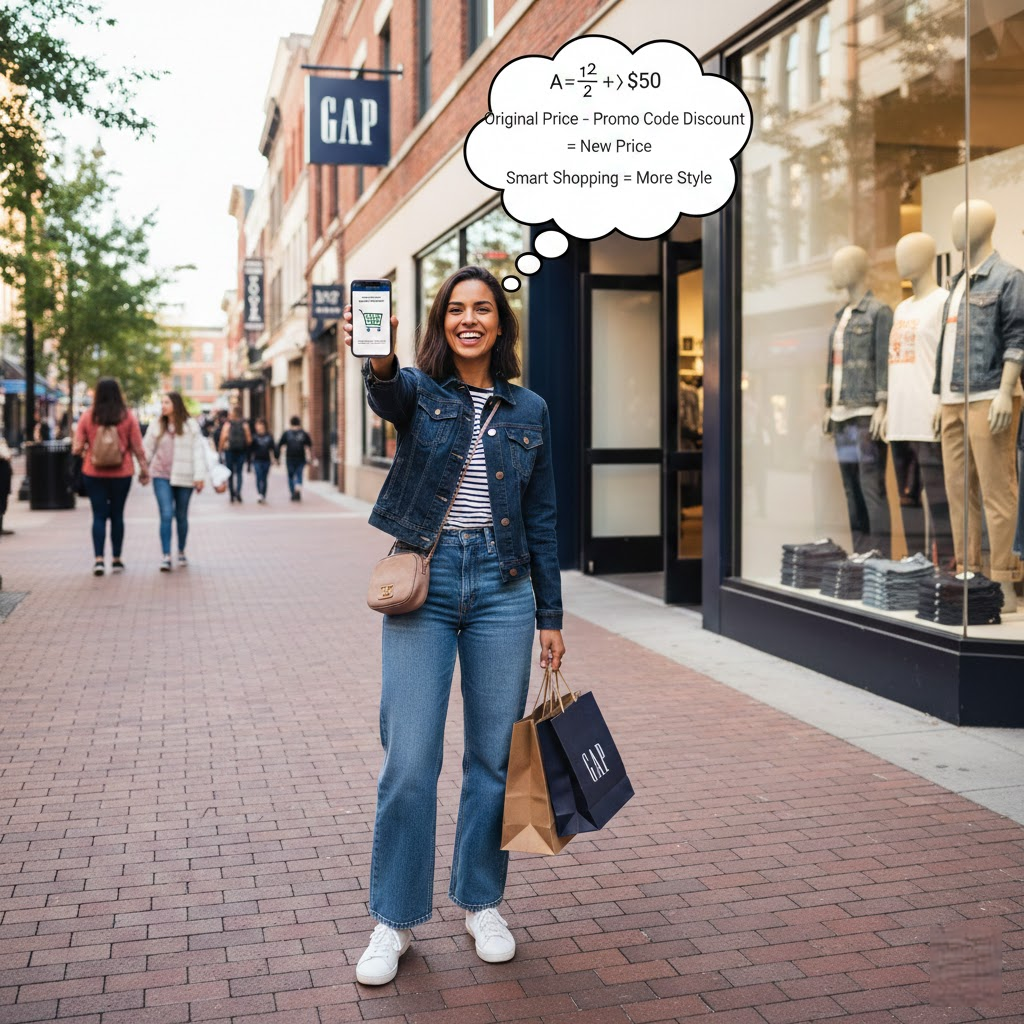
Let’s establish the baseline reality: Gap’s retail price is rarely the “real” price. The sticker price on a pair of khakis exists primarily to be slashed. If you see a jacket for $80 on Tuesday, there is a statistical certainty that it will be $48 (40% off) or $40 (50% off) within a few days. The first rule of shopping here is patience. If there isn’t a promo code active right now—which is rare—wait 24 hours.
The company operates on a high-low pricing strategy. They introduce inventory at a premium, then systematically lower the barrier to entry through a rotating carousel of digital coupons. The key to winning is knowing which cycle you are in. Are you in a “Mystery Deal” phase? A “GapCash Earning” phase? Or the holy grail: a “Stacking” phase?
Decoding the Types of Gap Promo Codes
Not all codes are created equal. To the untrained eye, a discount is a discount. To the pro shopper, there is a hierarchy of value. Understanding the taxonomy of these codes is crucial for knowing which ones to prioritize when you are filling your cart.
1. The “Percentage Off” Global Codes
These are the workhorses of the Gap website. You’ll see them splashed across the homepage banner. Common iterations include YOURS, TREAT, or GAPVIP. They typically offer 30%, 40%, or occasionally 50% off your purchase.
The Catch: These codes usually carry a list of exclusions. They often won’t apply to “Best Seller” items, third-party brands, or 100% organic cotton pajamas. Always read the fine print. However, when these codes appear, they are usually “stackable” with reward points, which we will discuss later.
2. The “Extra Off” Sale Codes
These are the secret weapons for bargain hunters. Gap will often run a sale where markdowns are already up to 50% off, and then offer a code like PERK or ADDON for an extra 10% or 20% off the discounted price. This is where the math gets fun. If a $100 sweater is marked down to $60, and you apply an extra 20% off code, you aren’t paying $40; you’re paying $48. It’s a discount on the discount. While the math seems diminishing, these codes are vital for clearing out end-of-season racks.
3. The “Free Shipping” Codes
Historically, codes like SHIPFREE were common, but Gap has largely shifted to an automatic threshold model (usually free shipping over $50 for rewards members). However, during major holidays, you might still snag a code that waives the shipping fee with no minimum. These are gold if you only need to grab a single pair of socks or a baby onesie.
The Phenomenon of GapCash
If there is one element that confuses and delights shoppers in equal measure, it is GapCash. This is not a promo code in the traditional sense; it is a currency. It operates on a strict “Earn” and “Redeem” cycle.
During an “Earn” period, you accumulate coupons based on how much you spend. Spend $50, get $20 in GapCash. Spend $100, get $40. It sounds incredible—effectively 40% back for future use. However, the redemption phase is where people get tripped up. You cannot simply use $20 of GapCash to buy a $20 item for free. The redemption usually requires a minimum spend, typically double the value of the coupon. To use that $20 coupon, you must spend $50.
Pro Tip: GapCash generally cannot be combined with other “percentage off” promo codes. You have to choose: Do you use the 40% off code GAPFRIEND, or do you use your GapCash? You need to do the math. If you are buying full-priced items, GapCash (which effectively acts as a 40% discount if you hit the spend thresholds exactly) is great. But if the items are already on sale, a percentage-off promo code might yield a lower total because it applies to the reduced price, whereas GapCash thresholds are calculated pre-tax but post-discount.
The Art of Stacking: Maximizing the Algorithm
The checkout page on the Gap website is a battleground. Unlike many retailers that restrict you to a single promo code, Gap has historically been generous with “stacking.” This means applying multiple codes to a single order. While policies fluctuate, the general architecture allows for up to three (sometimes five) codes, provided they fall into different categories.
A dream stack looks like this:
- Code 1: A 40% off general promotion (e.g., FRIEND).
- Code 2: A 10% off extra boost (e.g., PLUS).
- Code 3: A Free Shipping code (if not automatic).
- Rewards: Applying $20 in rewards points (from your Gap Good Rewards account).
The order of operations matters here. The percentage discount usually comes off the total first, and then the dollar-off rewards are subtracted. This is beneficial for you. If you have a $100 item and a 40% code, the price drops to $60. If you then apply a $10 reward, you pay $50. If the dollar reward came off first ($100 – $10 = $90), and then the 40% came off, you’d pay $54. The system is designed to favor the percentage drop first, protecting the value of your earned points.
Gap Good Rewards: The Engine Behind the Codes
You cannot talk about promo codes without addressing the engine that powers the modern Gap savings vehicle: the Gap Good Rewards program. It unifies the four brands: Gap, Banana Republic, Old Navy, and Athleta. Joining is free, and frankly, shopping without being a member is a mistake.
Why does this matter for promo codes? Because members get access to exclusive codes. Members often receive “Early Access” codes to Black Friday sales or Friends & Family events days before the general public. Furthermore, the points you earn (1 point for every $1 spent for regular members, more for cardholders) convert into dollar-off codes that are the most flexible currency in the ecosystem. Unlike coupons, rewards stack with almost everything.
There are tiers to this madness—Core, Enthusiast, and Icon. Reaching “Icon” status (usually by spending $1,000 a year or being a cardholder) unlocks free fast shipping and, crucially, specific “Icon-only” promo days where the discounts are steeper.
The Email and Text Message Game
If you are hunting for a code right now, your inbox is your best friend. Gap’s email marketing is aggressive, but lucrative. A standard tactic for new customers (or existing customers with a new email address) is the “Welcome” code. This is typically a 25% off code generated instantly upon sign-up.
The “Abandon Cart” Strategy: This is a classic digital marketing maneuver that still works surprisingly well. If you are logged into your account, add items to your cart, and then close the browser window. Wait 24 to 48 hours. Often, Gap’s automated systems will trigger an email with a subject line like “You forgot something…” containing a unique promo code to nudge you to complete the purchase. It’s not guaranteed, but it works often enough to be a valid strategy for non-urgent purchases.
Factory vs. Mainline: Know Your Codes
A common point of confusion is the difference between “Gap” and “Gap Factory.” These are essentially two different businesses. Gap Factory sells items specifically made for the outlet market—often lower price points and slightly different materials.
The promo codes for Gap Factory are usually more aggressive—often hovering in the 50-70% off range—but they are rarely interchangeable with the mainline store. If you have a code like GFBONUS, it likely won’t work on that premium denim jacket from the main site. Always check the URL. If it says “gapfactory.com,” you are in the outlet ecosystem. The savings here can be massive, but adjust your quality expectations accordingly.
The Price Adjustment Secret
This isn’t a promo code, but it acts like a retroactive one. Gap has a price adjustment policy (though it is subject to change, so always verify). Generally, if an item you bought goes on sale for a lower price within 14 days of your purchase, they will refund you the difference.
This is where the savvy shopper wins. If you bought a coat on Monday for $100, and on Wednesday a “50% Off Flash Sale” code drops, you can contact customer service. They will often apply the new pricing logic to your previous order. This removes the “buyer’s remorse” fear that plagues discount shoppers.
Seasonal Rhythms: When to Strike
While promo codes are available 365 days a year, the potency of the codes varies by season. Understanding the calendar helps you predict when the big codes will drop.
- January/July: The “Great Gap Sale” periods. This is when seasons change. You will see “Extra 50% off Markdowns” codes. This is inventory clearing time.
- May: Friends & Family. Historically one of the best times to shop. Codes during this event often have the fewest exclusions, applying even to denim and leather which are usually excluded.
- Back to School (August): Expect massive volume on “Buy More, Save More” codes (e.g., 20% off 1 item, 30% off 2, 40% off 3+).
- Black Friday/Cyber Monday: The gloves come off. 50% off everything is the standard. Promo codes during this time are often just “auto-applied” at checkout to reduce friction.
The “.97” and “.99” Detective Work
To truly maximize promo codes, you need to look at the price cents. In the Gap internal system, price endings tell a story.
Prices ending in .99 are typically full price or a temporary promotional price.
Prices ending in .97 are usually final sale or “kill” prices. These are items the store wants gone.
Why does this matter? Because some promo codes explicitly exclude “Final Sale” items (.97). Before you get excited about applying a 40% off code to a rack of clearance items, check the ending digits. If it ends in .97, the system might block the code. However, “Extra off Clearance” codes are specifically designed for these .97 items.
Common Pitfalls to Avoid
Even the best promo code hunters make mistakes. The most common is the “Exclusion Shock.” You have a cart full of jeans, pajamas, and a third-party brand pair of shoes. You apply the code GREAT for 40% off. The total drops, but not by 40%. Why? Because the code didn’t apply to the pajamas (often excluded) or the third-party shoes. Always check your cart line-by-line to see which items actually accepted the discount.
Another pitfall is letting GapCash expire. The redemption windows are short—usually about a week. Set a calendar reminder. Unused GapCash is literally wasted money.
Conclusion: The Strategic Wardrobe
Shopping at Gap without a promo code is like driving a car in second gear; you can do it, but it’s inefficient and bad for your wallet. The ecosystem of Gap promo codes, from the humble email signup discount to the complex stacking of rewards and GapCash, offers a game that is genuinely winnable for the consumer.
By understanding the difference between factory and mainline codes, timing your purchases around the Friends & Family events, and utilizing the stacking logic of the checkout cart, you can maintain a high-quality wardrobe for a fraction of the sticker price. The next time you see a total of $200 in your cart, take a breath, open a new tab, and start hunting. With the right combination of codes, you can easily turn that $200 into $110. And that, ultimately, is the most stylish look of all.


