
 salehunter.net
 Let’s face it, laundry is a relentless part of life. It’s the never-ending story of sorting, washing, drying, and folding. But when your trusty washer starts sounding like a jet engine taking off, or your dryer decides that “damp” is the new “dry,” the chore becomes a genuine headache. The silver lining? A fantastic washer and dryer sale is your golden ticket to upgrading your laundry game, saving money, and bringing a little bit of peace back to your utility room. But navigating these sales can feel like a spin cycle of its own. With endless models, confusing features, and prices that fluctuate wildly, how do you know you’re actually getting a great deal?
Fear not, intrepid laundry warrior! This is your ultimate guide to conquering the washer and dryer sale. We’re going to dive deep into the when, what, and how of buying a new laundry pair. We’ll decode the jargon, demystify the features, and give you the insider knowledge you need to walk away with the perfect machines for your home, your family, and your wallet. By the time you’re done reading, you’ll be able to spot a genuine bargain from a mile away and make a purchase you’ll be happy with for years to come.
Timing is Everything: When Do Washers and Dryers Go on Sale?
You wouldn’t buy a winter coat in the middle of a blizzard and expect a discount, right? The same logic applies to appliances. The secret to scoring the best price is knowing when retailers are most eager to move inventory. Mark your calendar for these key sale periods.
- Major Holiday Weekends: This is the most predictable and reliable time to find a deal. Retailers roll out their biggest promotions during three-day weekends. Keep your eyes peeled for massive sales during Memorial Day in May, the Fourth of July, and especially Labor Day in September. Labor Day often coincides with the start of new model releases, making it a prime time for deals.
- Black Friday and Cyber Monday: The king of all sales events is, of course, the week of Thanksgiving. Black Friday and Cyber Monday offer some of the steepest discounts of the year. The competition between retailers is fierce, which means deeper price cuts, bundle deals (buy a pair and save), and often free delivery or installation perks.
- New Model Season (September & October): Just like cars, new appliance models are typically released in the fall. As manufacturers like LG, Samsung, Whirlpool, and Maytag roll out their latest and greatest machines, retailers need to clear out the previous year’s models. This is your chance to get a brand-new, perfectly good appliance with last year’s tech for a significant discount.
- End of the Month/Quarter: Sometimes, the best deals are less about a specific holiday and more about sales quotas. Shopping near the end of the month or fiscal quarter can sometimes yield unexpected bargains as stores push to meet their sales goals. It’s not a guarantee, but it’s worth a shot if you’re in a hurry.
Know Your Laundry Lingo: A Crash Course in Washer and Dryer Types
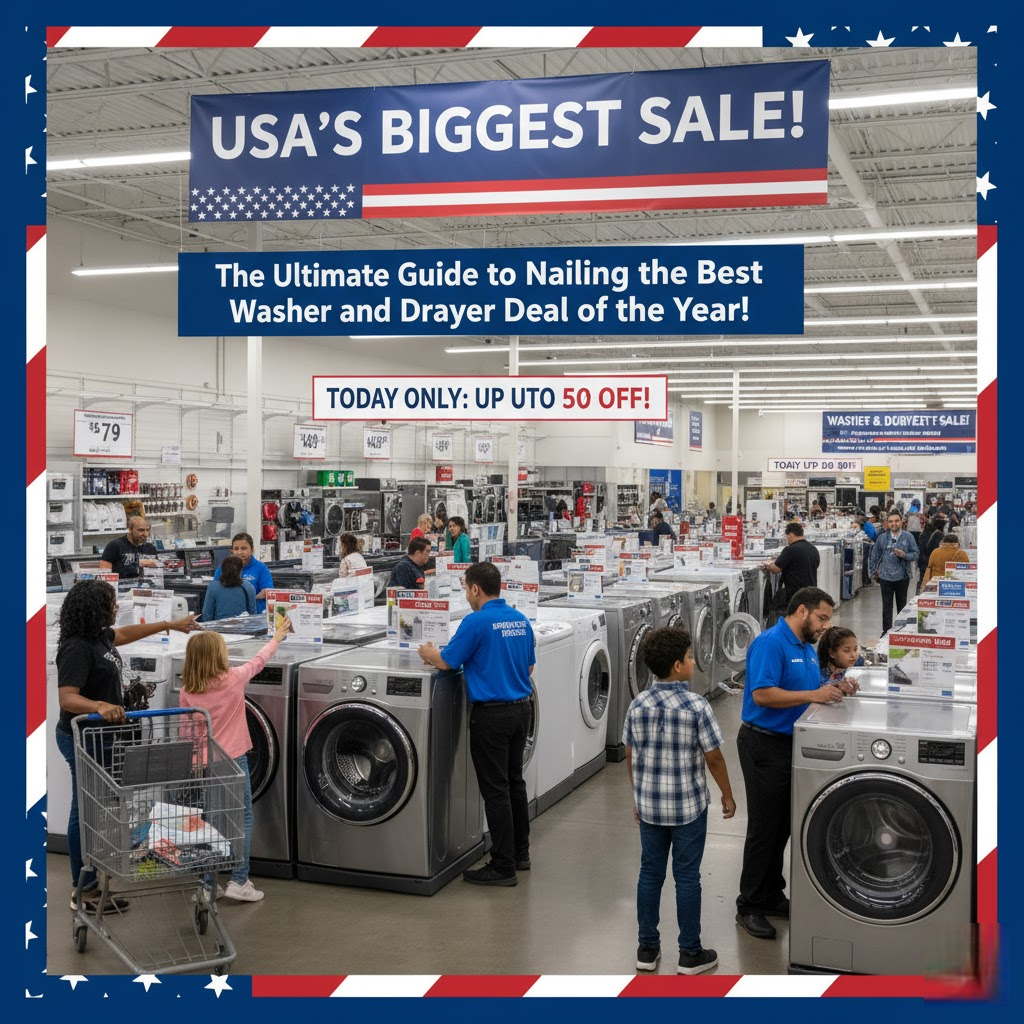
Walking into an appliance store can feel like alphabet soup: HE, agitator, impeller, condenser, heat pump. Let’s break down the main types so you can choose the right technology for your needs.
Washing Machines
- Top-Load Agitator: This is the classic design many of us grew up with. It has a tall spindle, the agitator, in the middle of the wash basket that twists and turns to churn clothes clean. They’re typically the least expensive option and have faster wash cycles. However, they use the most water and energy and can be rougher on fabrics.
- Top-Load Impeller (High-Efficiency or HE): Instead of a tall agitator, these HE models use a low-profile cone or disc at the bottom of the tub that spins and sprays water to move clothes. This method is gentler on your clothes, uses significantly less water, and allows for a much larger capacity since there’s no spindle in the way.
- Front-Load (High-Efficiency or HE): These washers are the champions of efficiency. They use a tumbling action, much like a dryer, to lift clothes in and out of a small pool of water. This makes them the most gentle on fabrics while using the least amount of water and energy. They also have the fastest spin cycles, which extracts more water from clothes, leading to shorter drying times. The main downsides can be the initial cost and the need to occasionally clean the door gasket to prevent mildew.
- Washer-Dryer Combos: For those in tight spaces like apartments or RVs, an all-in-one unit that washes and dries in the same drum can be a lifesaver. The convenience is unmatched, but be aware that they typically have smaller capacities and the drying function (often ventless) can take much longer than a standalone dryer.
Dryers
The biggest choice you’ll make with a dryer is how it’s powered and how it vents.
- Electric vs. Gas: This decision is usually made for you by the hookups in your home. Electric dryers are more common and use a 240-volt outlet. Gas dryers require a natural gas line. While gas dryers often have a higher upfront cost, they typically heat up faster and can cost less to run over time, depending on your local utility prices.
- Vented Dryers: This is the standard type. They work by heating air, tumbling it with your wet clothes, and then expelling the hot, moist air outside through a vent duct. They are efficient and fast.
- Ventless Dryers: If you don’t have an external vent, a ventless dryer is your solution. They are common in apartments and condos. There are two main types:
- Condenser Dryers: These pull in ambient air, heat it, and tumble clothes. The resulting moist air is then passed through a heat exchanger where it cools and condenses, collecting the water in a reservoir or sending it down a drainpipe.
- Heat Pump Dryers: This is the most energy-efficient dryer technology available. It works like a refrigerator in reverse, recycling the hot air in a closed loop system instead of releasing it. They are incredibly gentle on clothes but can have much longer cycle times than vented dryers.
Decoding the Features: What’s Worth the Extra Money?
Modern appliances are packed with features. Some are game-changers, while others you might never use. Here’s a breakdown of what to look for during a washer and dryer sale.
- Capacity: Measured in cubic feet, this is one of the most important specs. A standard capacity (around 4.5 cu. ft. for a washer) is great for couples or small families. If you have a large family or want to wash bulky items like a king-size comforter, look for a large or extra-large capacity machine (5.0 cu. ft. and up).
- Energy Star Certification: An Energy Star certified washer uses about 25% less energy and 33% less water than a standard model. For a dryer, the savings are about 20%. This not only helps the environment but can save you a significant amount on your utility bills over the life of the appliance.
- Steam Functions: A popular feature on mid-range and high-end models. In the washer, steam can help power out tough stains and sanitize. In the dryer, a steam cycle is fantastic for refreshing wrinkled clothes, meaning less ironing for you!
- Sanitize Cycles: If you have allergies, babies, or pets, a sanitize cycle that uses high heat or steam to kill 99.9% of common household bacteria can provide excellent peace of mind.
- Smart Features (Wi-Fi Connectivity): Do you need your washer to text you when a cycle is done? Maybe! Smart features allow you to start, stop, and monitor your laundry from your phone. You can download new cycles and get maintenance reminders. While it may seem like a novelty, it can be genuinely useful for busy families. Decide if the convenience is worth the extra cost.
- Automatic Dispensers: Some washers have reservoirs you can fill with weeks’ worth of detergent and fabric softener. The machine will then automatically dispense the perfect amount for each load. This prevents waste and ensures optimal cleaning performance.
The Pre-Shopping Checklist: Measure Twice, Buy Once
Nothing is more heartbreaking than finding the perfect laundry pair on sale, only to have the delivery team tell you it won’t fit. Before you even start browsing, grab a tape measure.
- Measure the Space: Get the exact height, width, and depth of the spot where the machines will live.
- Account for Clearance: You need extra room! Plan for at least one inch of space on either side of the machines for air circulation. More importantly, you need about 4-6 inches of depth behind them for hoses, plugs, and dryer vents. Don’t forget vertical clearance, especially if you have overhead cabinets.
- Check Your Path: Measure the width of every doorway, hallway, and staircase the delivery team will need to navigate to get to your laundry room. This is a step people often forget!
Beyond the Sale Price: The Total Cost of Ownership
A great sale price can be tempting, but it’s not the whole story. To understand the true cost, you need to factor in a few other things.
- Delivery and Installation: Some retailers offer free delivery, but installation can be an extra charge, especially for gas dryers. Make sure you clarify this.
- Required Parts: You will almost always need to purchase new hookup accessories. This includes new stainless steel hoses for the washer and a new vent duct for the dryer. Never reuse the old ones; it’s a safety risk.
- Haul-Away Service: What are you going to do with your old machines? Most retailers offer to haul away your old set for a small fee (typically $25-$50 per appliance). This is usually well worth the cost for the convenience.
- Extended Warranties: The salesperson will likely offer you an extended warranty. Modern appliances have a lot of complex electronics. Read the manufacturer’s warranty first (typically one year for parts and labor). If you want peace of mind for 3-5 years, a warranty might be worth it, but be sure to read the fine print to understand what is and isn’t covered.
Pro Tips for a Smooth Purchase
You’ve timed the sales, picked your features, and measured your space. Here are a few final tips to ensure you make a confident choice.
- Read Reviews: Don’t just rely on the reviews on the retailer’s website. Check independent sources like consumer advocacy groups and tech websites to get a balanced view of a model’s performance and reliability.
- Consider a Pair: Retailers often offer the best deals when you buy a matching washer and dryer set. This not only saves you money but also ensures a cohesive look in your laundry room.
- Look for Scratch-and-Dent: Ask about floor models or appliances with minor cosmetic damage. A small scratch on the side of a machine that will be hidden anyway could save you an extra 10-20%.
- Stack Your Savings: Look for opportunities to stack discounts. Can you combine a holiday sale price with a mail-in rebate from the manufacturer? Does the store have its own credit card that offers an additional percentage off? These small savings can add up to a significant discount on the final price.
Buying a new washer and dryer is a big investment, but it doesn’t have to be a stressful one. By doing your homework, timing your purchase, and understanding what features truly matter to you, you can turn a major washer and dryer sale into a major win for your home. Happy shopping, and may your laundry days be ever more efficient!